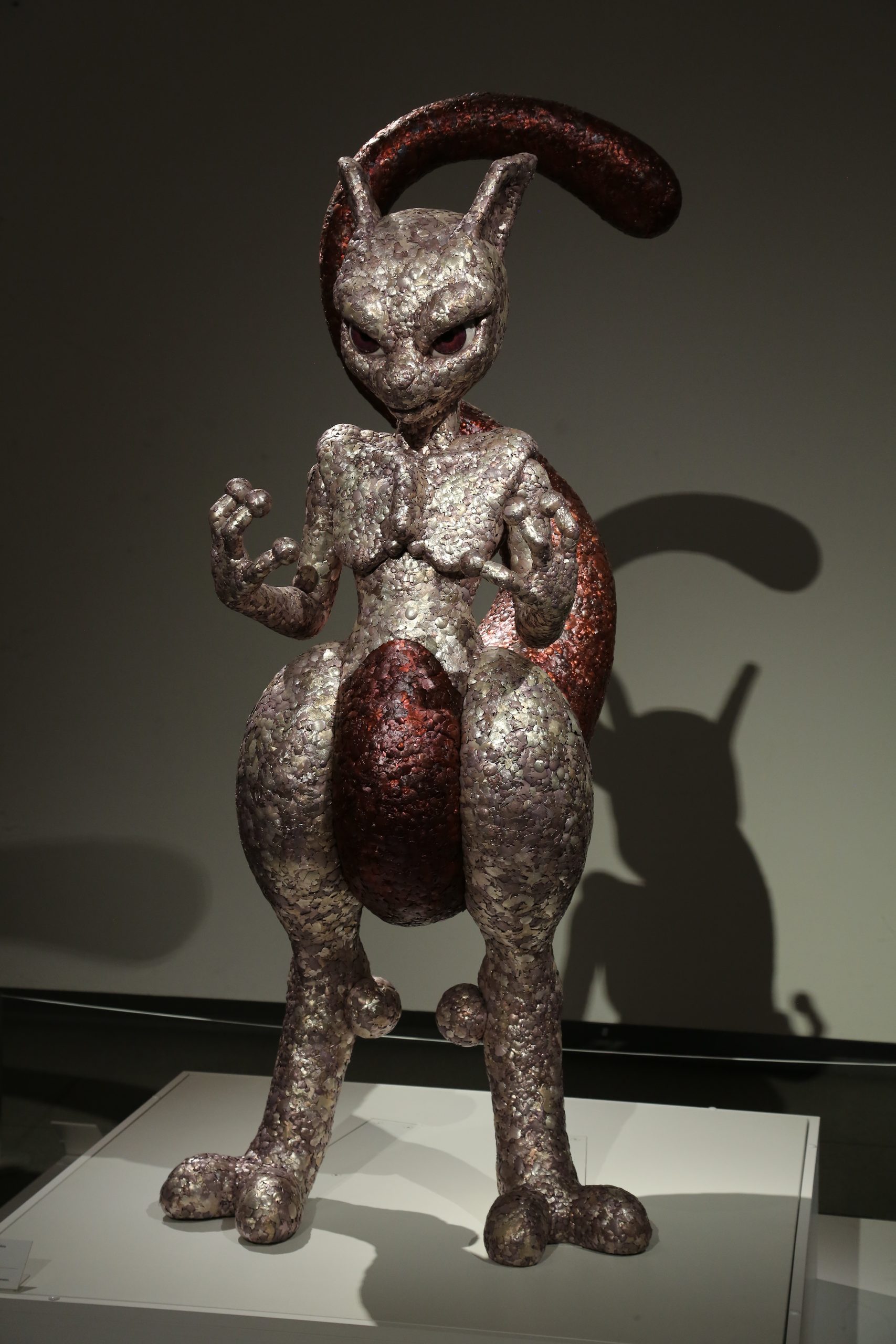
As we move deeper into the exhibition, the atmosphere suddenly shifts. Standing tall and radiating an overwhelming, almost intimidating pressure is the ultimate genetically-engineered Pokémon: Mewtwo.
Created by the phenomenal metal and ceramic artist Kasumi Ueba, this sculpture is an absolute showstopper. Capturing a legendary Pokémon known for its tragic backstory and unmatched psychic power requires an artwork of immense weight—and Ueba delivered a masterpiece that looks alive, dangerous, and divine.
The Texture of Artificial Perfection
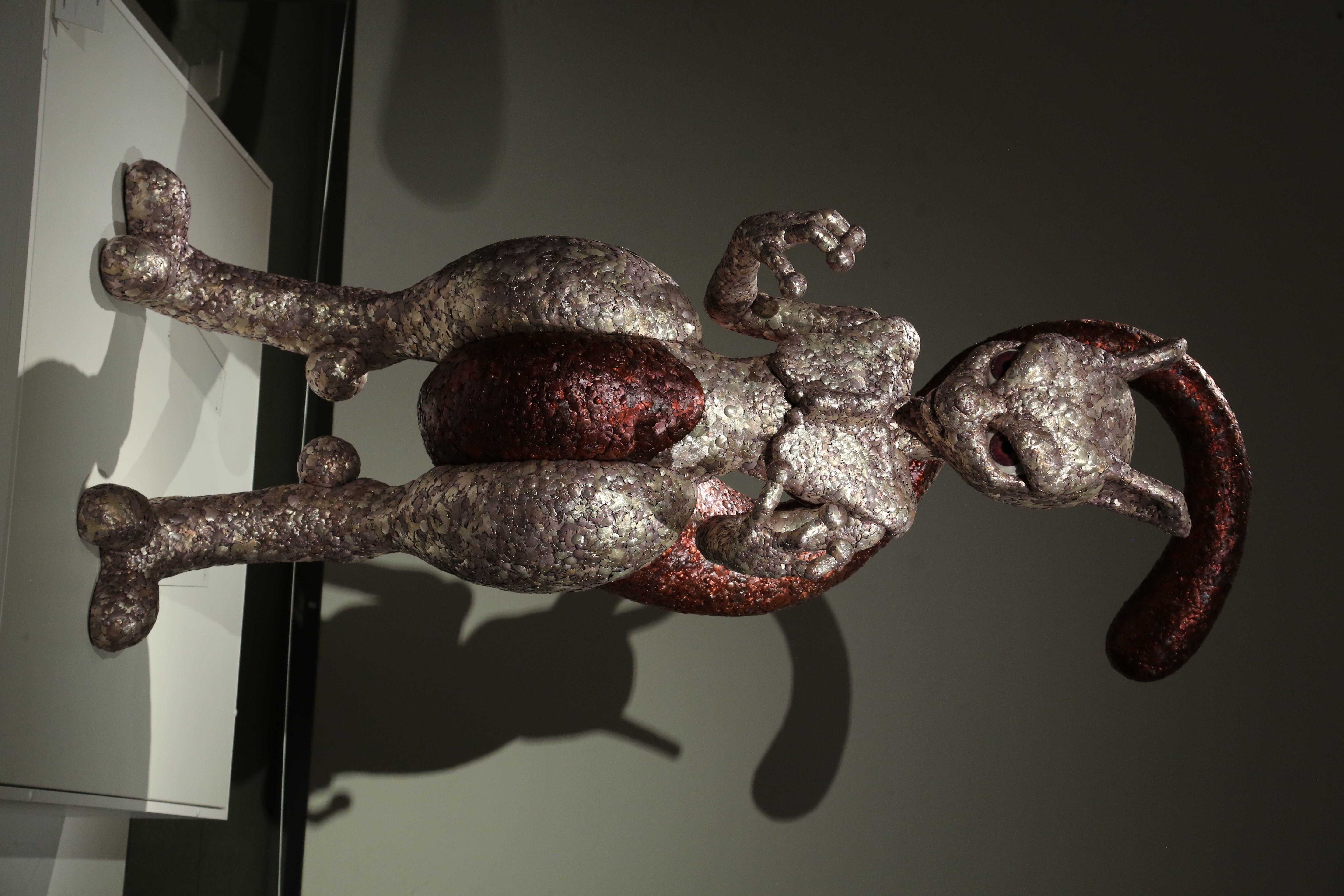
Unlike the smooth, sleek skin we usually see in the anime or games, Ueba’s Mewtwo is covered in a complex, organic metal texture.
Its entire body is crafted with layered metallic encrustations that shimmer with iridescent shades of silver, platinum, and faint violet. This heavily textured surface perfectly reflects Mewtwo’s lore as an “artificial lifeform”—it looks like a creature born from intense chemical reactions, possessing a body harder and more resilient than anything found in nature.
An Ominous Shadow: The Psychic Presence
Take a look at the right side of the photo. Thanks to the precise museum lighting, the sculpture casts a perfectly defined, dark silhouette onto the gallery wall.
In the Pokémon world, Mewtwo’s psychic aura is invisible but heavy enough to distort space. This shadow acts as a brilliant visual representation of that unspoken, terrifying Psychic-type energy. It feels as though the shadow itself has a mind of its own, watching you from the dark.
The Striking Red Contrast
While most of Mewtwo’s body is a shimmering silver-purple, its thick tail and the tube extending from the back of its neck are finished in a deep, textured copper-red glaze. This stark color contrast guides your eyes along the powerful curves of its alien anatomy, highlighting the incredible muscular structure of its thighs and the cold, calculative pose of its hands.
Outro
Seeing this Mewtwo up close in its full vertical glory is a reminder of how powerful contemporary art can be when mixed with pop culture. Ueba didn’t just recreate Mewtwo’s shape; she captured the heavy, tragic, and god-like essence of the character using the unyielding medium of metal.
How does this textured, metallic interpretation of Mewtwo compare to the sleek digital version from the movies? Let me know your thoughts in the comments!