Anchoring the Body in Seaweed Farming
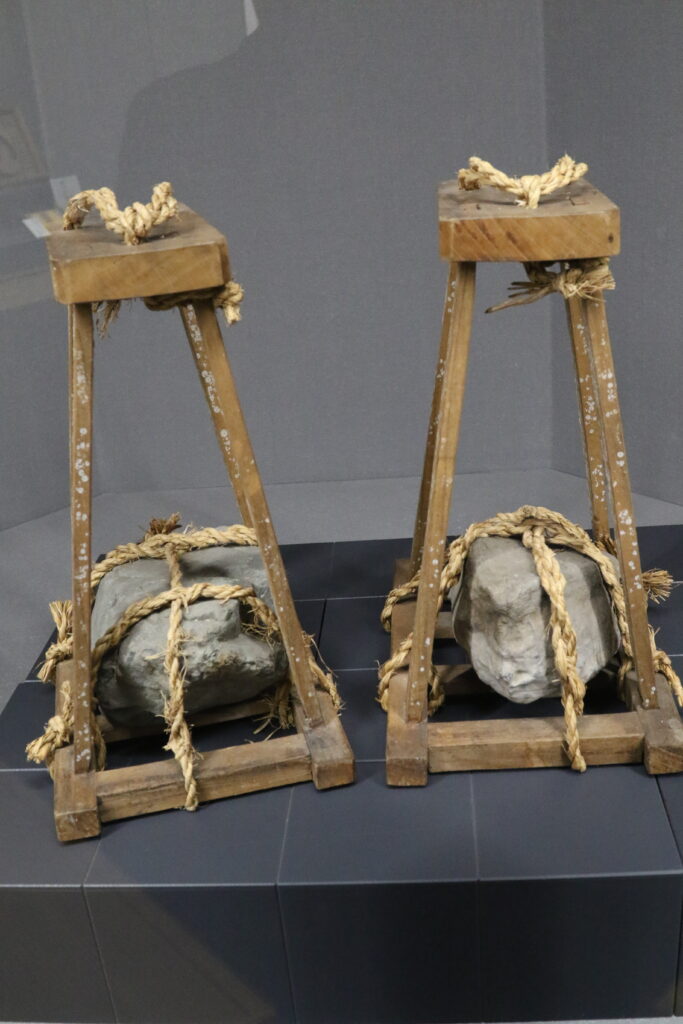
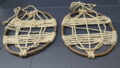
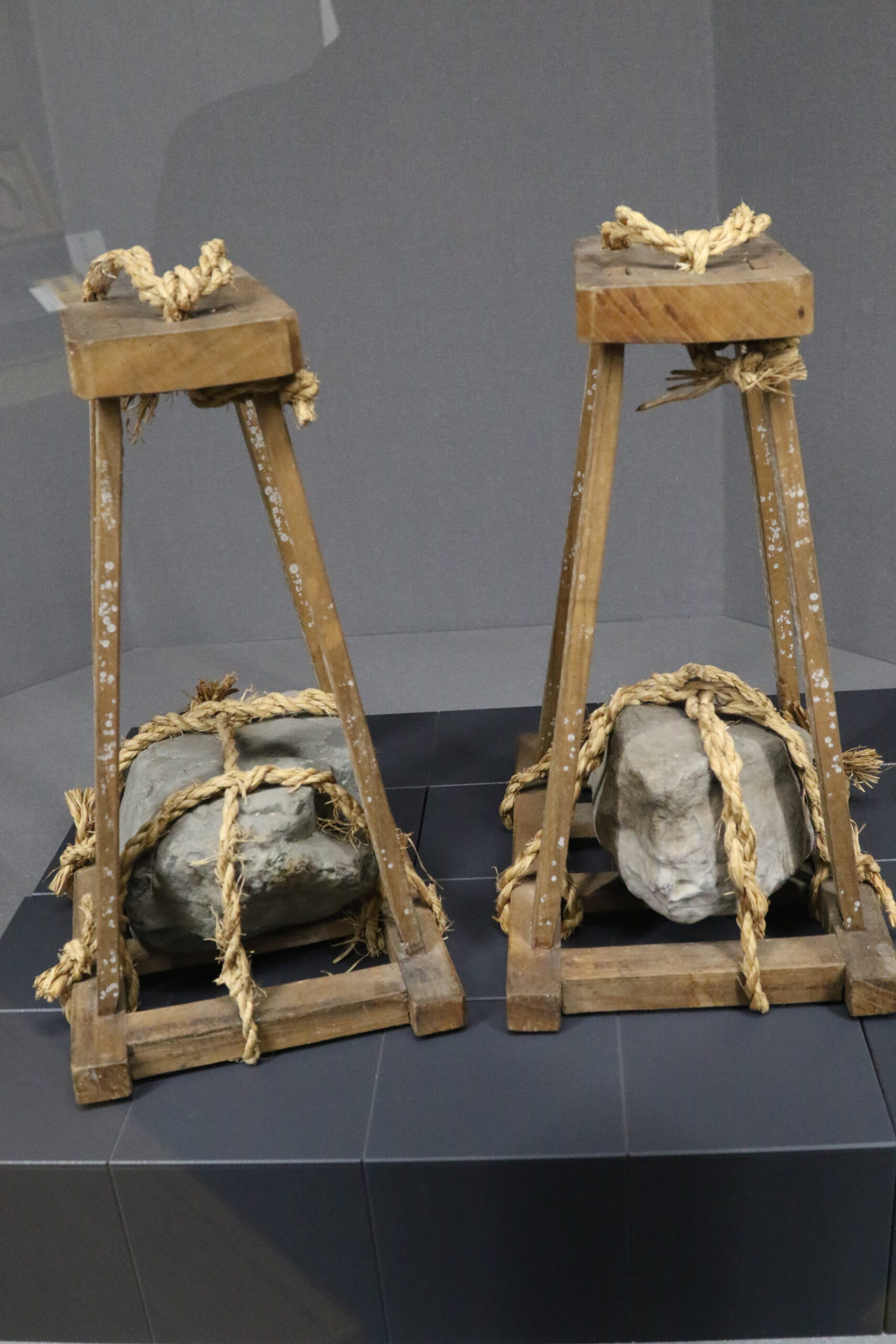
At first glance, these do not look like footwear.
They are wooden frames tied to heavy stones with straw rope.
Yet they were worn on the body.
In seaweed farming along the Japanese coast, workers stood in shallow water for long hours.
The sea floor was uneven. Waves shifted the body. Buoyancy made stable footing difficult.
So instead of lifting the body above the ground,
these devices did the opposite.
They anchored it.
Each frame was strapped to the leg, with a stone fixed below.
The added weight counteracted the upward force of water.
Stability meant productivity. Balance meant survival.
Most footwear is designed to reduce weight, to increase mobility.
These were designed to increase weight.
In this reversal lies a quiet ingenuity.
Japanese craftsmanship is often associated with precision and refinement.
But before “Made in Japan” became a global label,
there were countless local inventions like this —
tools shaped directly by environment and labor.
Straw rope, wood, stone.
Simple materials. Exact purpose.
This is not elegance for display.
It is intelligence under pressure —
where water, work, and the human body meet.
In the footsteps of Japanese life,
even the sea required its own way of standing.
Known as “Nori Geta” (seaweed clogs),
these devices were used in Ōmori, Tokyo,
during the autumn season of seaweed cultivation.
Stones were attached to prevent flotation while standing in shallow coastal waters.
Stability in water required deliberate weight.