Steam rises from freshly cooked soybeans.
They are hot. Soft. Heavy.
And someone must step into them.
Not barefoot.
Wearing thick straw boots.
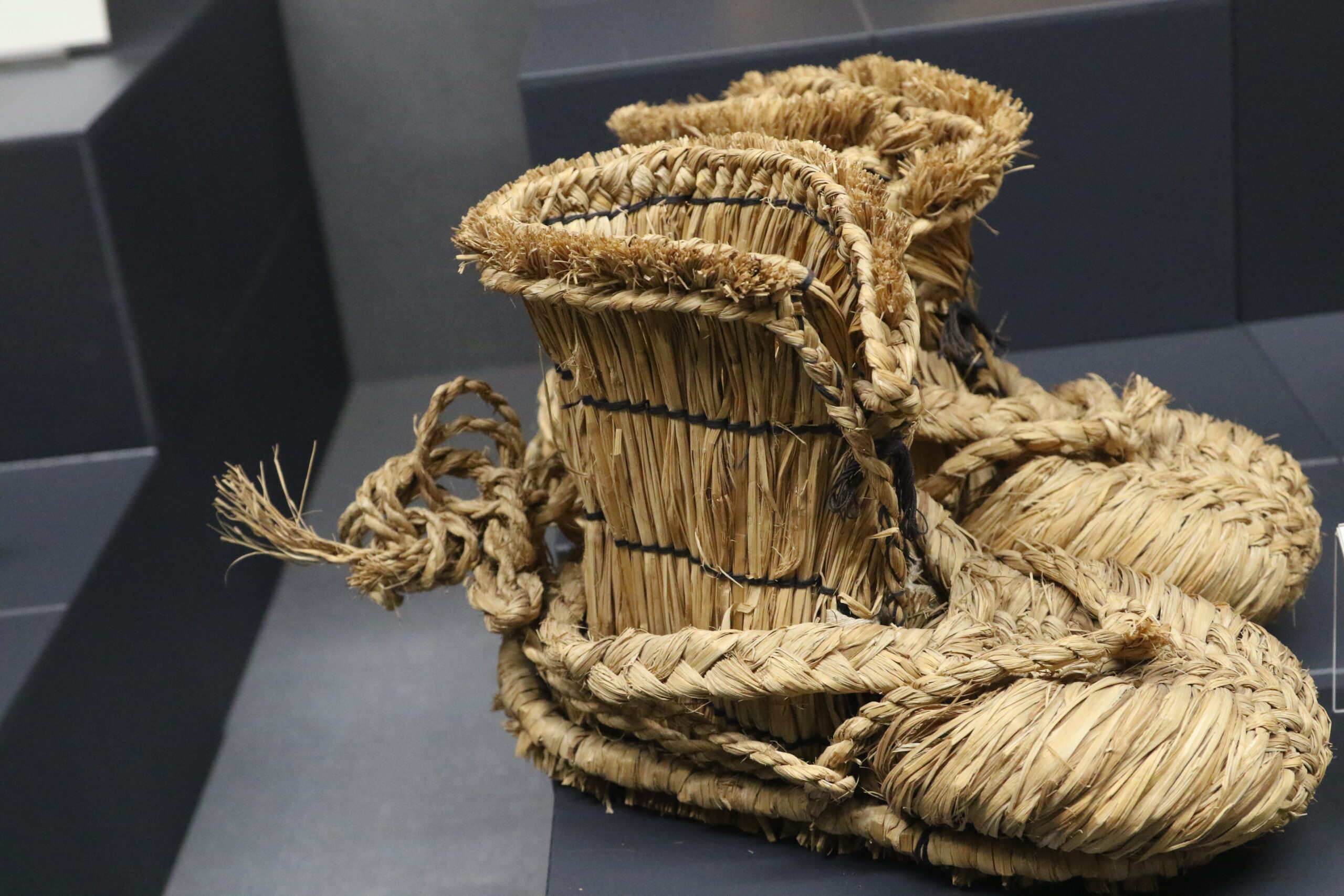
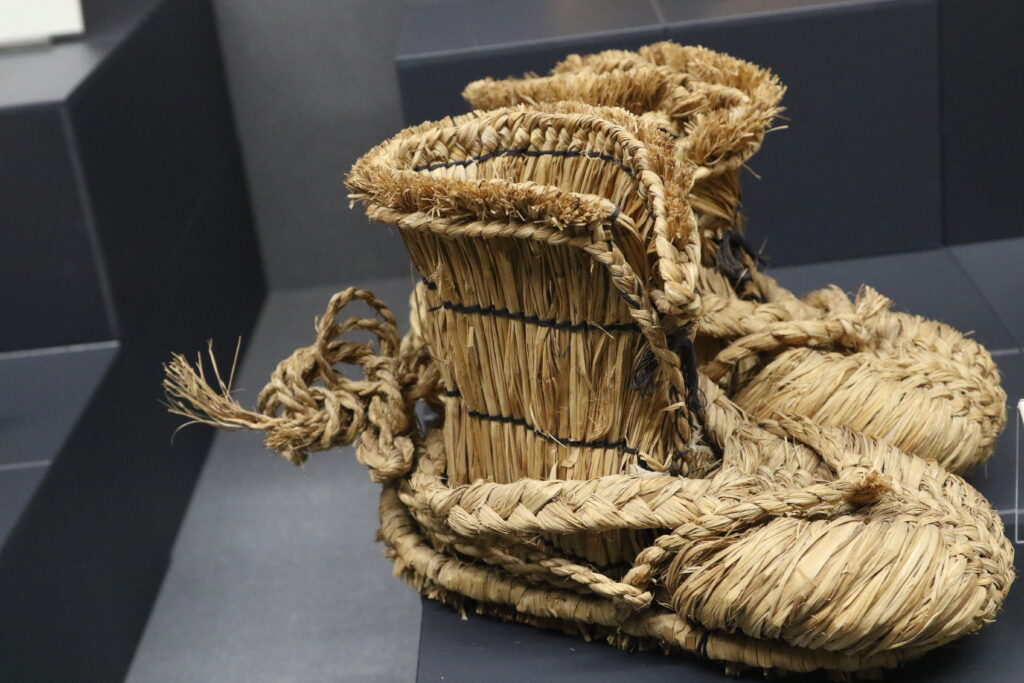
In traditional Japanese miso production, there was a stage where cooked soybeans were crushed by foot. To do this safely and efficiently, producers developed a specialized form of straw footwear known as misofumi-tsumago.
This was not everyday footwear.
This was engineering.
Why Step on Soybeans?
Before mechanical grinders became common, soybeans needed to be broken down into a paste before fermentation.
Hands were inefficient.
Wooden tools could damage texture.
But the human body—using controlled body weight—was ideal.
Stepping allowed:
- Even pressure
- Large batch processing
- Efficient crushing
- Direct tactile feedback
But there was a problem.
The beans were hot.
The Problem of Heat
Freshly cooked soybeans retain significant heat. Stepping directly into them would cause burns.
This is where material intelligence appears.
Straw, when bundled and layered, traps air.
Air is an insulator.
The thick sole of the misofumi-tsumago functioned as thermal protection.
Not through modern foam.
Through compressed plant fiber.
The thickness was deliberate.
The density was calculated by experience.
Too thin — burns.
Too loose — collapse.
Too tight — loss of cushioning.
What we see is trial-and-error refinement across generations.
Anatomy of the Boot
Looking closely at the structure:
- The sole is heavily layered and tightly braided.
- The sidewalls rise high, protecting ankles and lower legs.
- Straw is bound in horizontal bands for structural integrity.
- The interior allows slight compression under weight.
This is not decorative craft.
It is load-bearing architecture for the human foot.
Unlike thin waraji sandals meant for walking, these boots are built for stationary labor under pressure.
The sole is not about mobility.
It is about force distribution.
Friction and Stability
There is another functional detail.
Soybeans, when crushed, become slippery.
The textured straw surface provides friction against the mass of beans.
Bare skin would slide.
Wood would skid.
But straw fibers grip.
In other words, the material choice solves two problems simultaneously:
- Thermal insulation
- Traction control
That is elegant design.
When Footwear Becomes Process
Most shoes exist to protect the foot from the ground.
The misofumi-tsumago does something different.
It allows the foot to become part of a manufacturing process.
Without these boots, stepping safely into hot soybeans at scale would be impractical.
The footwear is not separate from production.
It is embedded within it.
This is a critical distinction.
In industrial systems today, machinery replaces the body. In pre-industrial Japan, the body remained central—but augmented through material innovation.
Straw boots transformed the human foot into a controlled crushing mechanism.
Agricultural Intelligence
It is easy to say, “Japanese people are skillful with their hands.”
But this is not just dexterity.
It is adaptive intelligence.
Rice straw was abundant. After harvest, it remained as byproduct.
Instead of waste, it became:
- Rope
- Sandals
- Rain gear
- Insulation
- And in this case, fermentation footwear
Material culture in rural Japan was deeply cyclical.
The same fields that produced rice also produced the straw that enabled miso production.
Grain and legume were linked not only nutritionally, but materially.
Thick Soles, Thick Knowledge
From a modern perspective, these boots look primitive.
But they are precisely engineered within material constraints.
No rubber.
No synthetic foam.
No factory molds.
Only:
- Straw
- Human experience
- Iterative improvement
The thickness of the sole is knowledge encoded in fiber.
Every layer reflects someone who once stepped into beans that were too hot.
The Body as Tool
In contemporary food production, we prefer separation. Gloves. Machines. Stainless steel.
But historically, the human body was integrated into process.
The foot was not just for walking.
It was:
- A crusher
- A presser
- A mixing instrument
Footwear extended bodily capability.
In that sense, these straw boots are closer to industrial equipment than to fashion.
A Quiet Respect
When we look at misofumi-tsumago today, it is tempting to romanticize them.
But their origin is pragmatic.
They were made because they were necessary.
Still, there is something striking about them.
The thickness.
The density.
The care in binding.
They represent a culture where tools were built from what was available—and refined through use.
Not engineered on drafting tables.
Engineered in fields and kitchens.
More Than Craft
This fourth chapter in our exploration of Japanese footwear reveals something important:
Shoes were not only about walking.
They were about working.
From corn husk sandals shaped by fields, to bamboo footwear shaped by forests, to straw boots shaped by fermentation work, we see a consistent pattern.
Footwear followed life.
Not trend.
Not status.
Life.
And sometimes, life meant stepping into heat.