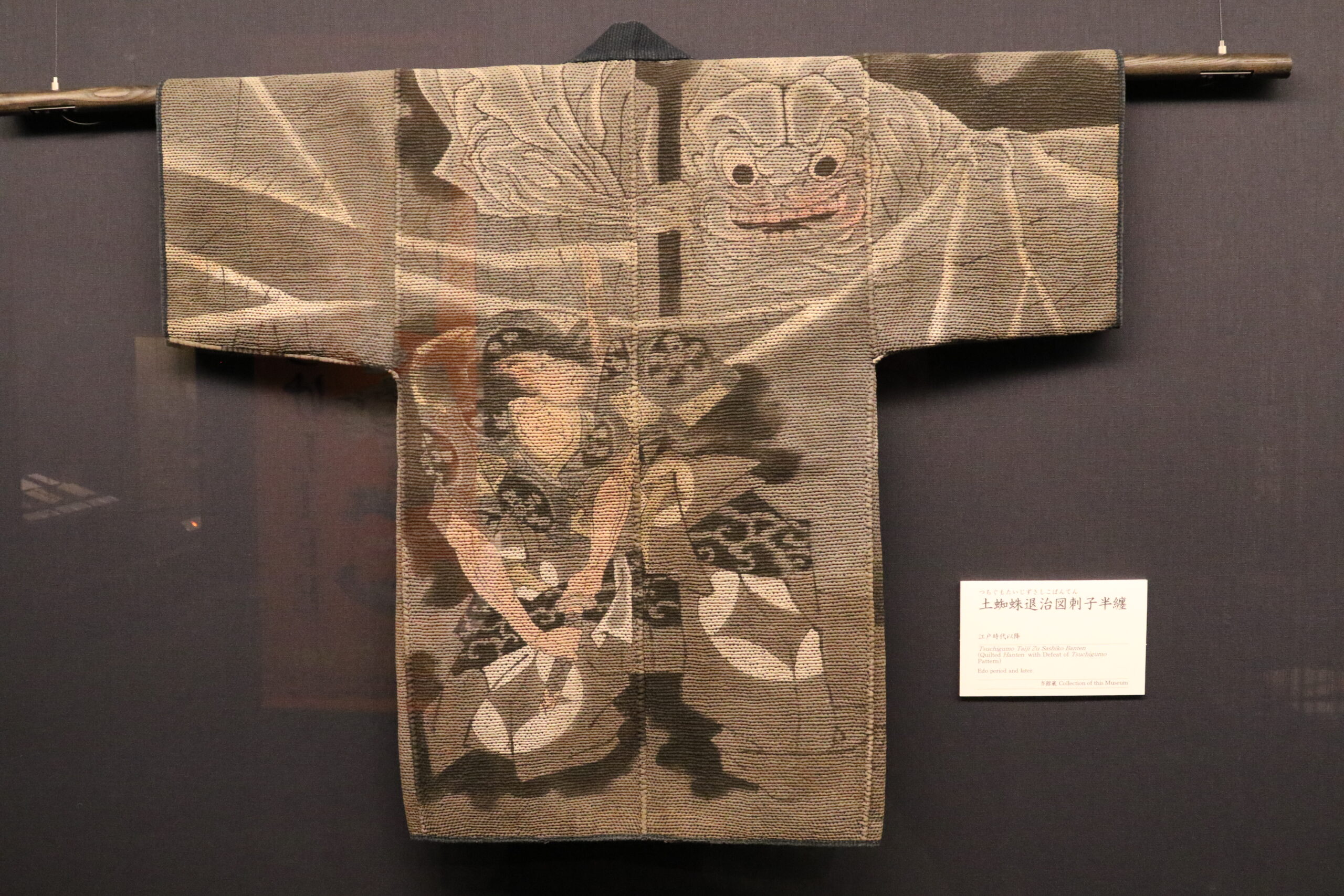
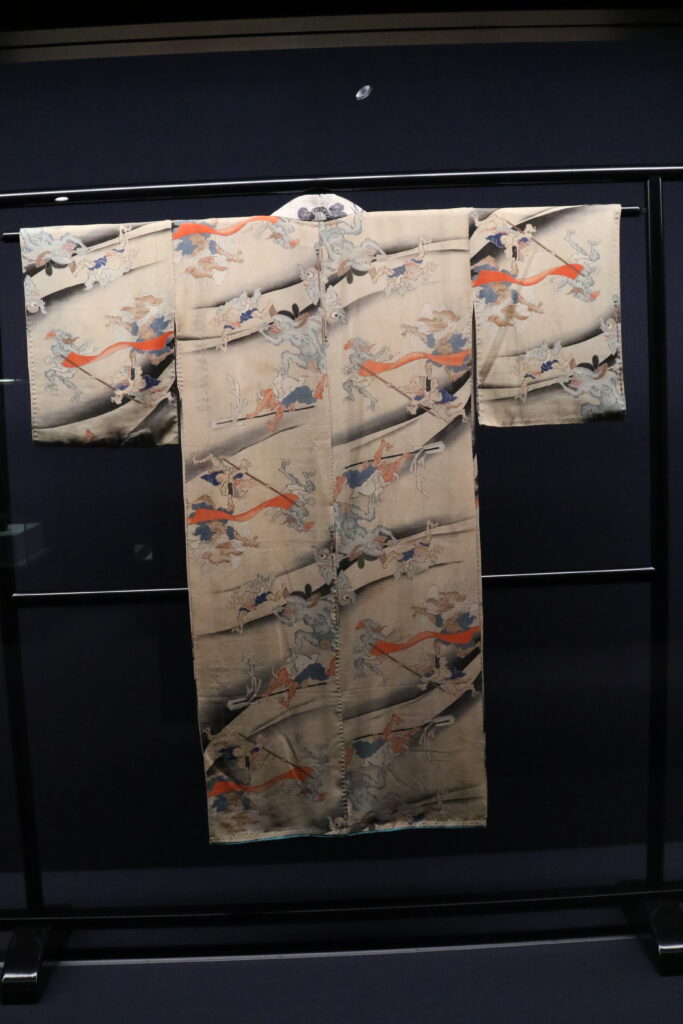
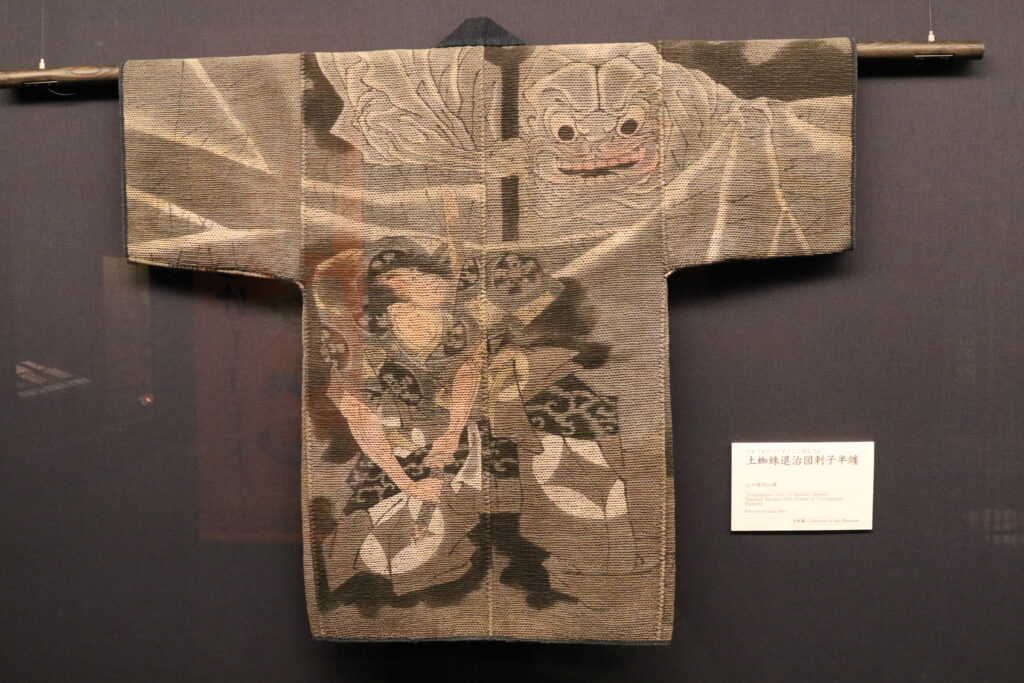
At first glance, kimono decorated with yōkai (Japanese supernatural beings) may look like purely decorative or ceremonial objects. However, in most cases, they were actually made to be worn, not just displayed.
Fashion and Playfulness in Edo-period Japan
During the late Edo period (18th–19th century), yōkai, ghosts, and fantastical creatures became extremely popular motifs in art and popular culture. Rather than being symbols of fear, they were often treated with humor, irony, and wit.
Wearing yōkai imagery allowed people to express:
- A sense of humor
- Cultural literacy and trend awareness
- A playful, slightly rebellious aesthetic
In other words, it was fashion with attitude.
Hidden Designs: A Key Japanese Aesthetic
Importantly, many yōkai designs were not meant to be immediately visible. They often appeared on:
- Kimono linings
- Under-kimono (juban)
- The inside of haori jackets
This reflects a classic Japanese concept: beauty for those who know, not for everyone. The design might only be seen when the wearer moved, removed a layer, or revealed the inside—an understated form of sophistication.
Who Wore These Kimono?
Yōkai-themed kimono were typically worn by:
- Townspeople
- Actors and performers
- Literati and art lovers
They were not formal garments for samurai or official ceremonies. Instead, they were stylish everyday or semi-casual wear.
Were Any Made Only for Display?
Yes, but they were relatively rare. Some pieces were created as:
- Collector’s items
- Textile samples
- Later exhibition or export pieces (especially after the Meiji period)
Many kimono now displayed in museums were originally practical garments that later gained historical and artistic value.
Summary
- Yōkai kimono were not merely for display
- They were wearable fashion with humor and cultural meaning
- Hidden or subtle placement of designs was intentional
- Today’s museum pieces often began life as everyday clothing