When Sandals Were Not Enough
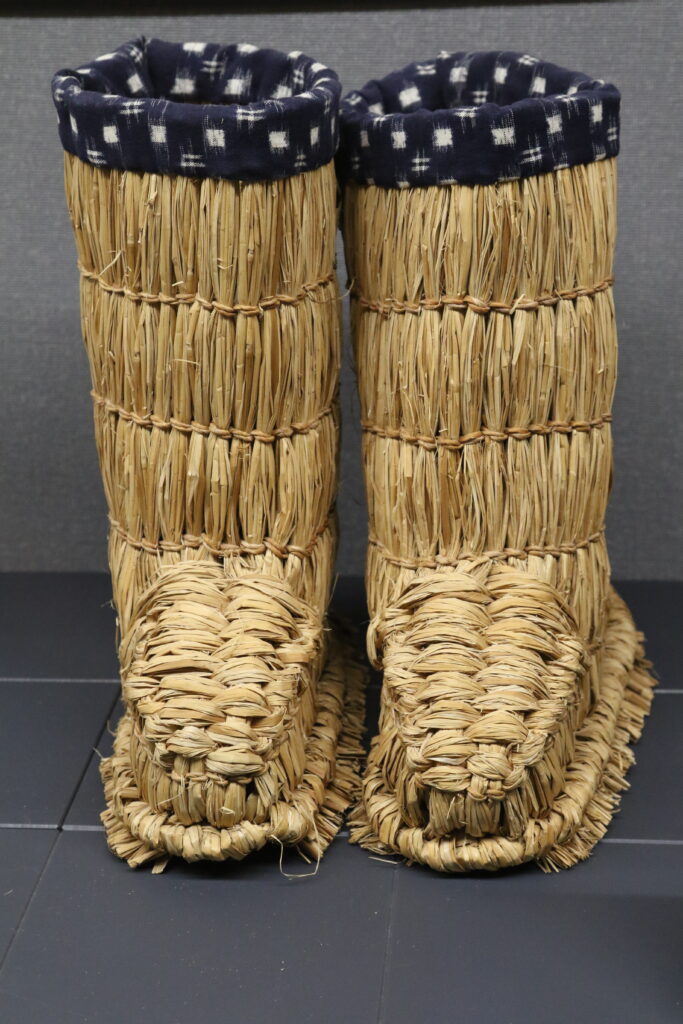
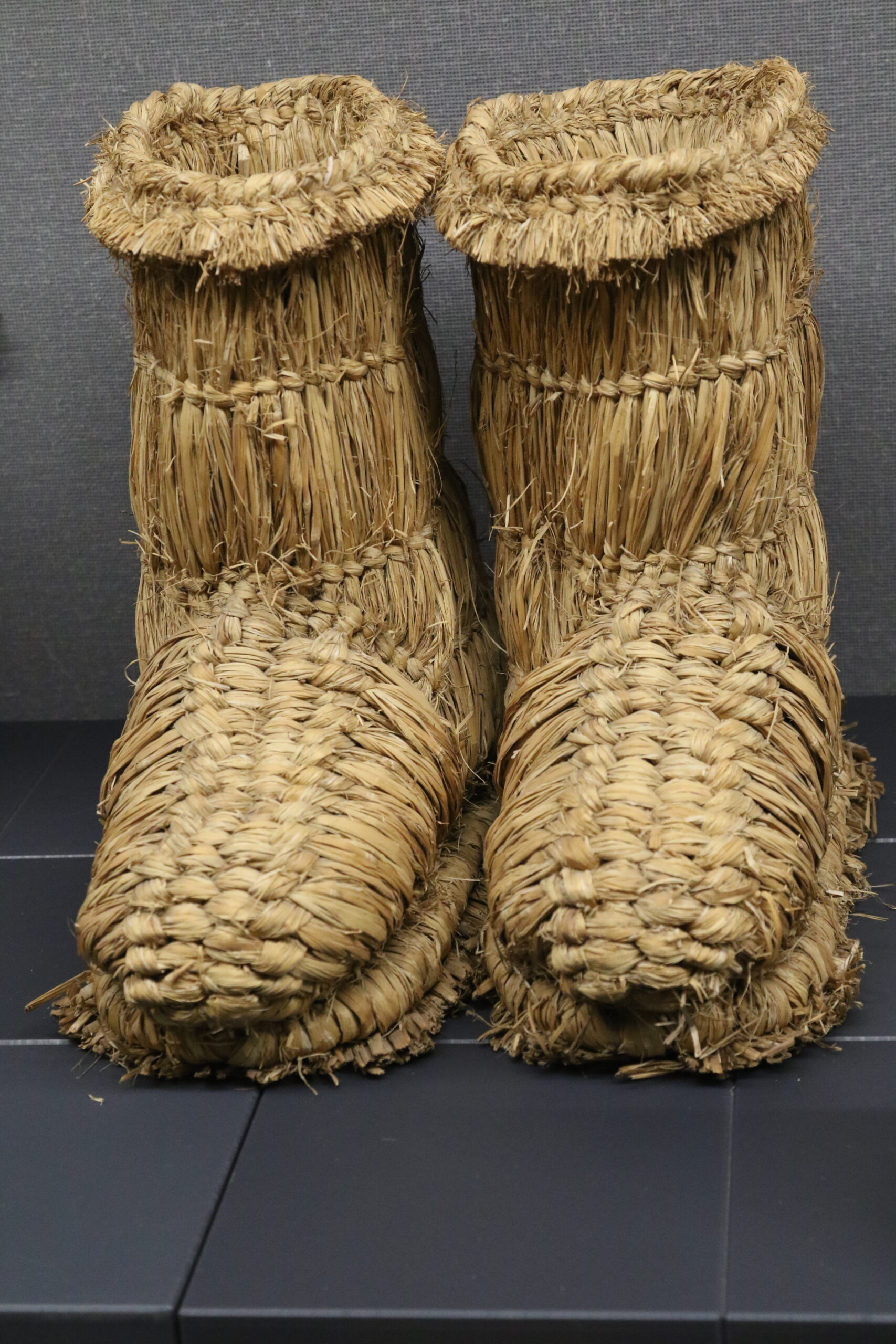
In much of Japan, straw sandals were sufficient for daily life. But in colder regions, especially in the north, winter demanded something more substantial. Snow, freezing temperatures, and long distances made open sandals impractical. Out of this necessity emerged waragutsu—straw boots designed to protect the entire foot.
Unlike flat waraji, these boots extended upward, enclosing the foot and sometimes reaching the ankle. They were thicker, denser, and better suited for insulation. While still made from rice straw, their construction reflected a different climate and a different set of challenges.
Built for Snow and Cold
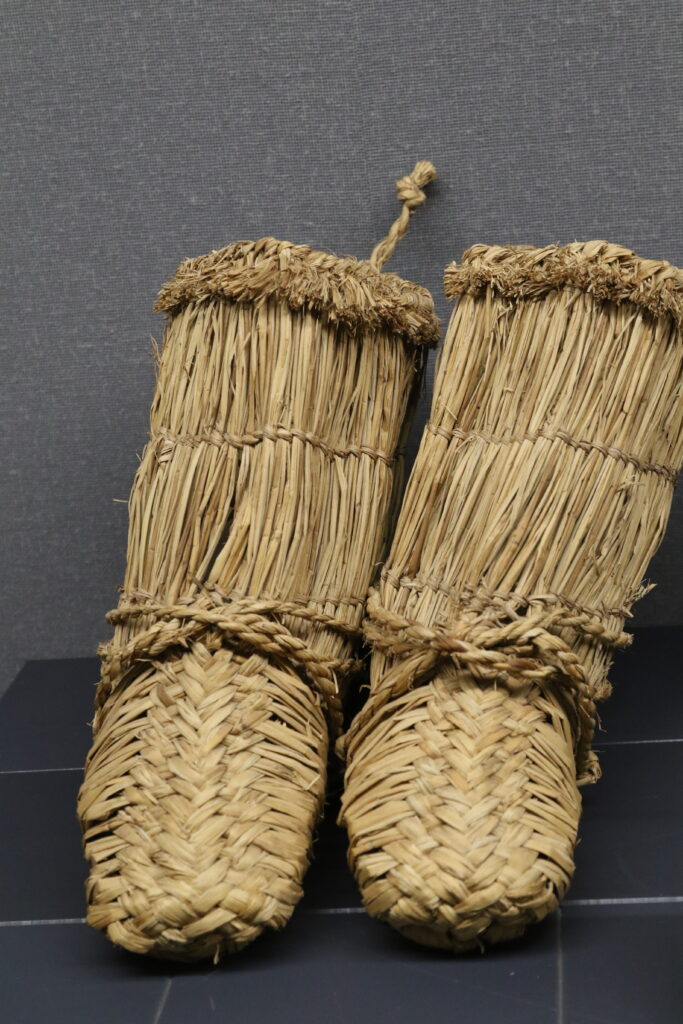
Regions such as northern Honshu experienced heavy snowfall during winter. Walking through snow required both insulation and traction. Waragutsu provided a surprising solution.
The tightly woven layers of straw trapped air, creating natural insulation. Their textured surface gripped packed snow more effectively than smooth leather soles. Though they were not waterproof in the modern sense, they could be dried and repaired with relative ease.
These boots were practical tools. Farmers, laborers, and travelers relied on them when moving through rural landscapes during harsh winters. Like straw sandals, they were replaceable—but they offered significantly more protection.
Climate Shapes Craft
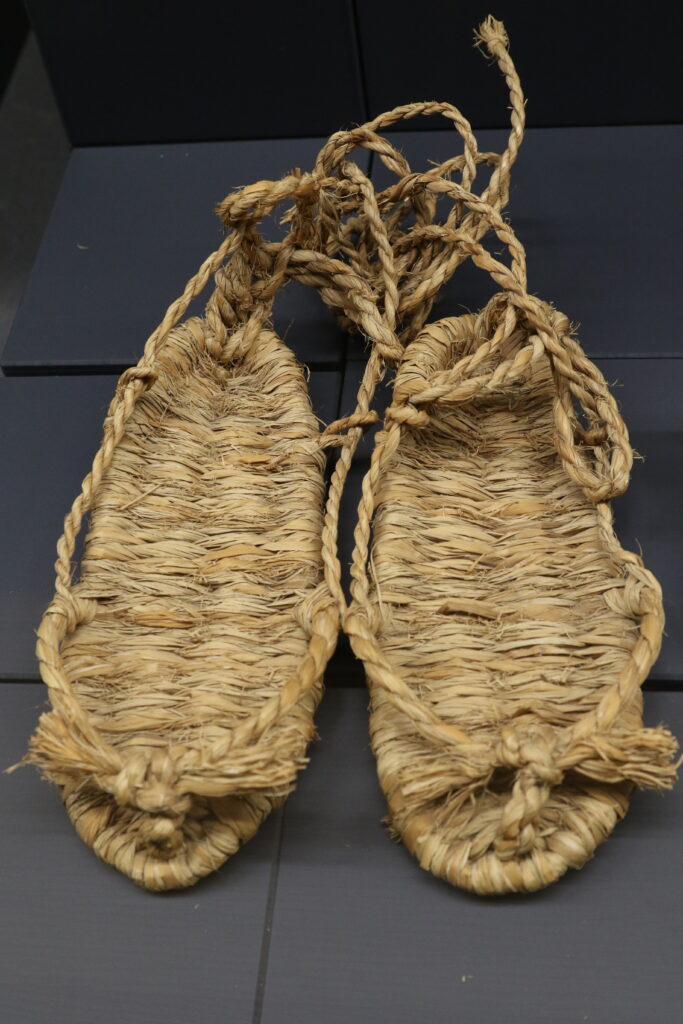
The difference between waraji and waragutsu illustrates how material culture responds directly to environment. Both were made from the same agricultural byproduct, yet their forms diverged according to climate.
In warmer seasons, flexibility and lightness were valued. In winter, coverage and insulation became essential. The transformation from sandal to boot reflects adaptation rather than innovation for its own sake. It shows how communities used what they had—rice straw—to meet the demands of changing seasons.
Before Modern Winter Boots
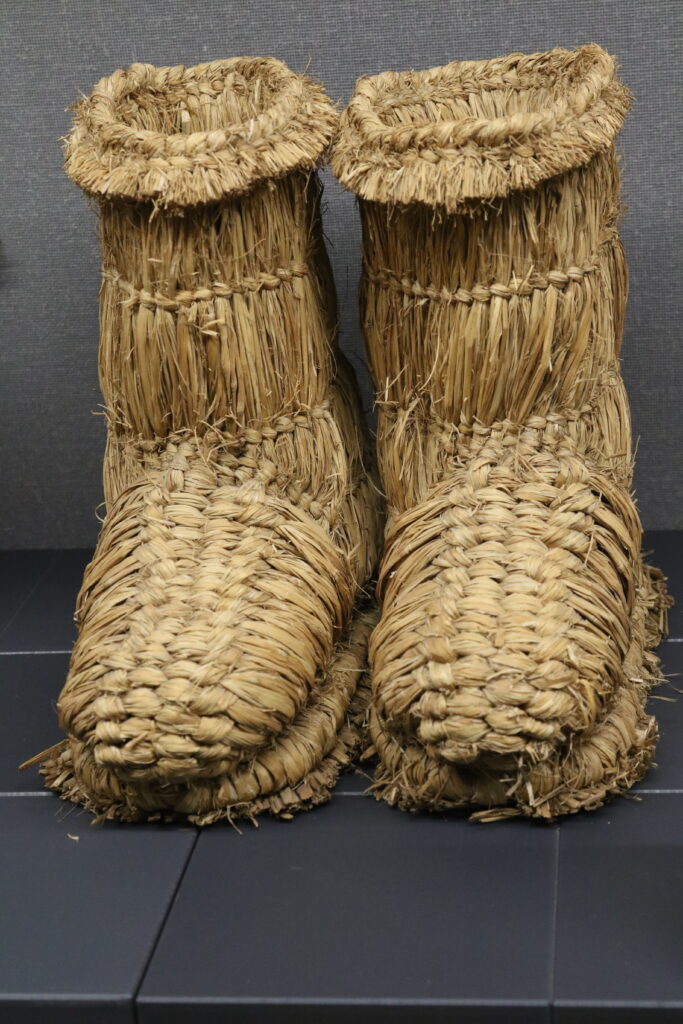
Today, insulated rubber and synthetic boots dominate snowy regions. Yet before industrial materials reshaped daily life, straw performed this role.
Waragutsu may appear fragile to modern eyes, but they represent a deep understanding of local conditions. They were biodegradable, repairable, and made within communities that depended on seasonal cycles.
From open sandals to woven winter boots, straw once carried Japan through every season.