Hiroshima’s Naka Incineration Plant
A Gate Framed in Steel
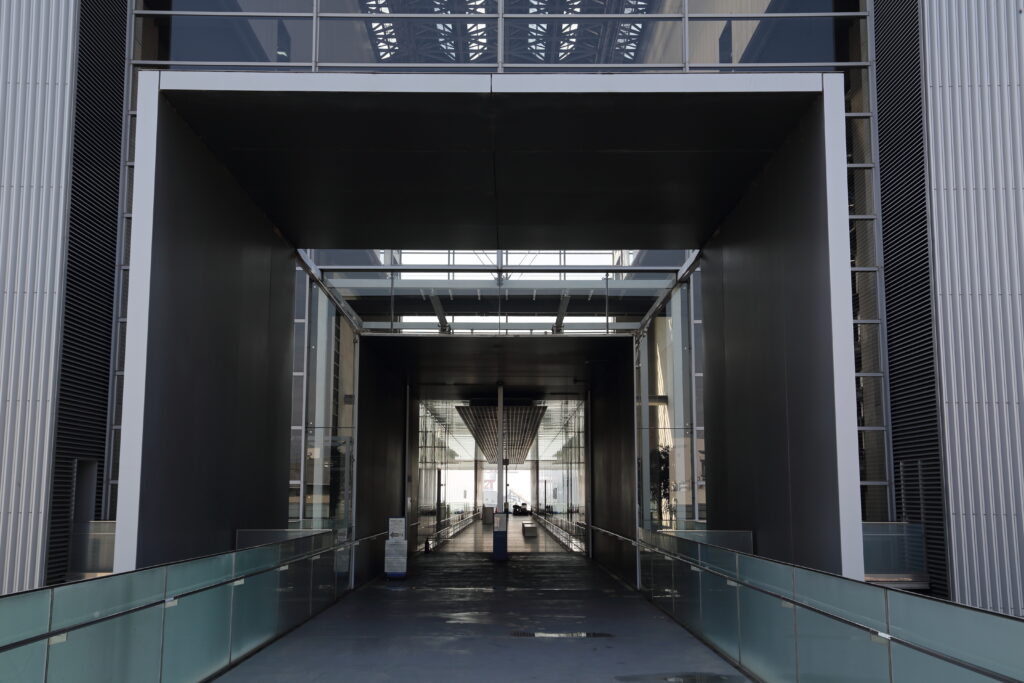
At first glance, it does not look like a waste incineration facility.
The massive rectangular frame rises like a modern torii of steel.
Glass, metal, and perfect symmetry draw the eye toward a vanishing point where light gathers quietly at the far end.
There is no noise.
No smoke.
No sense of urgency.
Instead, there is geometry.
Hiroshima’s Naka Incineration Plant was designed not to hide infrastructure, but to reveal it — as architecture.
The Mechanical Heart
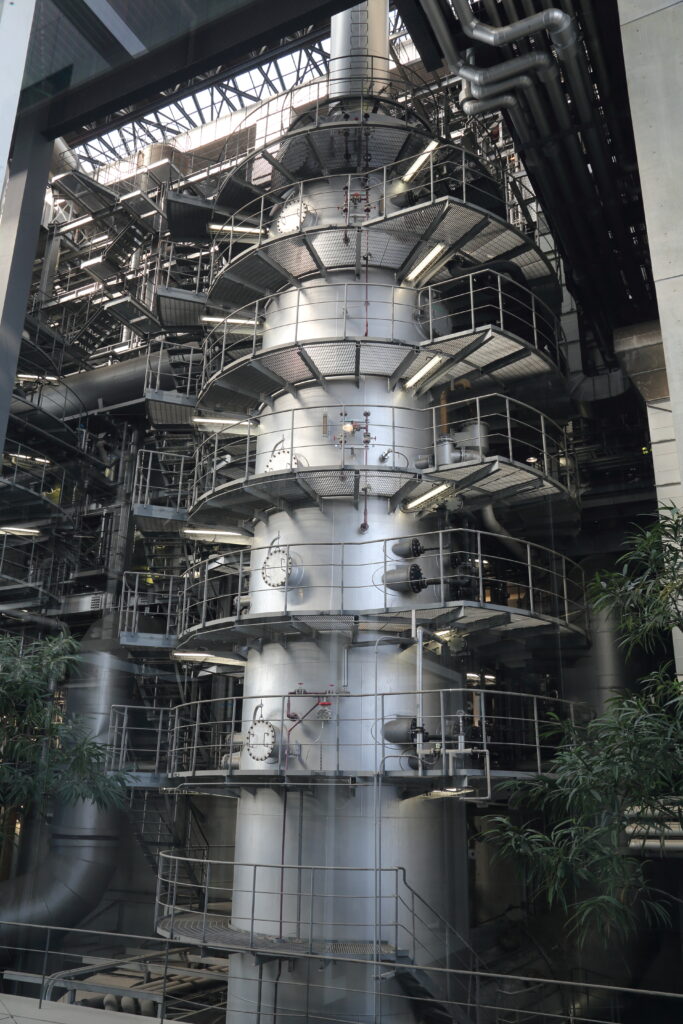
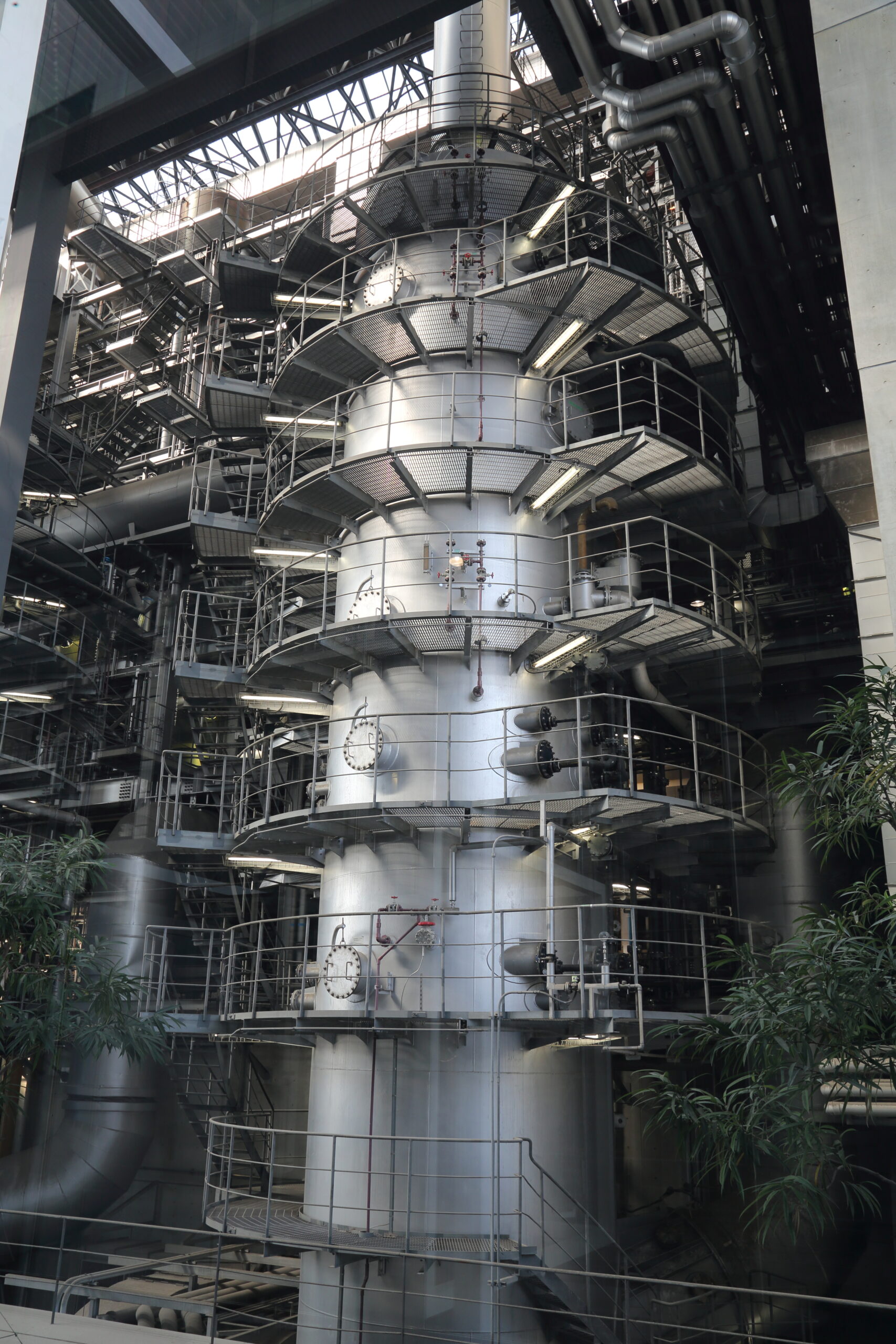
Behind the glass walls stands the plant’s true core.
Layers of circular platforms wrap around a towering steel column — pipes branching like arteries, valves punctuating the surface like controlled pulses.
It feels less like machinery and more like an exposed industrial organism.
Japan does something unusual here:
It allows visitors to see the inside.
Transparency is not decorative.
It is philosophical.
Waste is not hidden.
It is processed openly.
Architecture of Purification
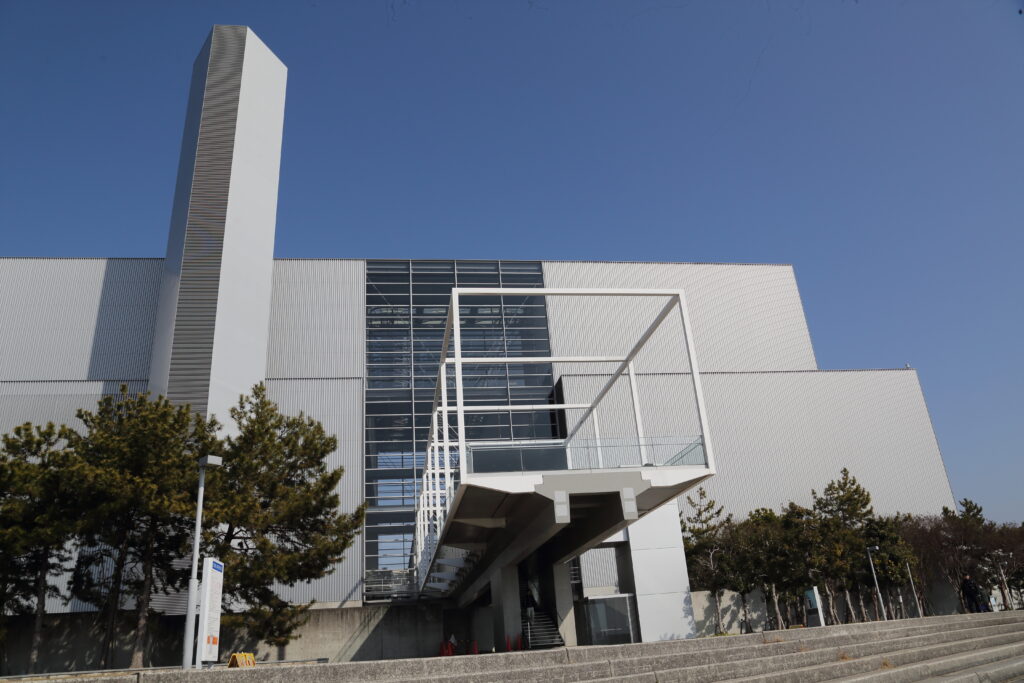
The exterior is strikingly minimal.
White vertical planes, a single tall chimney, and a glass façade that reveals internal structure without apology.
Unlike many industrial plants that try to disappear, this building stands calmly beside the sea — clean, precise, intentional.
The design speaks of control.
Of responsibility.
Of purification rather than disposal.
This is not a factory of smoke.
It is a system of order.
Life Beside the Machine
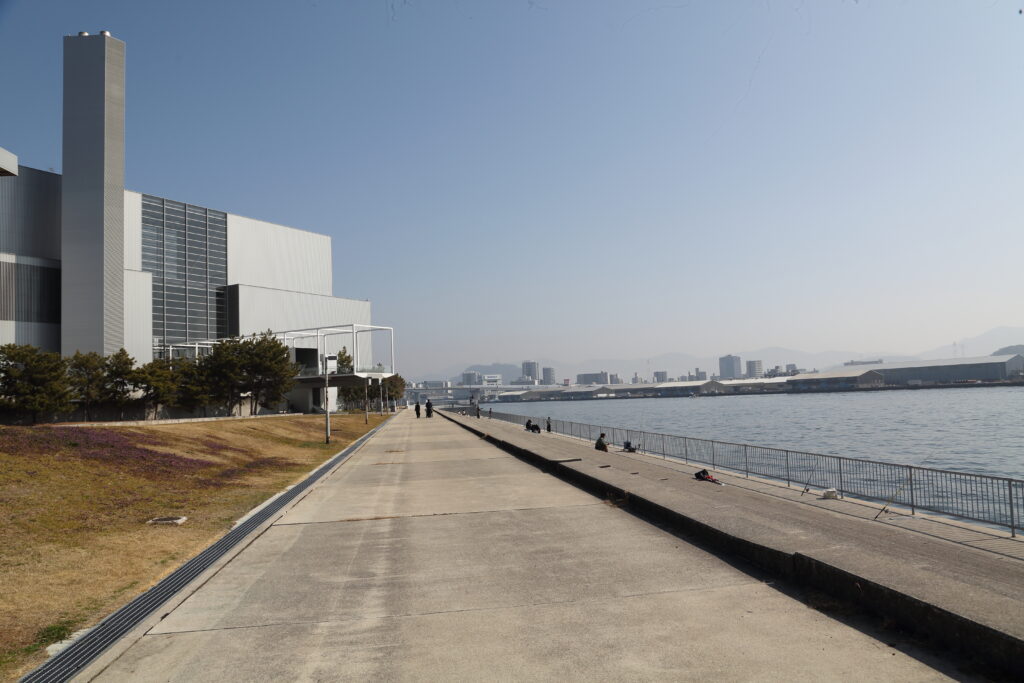
Just steps away from the towering structure, people sit quietly along the waterfront.
Fishing rods lean against the railings.
The sea moves gently.
Conversation is soft.
Industry and daily life exist without friction.
In many countries, waste facilities are pushed to the margins, hidden behind distance and discomfort.
Here, they coexist.
The plant does not dominate the landscape.
It becomes part of it.
Where Steel Meets Silence
There is something distinctly Japanese about this balance.
Precision without aggression.
Power without spectacle.
Function without chaos.
The Naka Incineration Plant feels almost sacred —
not because it is religious,
but because it embodies discipline.
It is a cathedral of steel.
And in its quiet geometry, it tells a story about how a city chooses to live with its own systems — not apart from them.