The Mountain Mother and Her Child
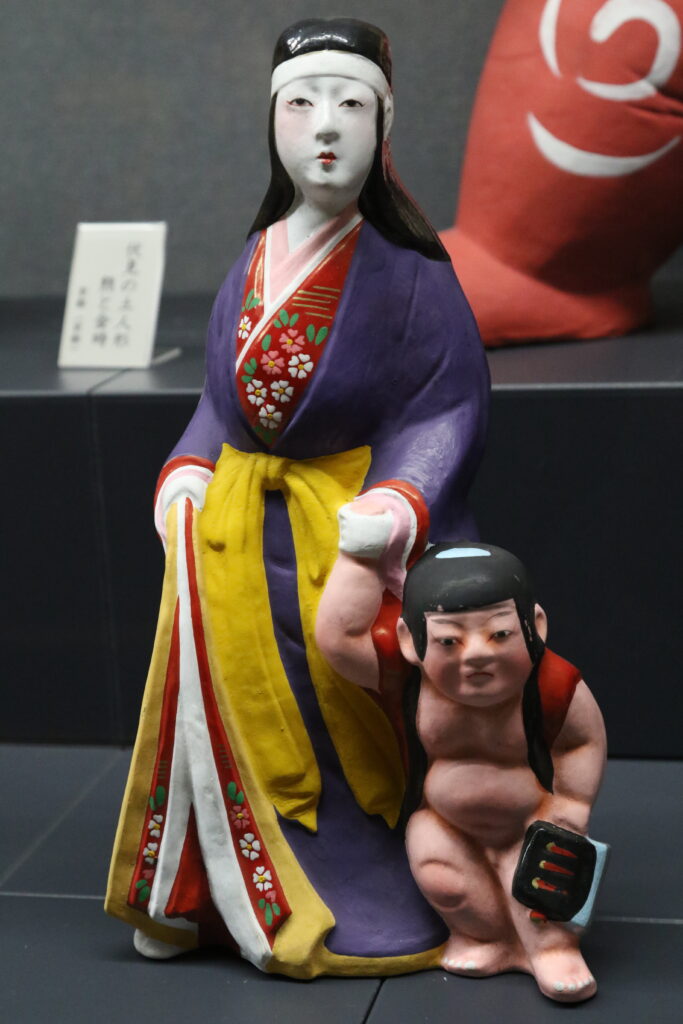
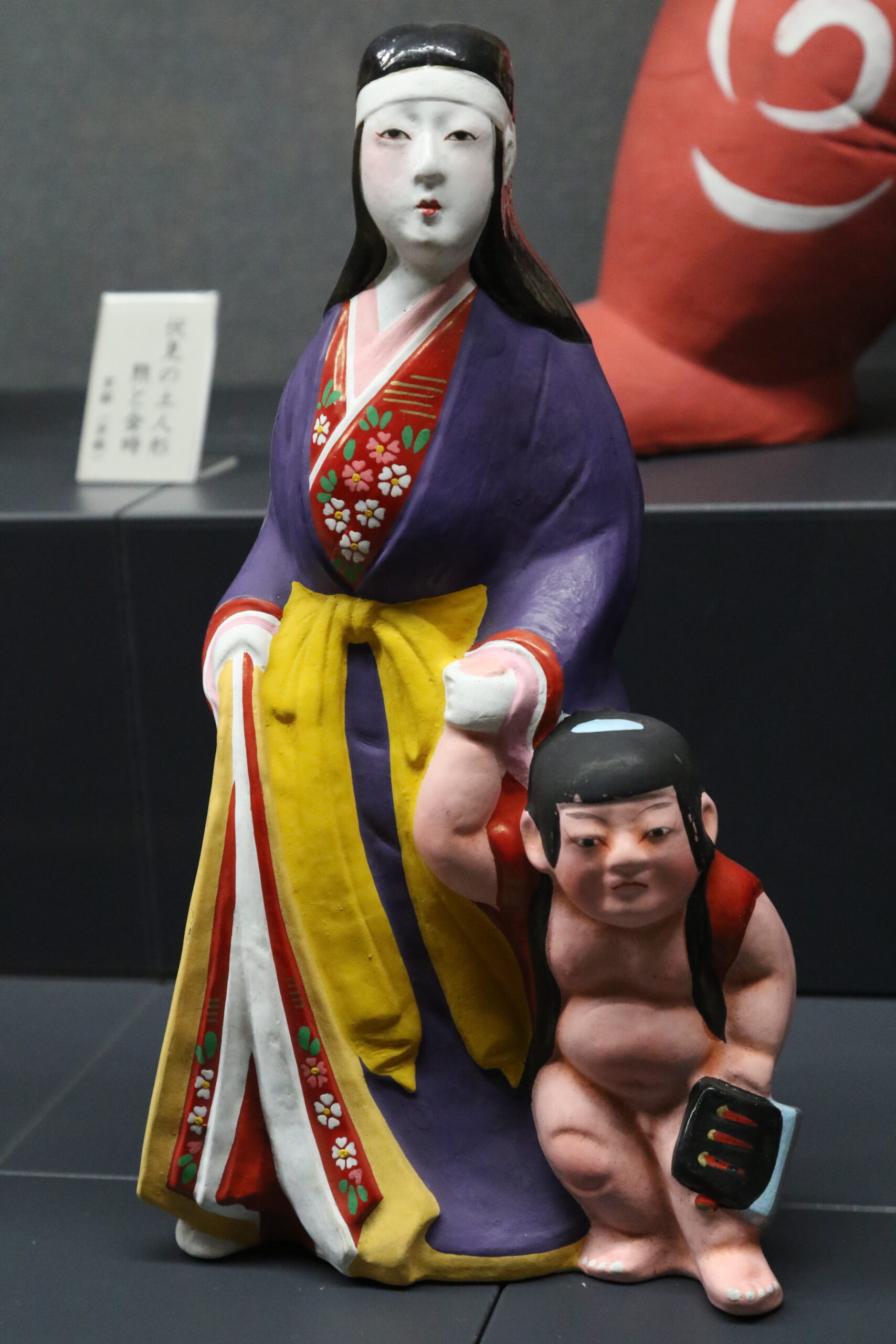
Before Kintaro becomes a hero, he is first a child of the mountains. Raised by a powerful woman of the wild, his strength is not taught by society but born from nature itself.
Why Kintaro Is a Myth, Not a Children’s Story
Kintaro is often introduced as a cheerful strong boy from a Japanese fairy tale.
Yet this familiar image conceals something older, deeper, and far less innocent.
At the beginning of the story, there is no village, no father, and no society.
There is only a mountain—and a mother who lives within it.
This woman, later called Yamanba in folklore, is not presented here as a monster or a witch. She is a figure of origin: a mother of the wild, existing outside human order. In mythological terms, she belongs to the same category as forest mothers, earth goddesses, and liminal women found across cultures—those who stand between nature and humanity.
Kintaro’s extraordinary strength does not come from training or discipline. It emerges naturally, as if the mountain itself flows through his body. The child and the landscape are inseparable. This is a classic mythic pattern: the hero is not raised in society but before it.
Only after this origin is established can the story move forward.
Only then does the child meet the forces of the wild—not as enemies, but as equals.
The Child Who Wrestles the Mountain
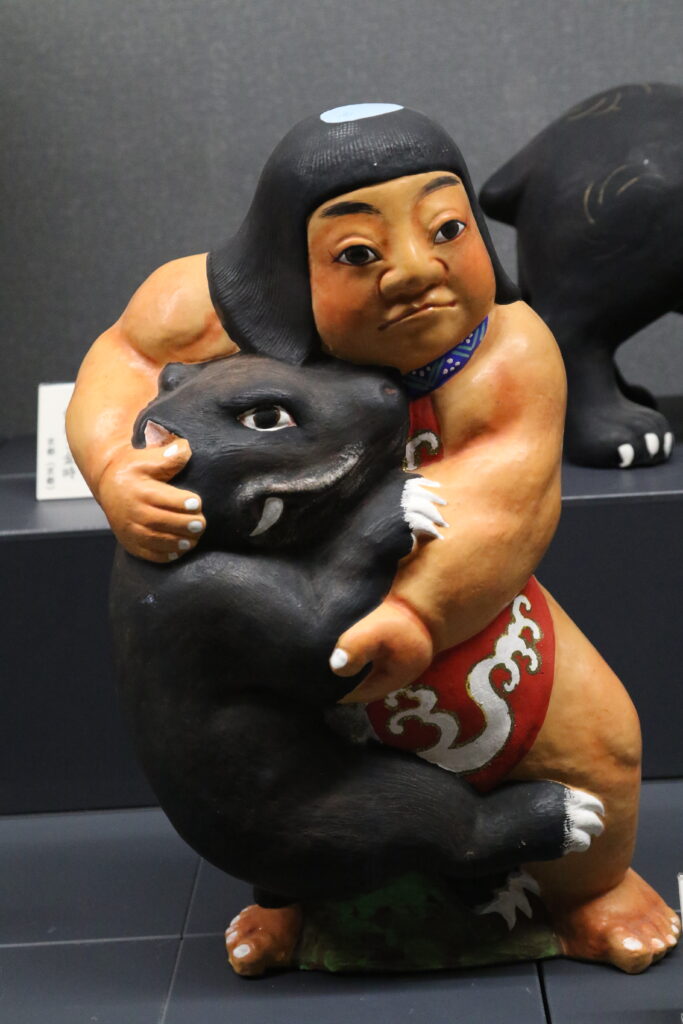
The bear is not an enemy to be defeated, but the living force of the mountain itself. Kintaro does not conquer nature—he meets it as an equal.
After the mother, the story does not move toward human society.
It moves deeper into the mountain.
The bear appears not as a villain, but as a counterpart. In many cultures, the bear embodies the spirit of the wilderness: strength, endurance, and an intelligence older than words. To wrestle a bear is not a test of violence—it is a ritual encounter with nature itself.
What matters here is that Kintaro does not kill the bear.
He plays with it. He grapples with it. He exists alongside it.
This detail is crucial. In myth, heroes who belong to the wild are recognized by the wild. Animals do not fear them. They respond. The mountain answers the child it has raised.
At this stage, Kintaro still carries no weapon. There is no axe, no blade, no symbol of human craft. His strength is entirely his own—raw, unshaped, and inseparable from the land. This is the moment before civilization intervenes.
Only later will tools appear.
Only later will the child be drawn into the human world.
For now, he stands at the threshold:
born of a mountain mother, tested by the mountain’s spirit, still untouched by society.
The Axe Appears
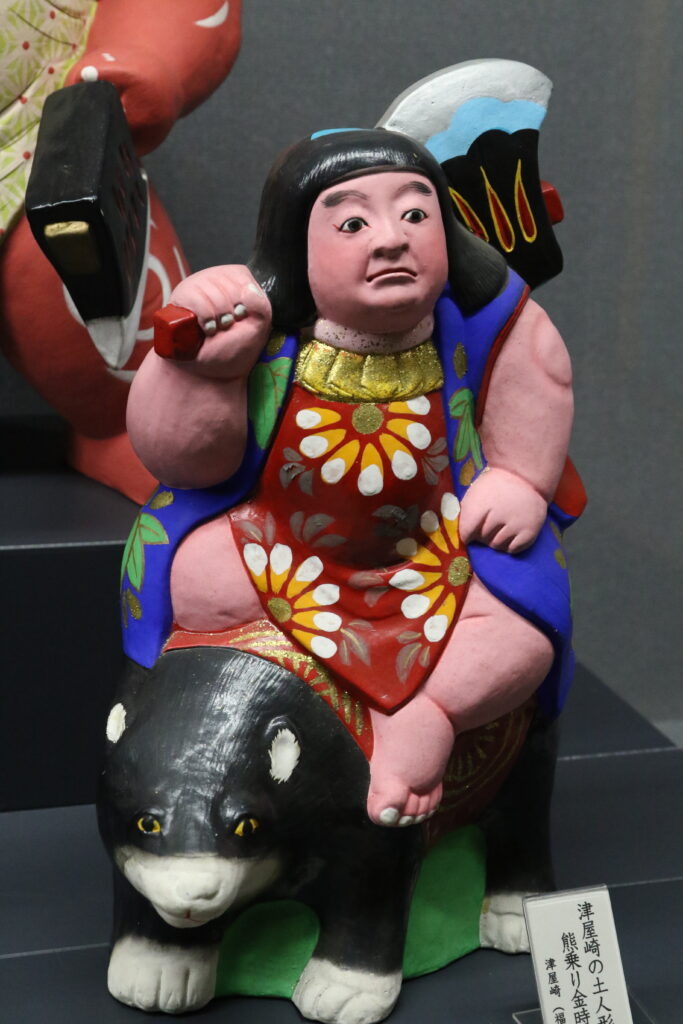
When the axe enters the story, the world changes. Strength alone is no longer enough—power is given form, direction, and purpose.
After the encounter with the bear, something shifts.
The mountain has acknowledged the child.
Nature has tested him—and accepted him.
Only then does the axe appear.
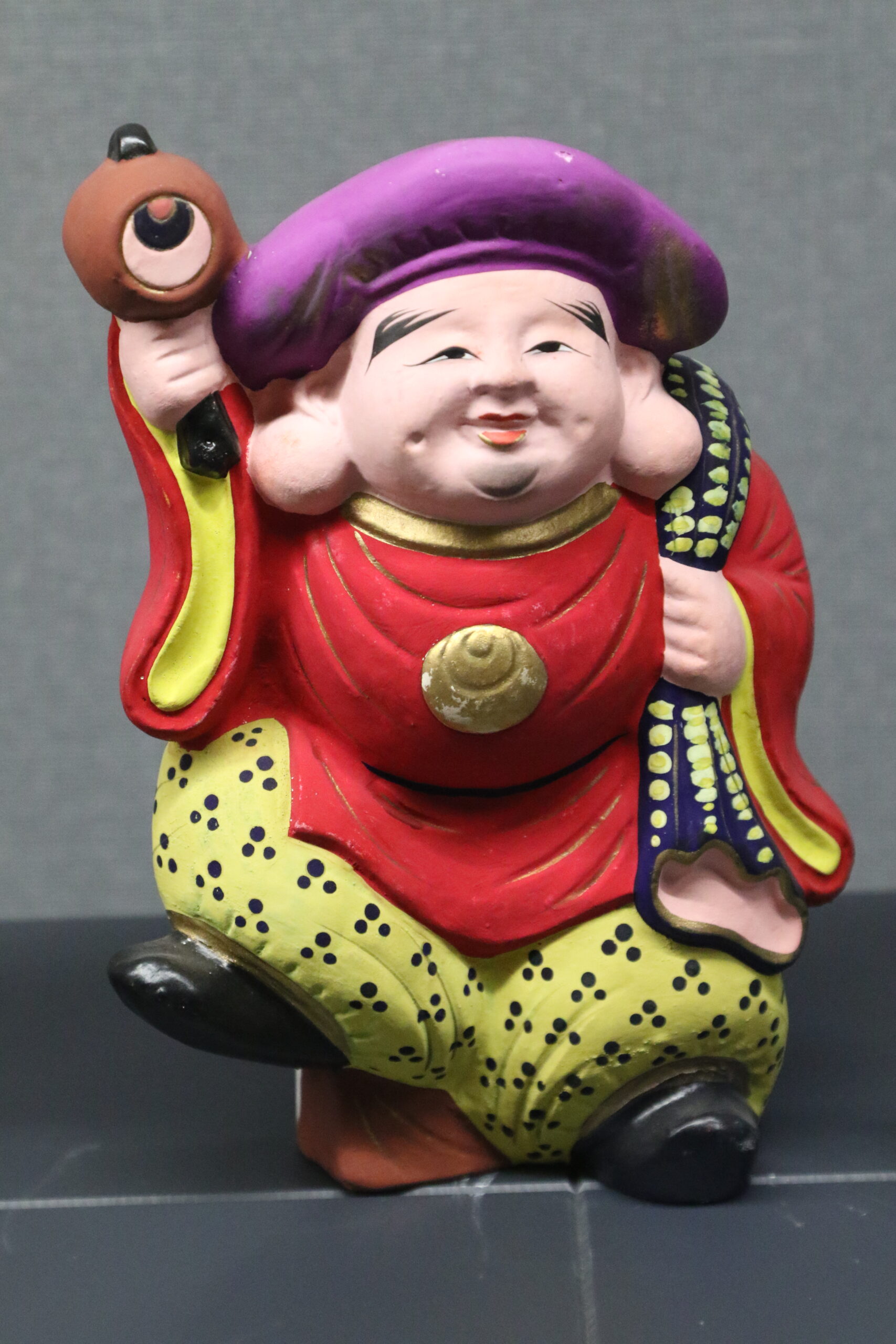
This moment is often overlooked, but it marks a decisive transformation. The axe (masakari) is not merely a tool or a toy. It is the first unmistakably human object in Kintaro’s story. Where bare hands belong to the wild, the axe belongs to intention, labor, and violence restrained by design.
From a mythological perspective, this is the threshold between worlds.
Until now, Kintaro’s strength has been instinctive. He wrestles, he plays, he exists. With the axe, strength becomes directed. It can cut, build, clear paths, and—eventually—serve authority. The child who once grappled with the mountain’s spirit now holds an instrument that allows him to reshape the mountain itself.
This is also the moment when followers appear.
In later tellings, the animals of the mountain—especially the bear—no longer confront Kintaro. They accompany him. What was once a trial becomes allegiance. In mythic language, this signifies recognition: the wild submits not through fear, but through respect.
Yet even here, Kintaro is not fully human.
He still belongs to the mountain.
The axe has not taken him away from it—only prepared him for departure.
The final transformation has not yet occurred.
That comes when strength is no longer tested in play or ritual,
but measured in work.
Strength Put to Work
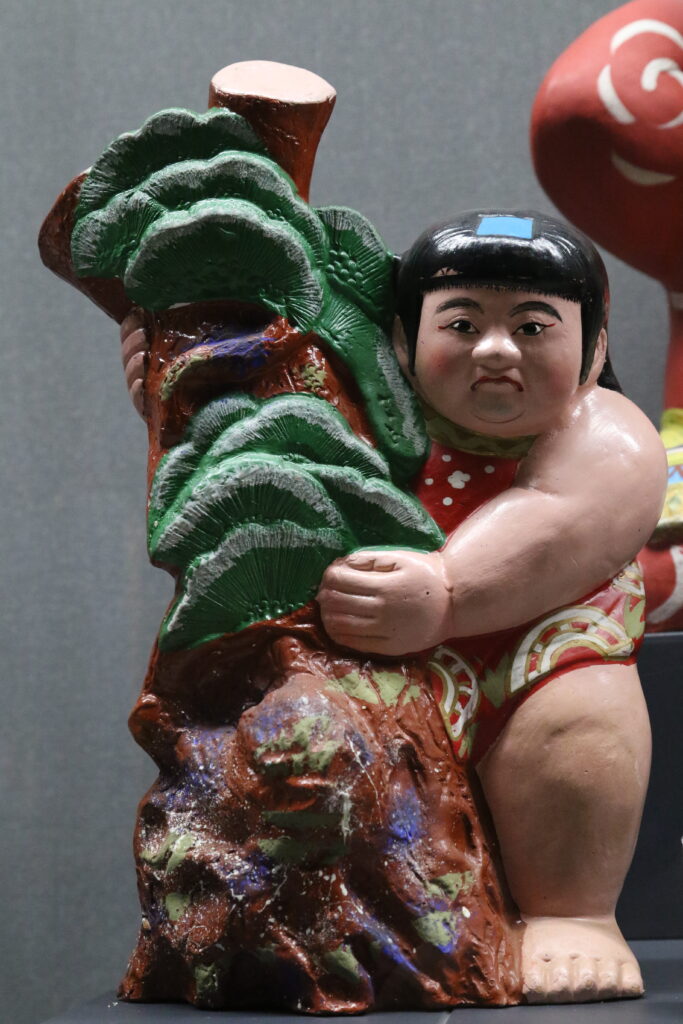
Here, power is no longer a challenge or a symbol. It becomes labor—strength measured, repeated, and absorbed into the human world.
This is the quietest image in the sequence, and the most decisive.
Kintaro is no longer testing himself against the mountain.
He is no longer meeting animals as equals.
He is no longer discovering strength.
He is using it.
Carrying timber is not heroic in the dramatic sense. There is no opponent, no spectacle, no ritualized struggle. Yet in mythic structure, this moment marks completion. Strength that once belonged to nature alone is now translated into work. The wild power of the mountain has become something society can recognize and employ.
This is the final step before departure.
In later stories, Kintaro leaves the mountains, enters human service, and becomes the warrior known as Sakata no Kintoki. But that future is already implied here. Once strength can be measured as labor, it can be commanded. Once it serves work, it can serve authority.
Seen this way, Kintaro’s story is not a children’s fantasy about a strong boy.
It is a myth about origin and transition:
- born outside society,
- tested by nature,
- armed by human intention,
- and finally absorbed into the human order.
At the beginning stood a mountain mother.
At the end stands a figure ready to leave her.
This is why Kintaro endures—not as a fairy tale, but as a myth that explains how raw power becomes human destiny.