A quiet journey through traditional sake brewing
1. Wood Before Steel
(Tradition before efficiency)
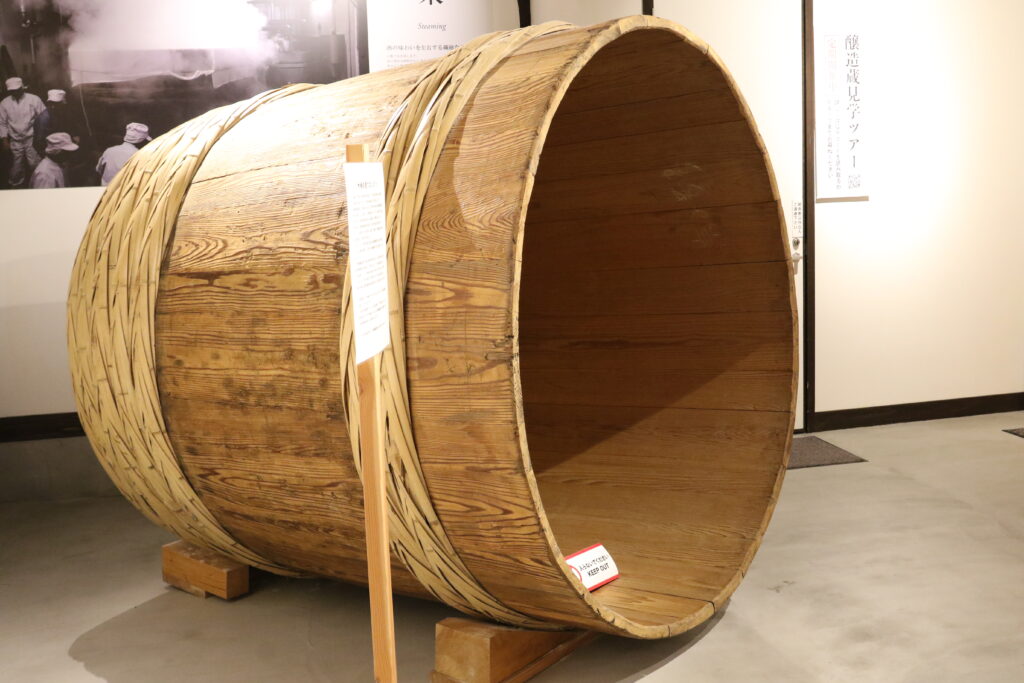
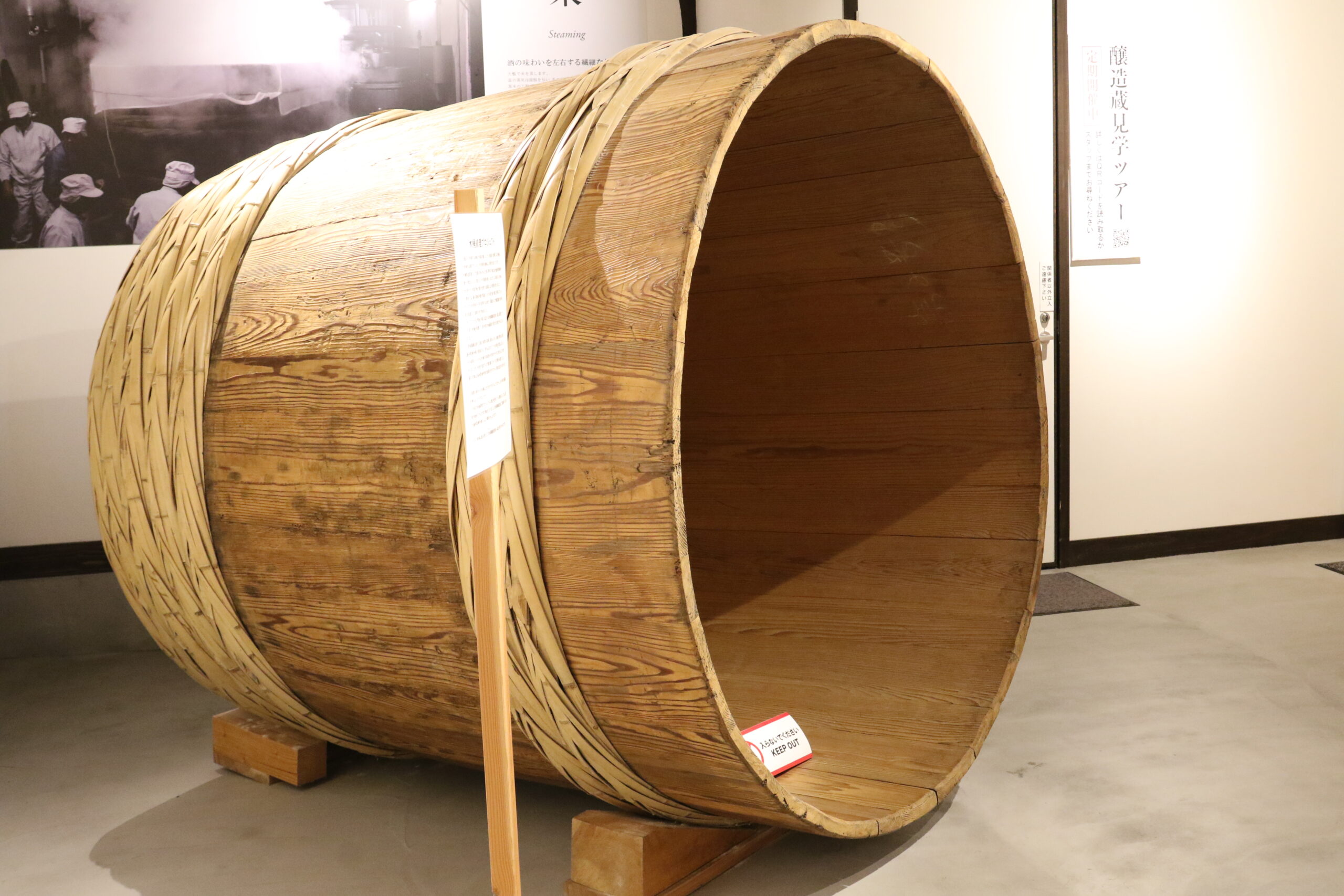
Long before stainless steel tanks became the standard, sake was brewed in wood.
These large wooden vats—assembled without nails and bound only by bamboo—were once the heart of every brewery.
Wood breathes.
It holds memory, temperature, and microorganisms accumulated over decades.
Brewing sake in a wooden vat is slower, less predictable, and far less efficient.
That is precisely why some breweries still choose it.
Today, wooden vats are no longer the norm.
They survive not because they are practical, but because they preserve something that cannot be replaced:
a relationship between time, material, and fermentation.
In this space, sake is not rushed.
It is entrusted.
2. Waiting Is Also a Technique
Fermentation is not dramatic when seen from the outside.
Most of what matters happens quietly, over time.
Bubbles rise, temperatures shift, yeast works invisibly.
Some processes are better experienced in motion rather than frozen in a single frame.
Not everything needs to be shown to be understood.
Here, the role of the brewer is restraint—
to wait, to observe, and to intervene only when necessary.
3. The Moment of Separation
(Joso – Pressing)
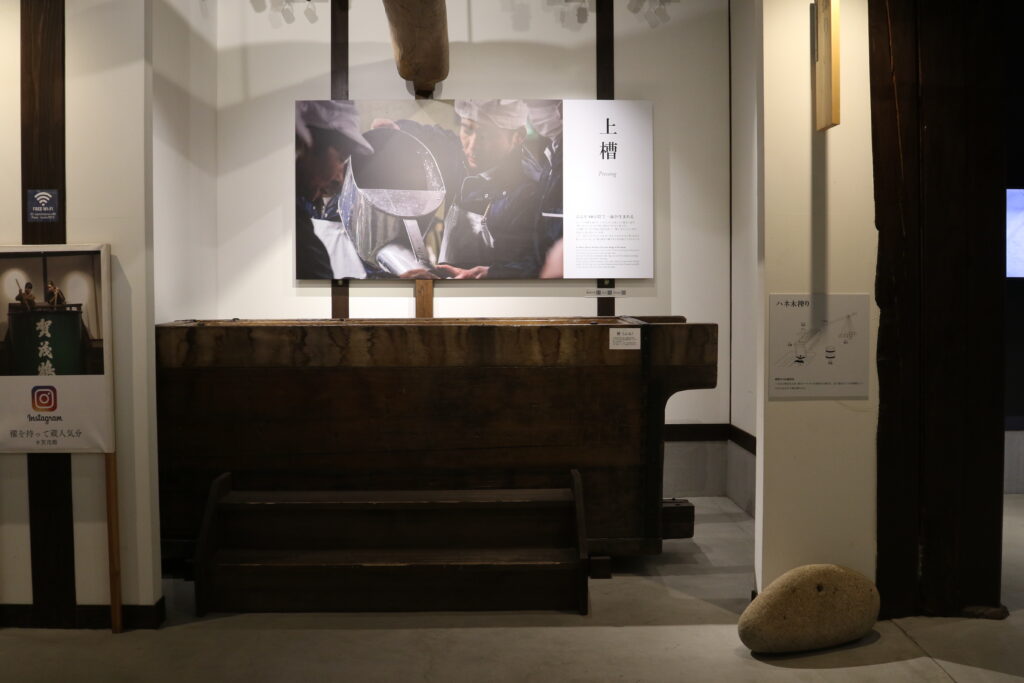
Eventually, waiting ends.
Pressing—joso—is the moment when fermented mash is separated into clear sake and solid lees.
It is one of the few stages where human presence becomes unmistakable.
Hands guide the process.
Timing matters.
Too early, and the sake is thin.
Too late, and balance is lost.
Unlike machines that run automatically, pressing still depends on experience and judgment.
This is where sake stops being a process and becomes a decision.
The liquid that flows out is no longer just fermentation.
It is sake.
4. Where Sake Becomes a Choice
From here, the sake will be adjusted, bottled, and eventually consumed.
But its character has already been shaped—
by wood instead of steel,
by time instead of speed,
by hands instead of automation.
Sake is often described as a drink.
In reality, it is a record.
Of materials.
Of patience.
Of people who know when to act—and when not to.