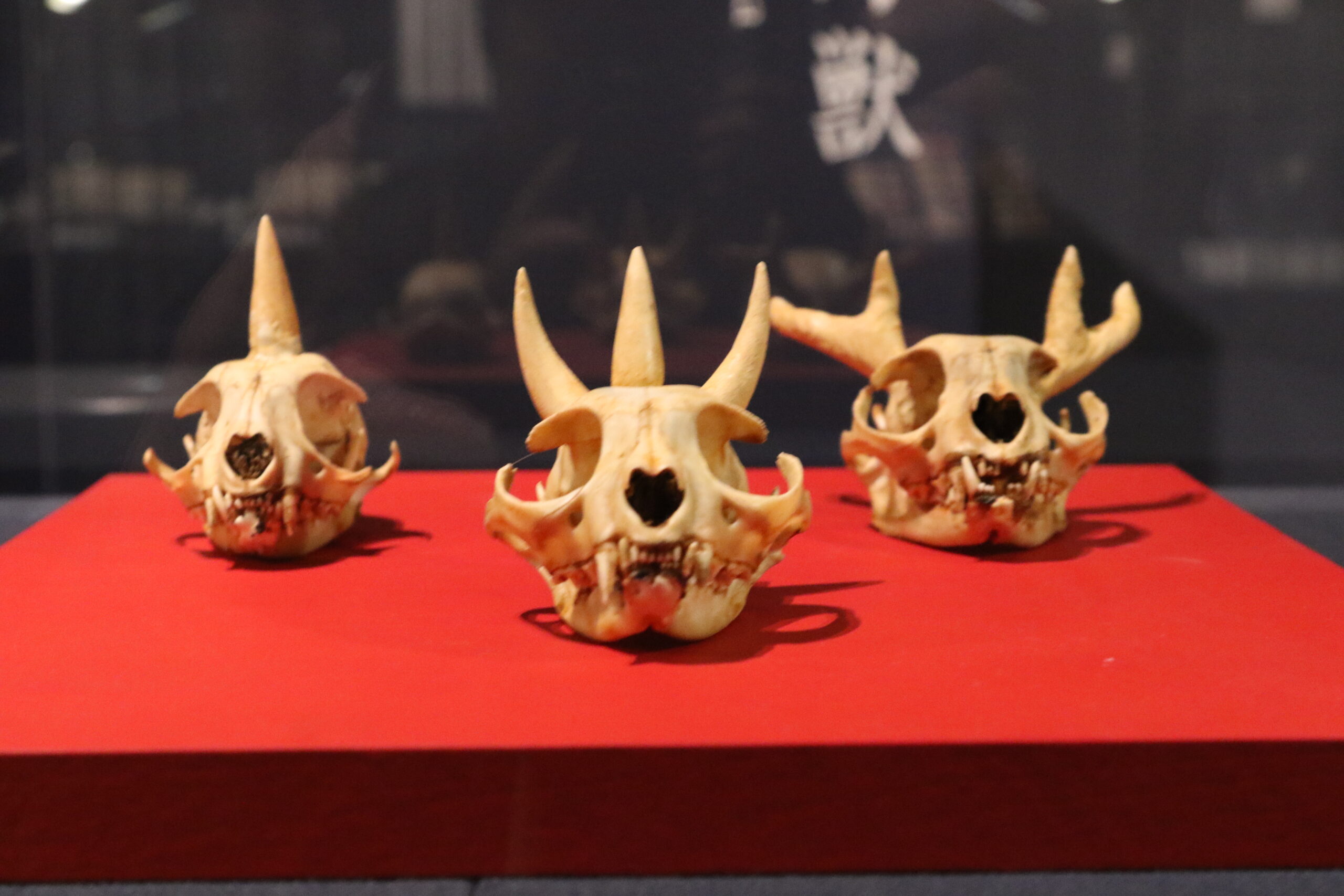
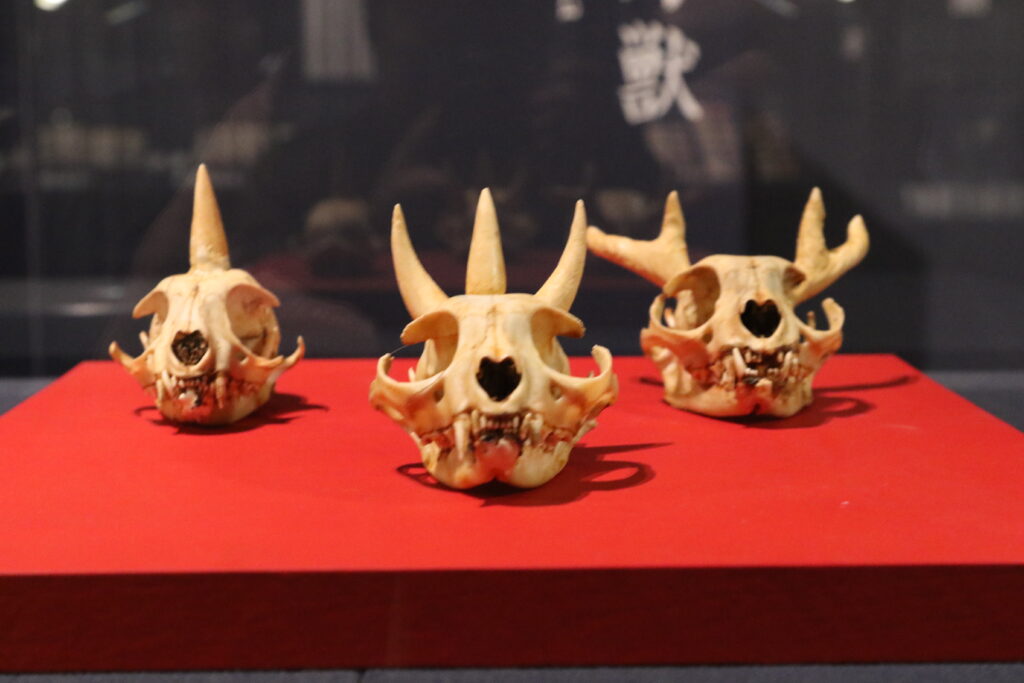
Cat Oni Skulls (Neko-oni)
Edo period and later.
Objects associated with folklore surrounding curses involving cats, reflecting beliefs imported from China and reinterpreted in Japan.
In Japanese folklore, the neko-oni (猫鬼) is a curious and unsettling figure. The name can be read as neko-oni or byōki, and it refers to a supernatural being associated with curses involving cats. While often perceived as a Japanese yokai, the idea itself may have deeper roots in continental Asia—particularly in China, where historical records describe maogui (猫鬼), a form of curse that used cats as spiritual mediums.
In China, cat-based sorcery was believed to cause illness, misfortune, or even death. The fear of such practices became widespread enough that entire families could be accused and punished. When these ideas reached Japan, they did not remain unchanged. Instead, they merged with local beliefs, giving birth to uniquely Japanese interpretations of the curse—less political, more symbolic, and deeply tied to moral consequence.
One of the most iconic images of Japanese cursing is the wara ningyō, a straw doll nailed to a sacred tree. While curses exist in many cultures, this ritualized form appears to be distinctly Japanese. It externalizes hatred into a visible act, performed in silence, often at night, under the watch of the gods.
Yet Japanese culture never treats cursing lightly. A well-known proverb warns:
“If you curse someone, dig two graves.”
(Hito o norowaba ana futatsu.)
The meaning is clear: a curse never travels in only one direction. To wish harm upon another is to invite ruin upon oneself. In this sense, the neko-oni is not merely a monster, but a mirror—reflecting human resentment, fear, and the price of malice.
Perhaps that is why cat skulls with horns, preserved and displayed today, feel less like evidence of dark magic and more like reminders. They tell us that folklore is not only about monsters, but about the emotions that create them—and the consequences we choose to ignore.