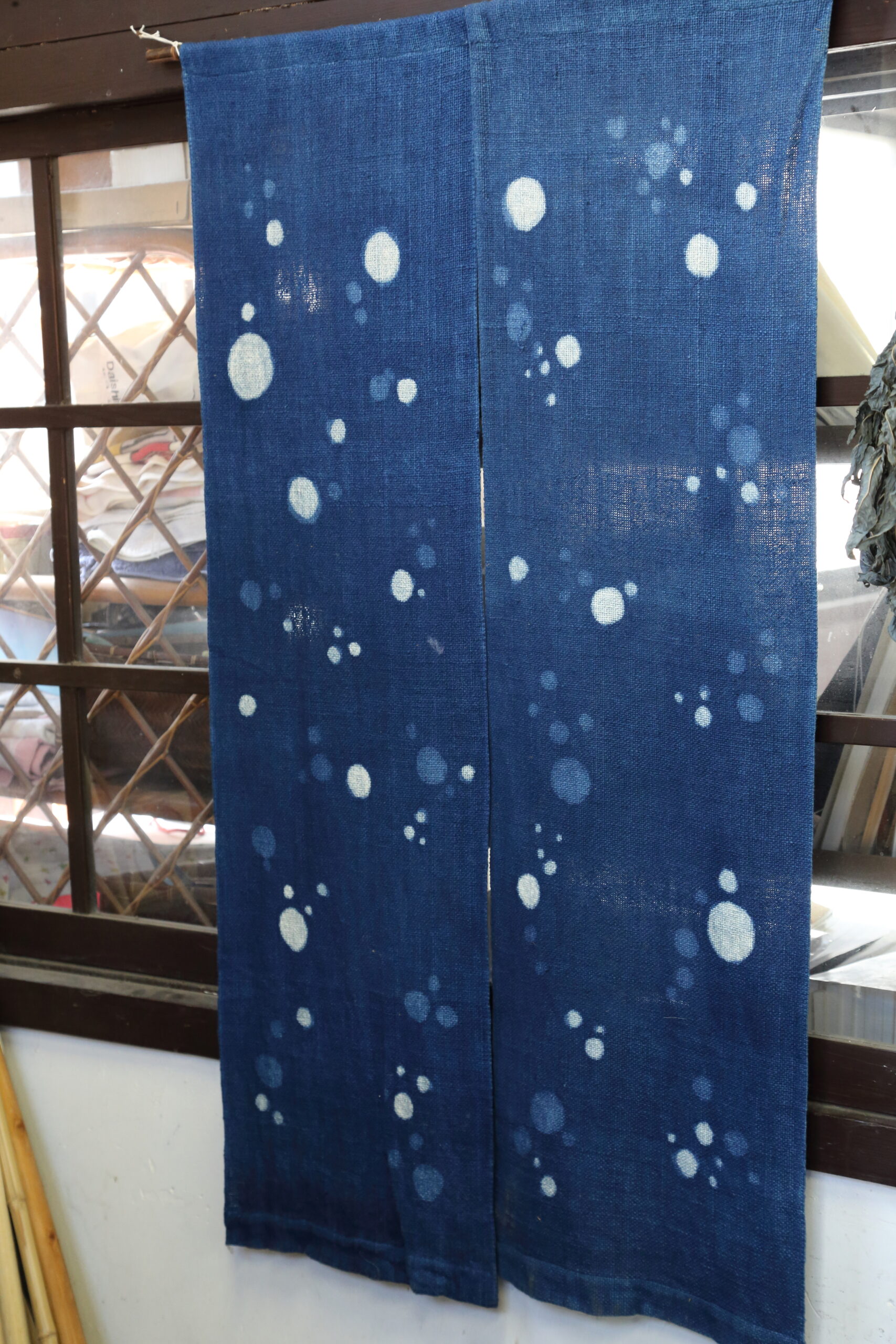
Aizome: Japan’s Indigo Born from Fermentation
In Japan, indigo is more than a color.
It is the result of a slow fermentation process that transforms plant leaves into a deep, living blue.
Aizome — traditional Japanese indigo dyeing — has been practiced for centuries. Before synthetic dyes existed, this blue was part of everyday life. Farmers, craftsmen, and merchants wore indigo-dyed cotton garments, and the color became closely associated with daily work and ordinary beauty.
What is Aizome?
Aizome uses leaves of the indigo plant, which are dried and fermented to create a dye material. Unlike modern chemical dyes, traditional indigo requires the activity of microorganisms. The dye vat itself is alive.
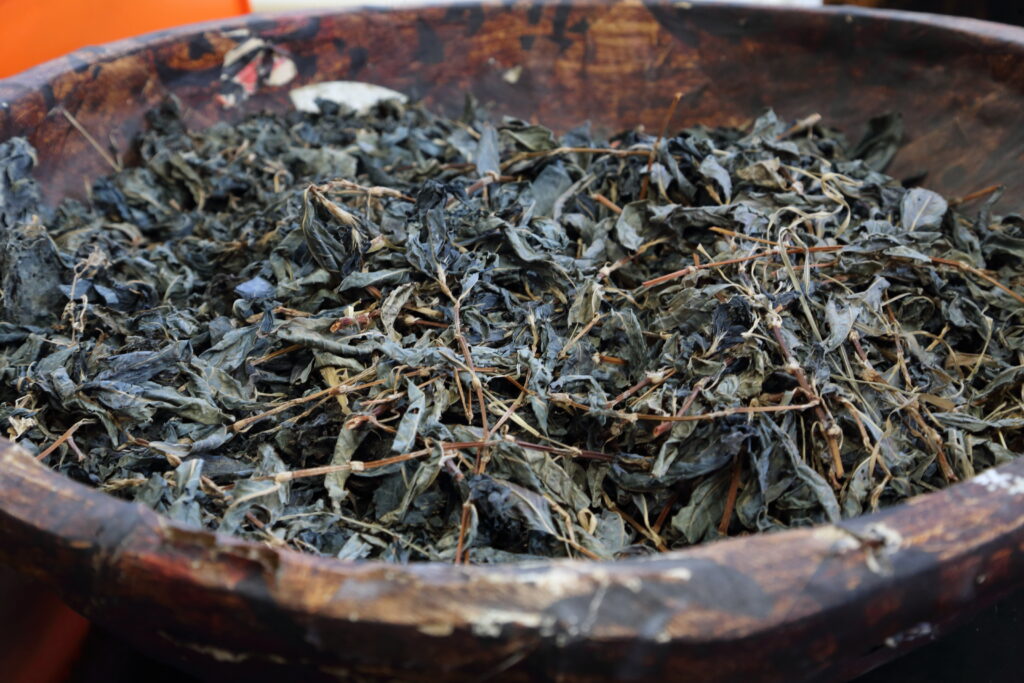
The dried leaves are processed and carefully prepared. Over time, natural fermentation transforms them into a substance capable of producing the distinctive Japanese blue.
Fermentation and the Indigo Vat
The heart of Aizome is the fermentation vat.
Maintaining it requires patience and experience. Temperature, moisture, and air must be carefully balanced so that microorganisms remain active.
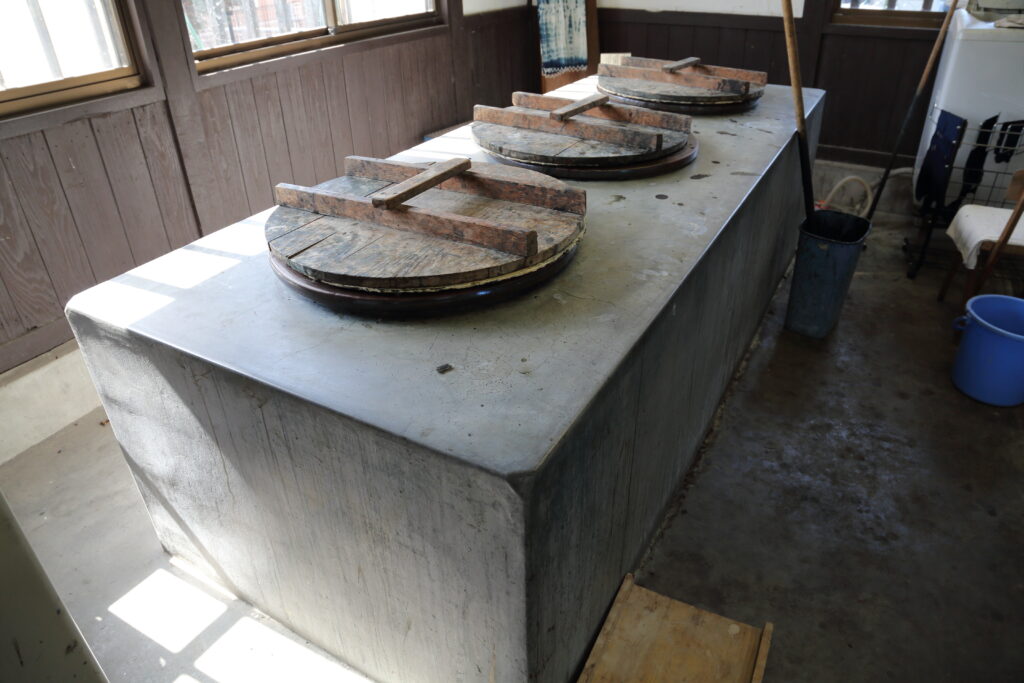
In this way, indigo dyeing shares something fundamental with other Japanese traditions — such as sake brewing. Both rely on invisible life working quietly over time.
Fermentation is not only about food or drink in Japan. It also creates color.
From Cotton to Thread
Indigo dyeing is closely connected to cotton. Cotton fabric absorbs the dye beautifully and was widely used for everyday garments.
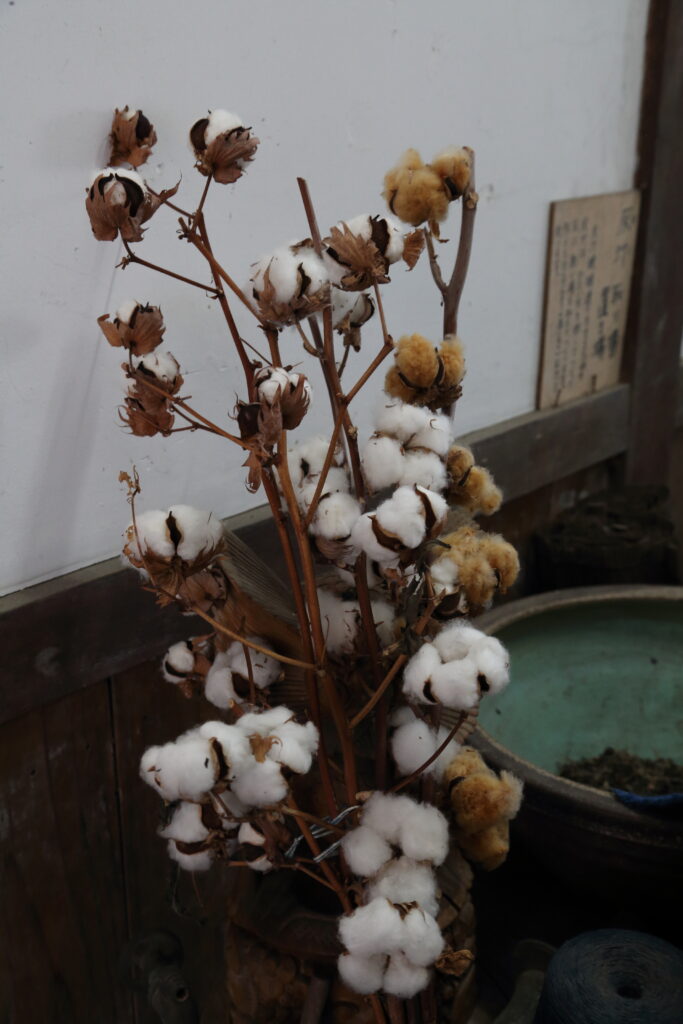
Before becoming cloth, cotton is spun into thread.
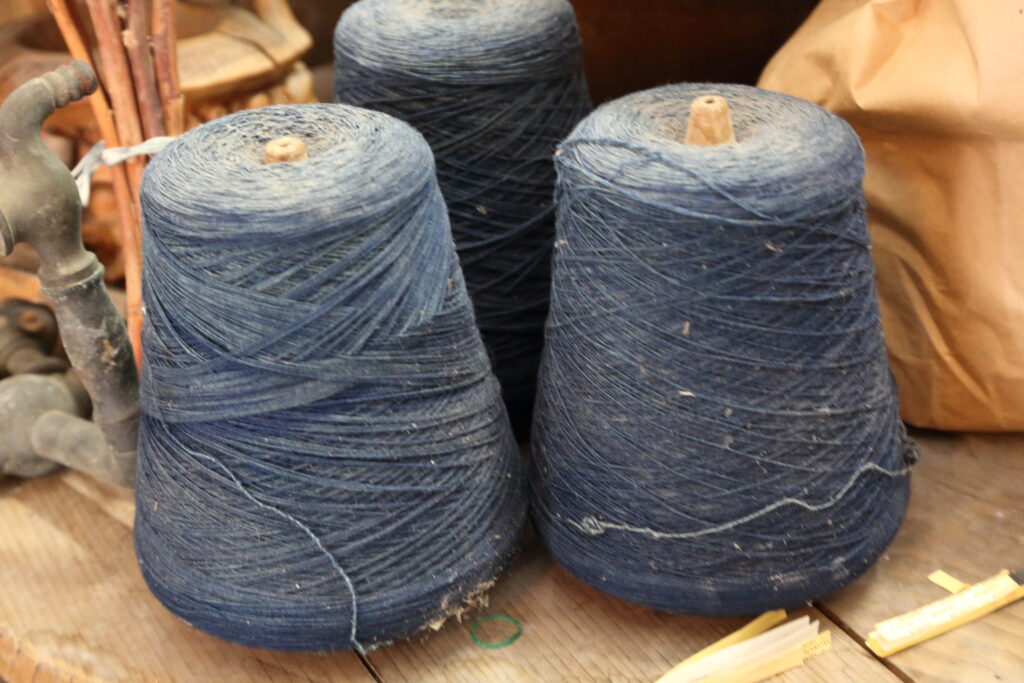
The thread is dipped repeatedly into the indigo vat. At first it appears greenish, but as it meets the air, oxidation slowly turns it deep blue. This transformation — from invisible chemical change to visible color — is part of the quiet beauty of Aizome.
Indigo Cloth in Daily Life
Indigo-dyed cloth has long been used for practical garments such as everyday kimono, yukata (summer cotton kimono), and traditional workwear. It is also used for noren shop curtains and interior textiles.
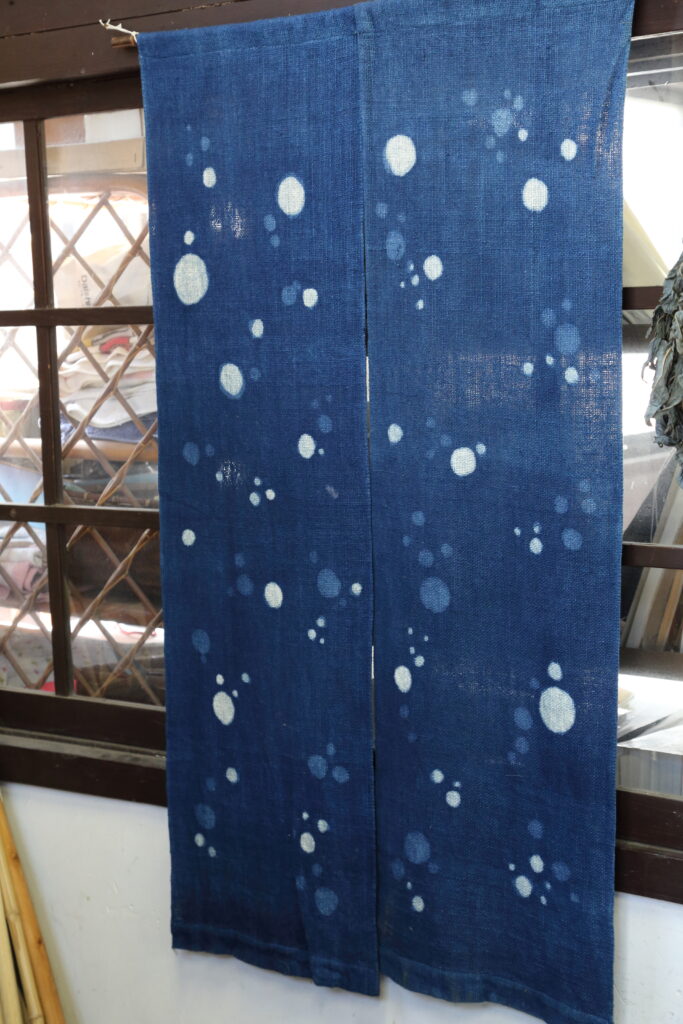
The cloth on display here was not made for sale. It represents a continuation of technique — a reminder that this blue is still created through careful fermentation, just as it was centuries ago.
A Living Blue
In Japan, fermentation shapes both flavor and color.
From sake to indigo, invisible processes create visible culture.
Aizome is not simply dyeing.
It is a collaboration between human hands and living microorganisms — a tradition that continues quietly in workshops across Japan.