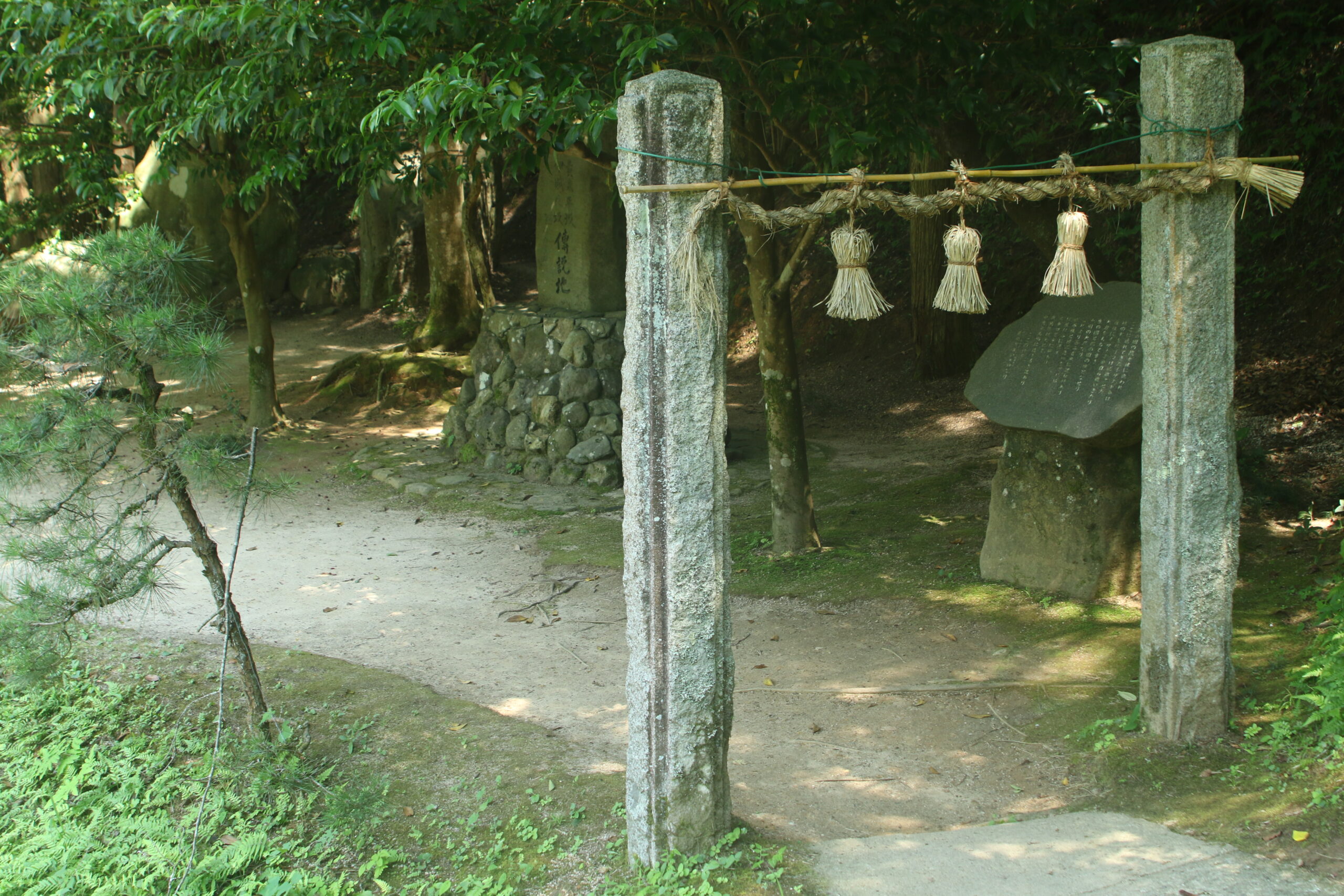
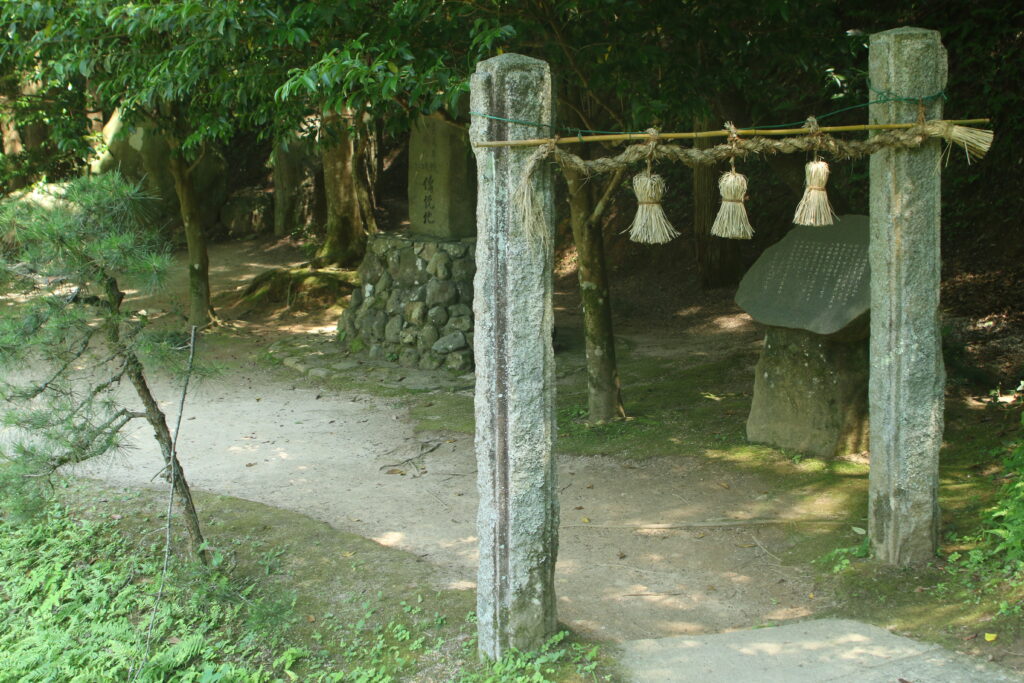
The entrance to Yomotsu Hirasaka, marked quietly, without insistence.
Yomotsu Hirasaka is described in Japanese mythology as the boundary between the world of the living and the land of the dead.
But when you actually stand there, it does not feel dramatic.
There is no clear line.
No gate.
Only trees, stones, and a quiet path.
It feels less like a destination, and more like a place where one pauses.
Stones resting in the forest, unchanged by time.
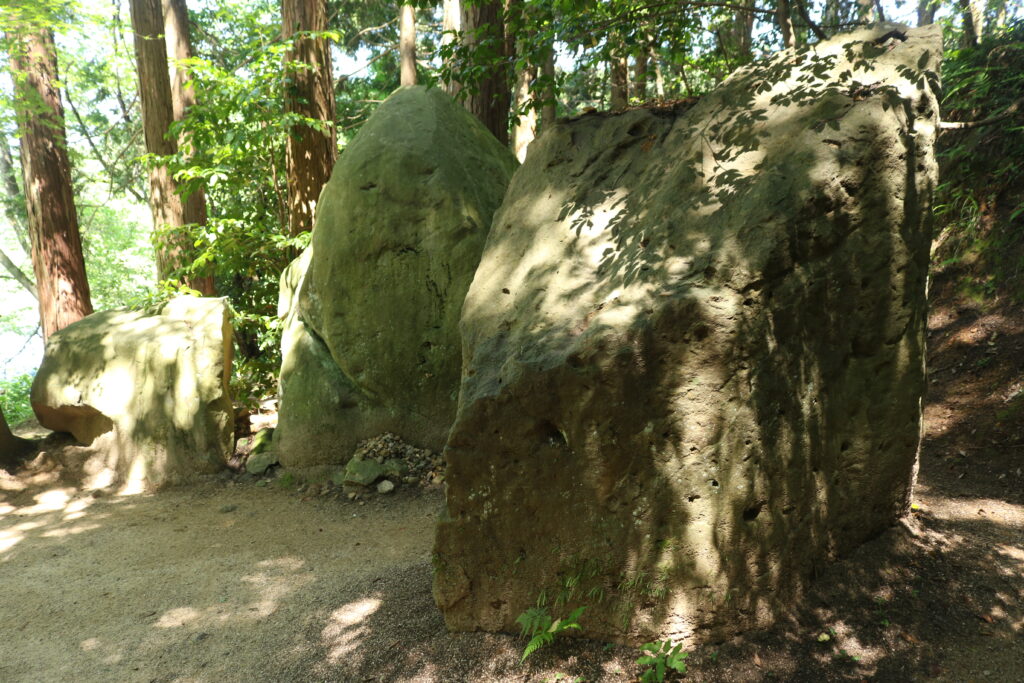
Large stones rest along the path, unchanged for generations.
They do not explain their meaning.
They simply remain.
In places like this, silence feels intentional — as if words were never required to begin with.
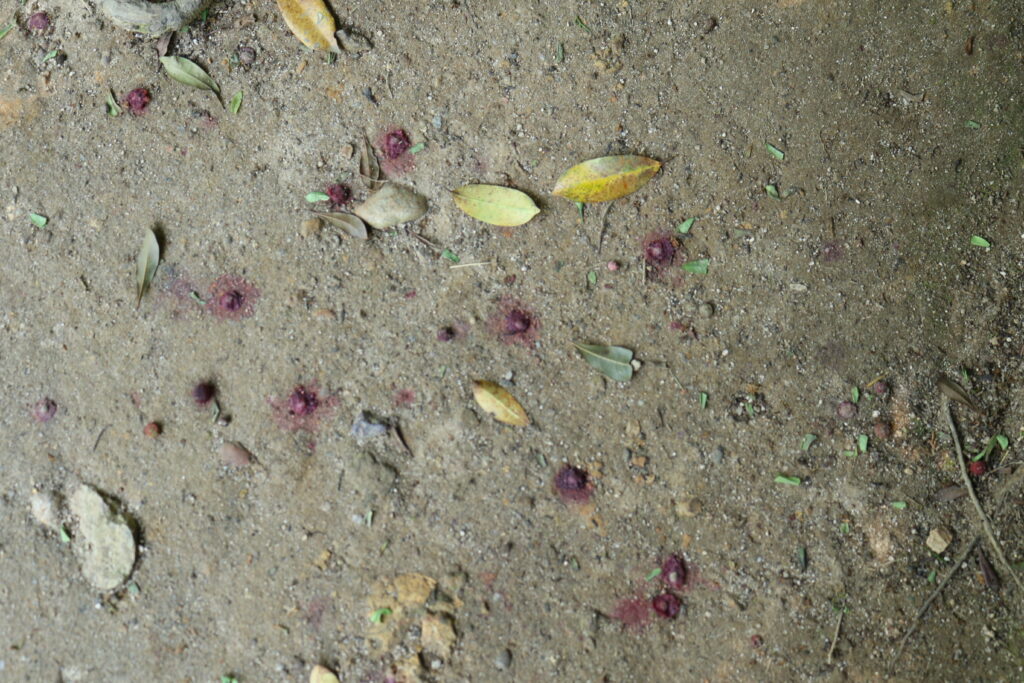
The ground along the path. Nothing asks to be noticed.
Looking up into the forest, where light and shadow overlap.
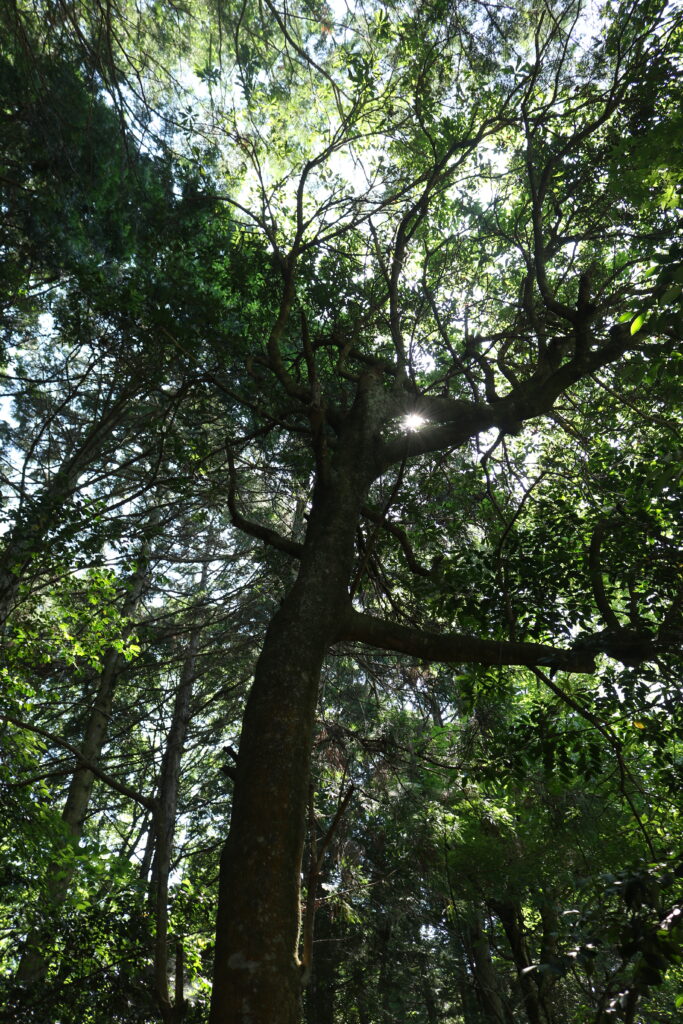
The forest surrounds everything.
Light filters through the leaves, moving gently as the wind shifts.
Looking up, I felt no fear.
Only the sense that different worlds might overlap here, briefly and without ceremony.
A postbox for letters addressed to those who are no longer here.
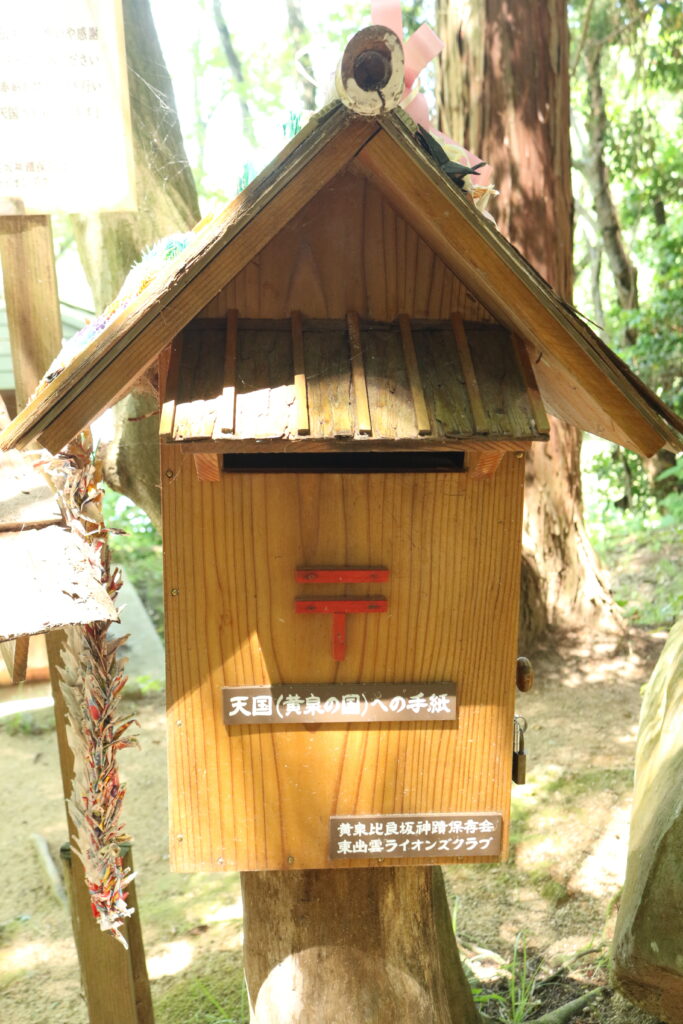
At the end of the path stands a small wooden postbox.
Visitors can place letters inside — messages addressed to those who have already passed on.
I wrote a letter to my wife.
I did not expect an answer.
I did not expect resolution.
I only wanted to speak, one more time, and then let the words go.
When I dropped the letter into the box, there was no sound worth remembering.
But something I had been holding loosened, quietly.
Perhaps Yomotsu Hirasaka is not truly a boundary between life and death.
Perhaps it is simply a place where the living are allowed to speak —
and then continue walking.