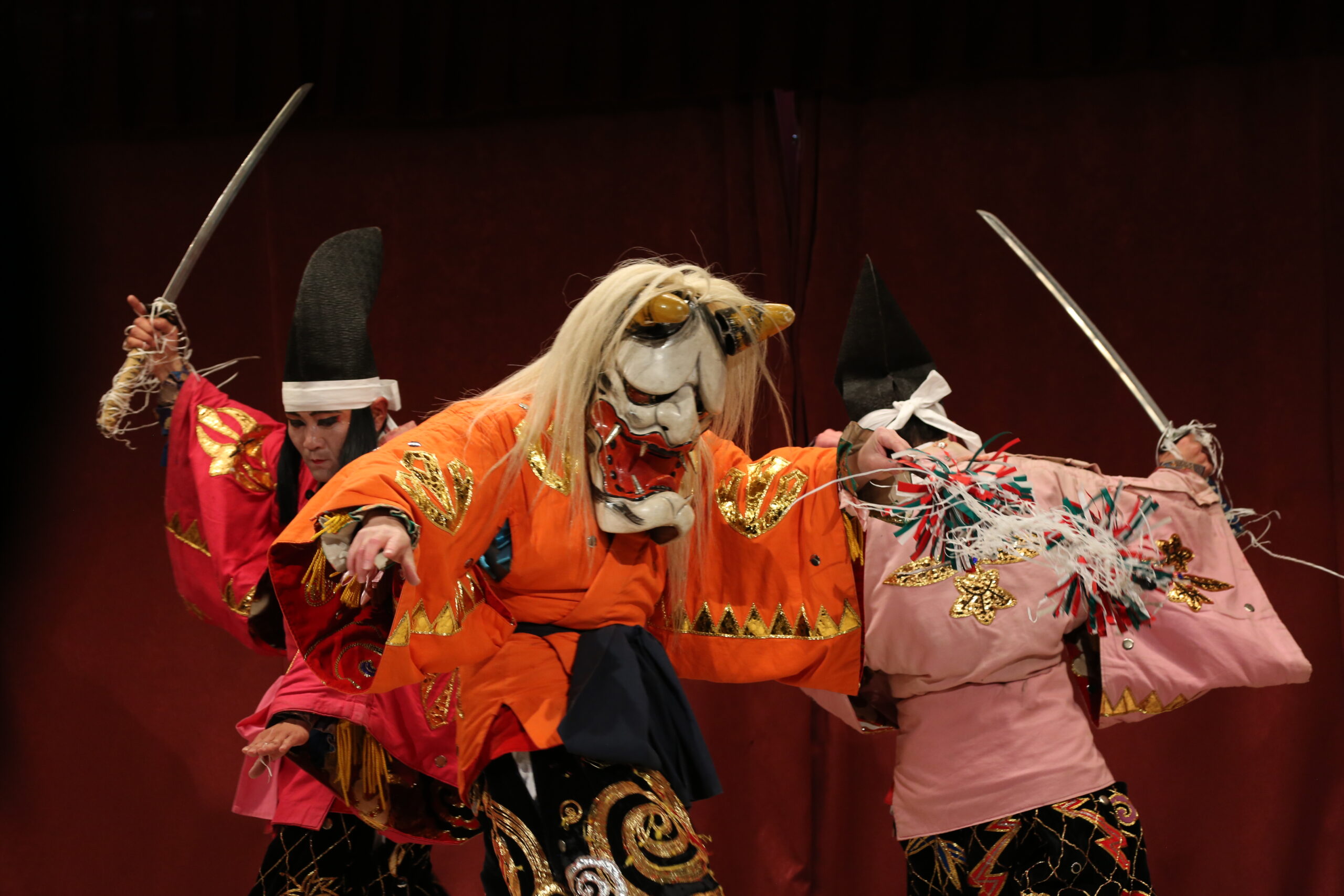
Tsuchigumo, known as the legendary spider demon in Japanese folklore, is one of the most dramatic and visually striking stories performed in Kagura.
With powerful movements, elaborate costumes, and intense storytelling, this performance captures the battle between humans and supernatural forces.
What is Tsuchigumo?
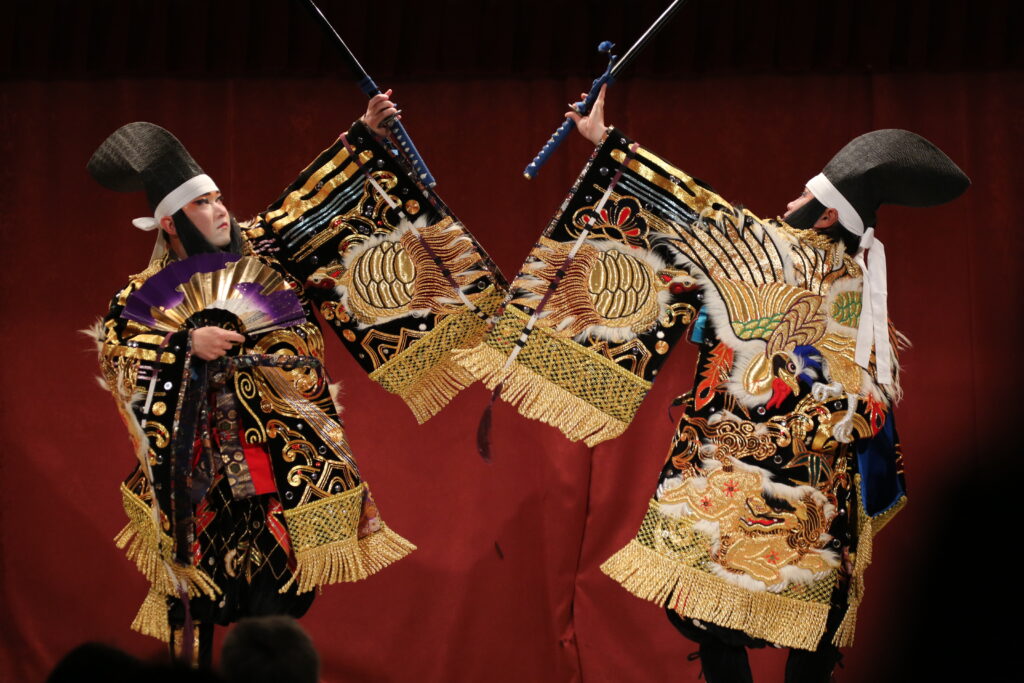
Tsuchigumo is a mythical creature from Japanese folklore, often depicted as a giant spider that deceives and attacks humans.
In traditional stories, it represents chaos, fear, and the unknown, often opposing heroic warriors.
Tsuchigumo in Kagura
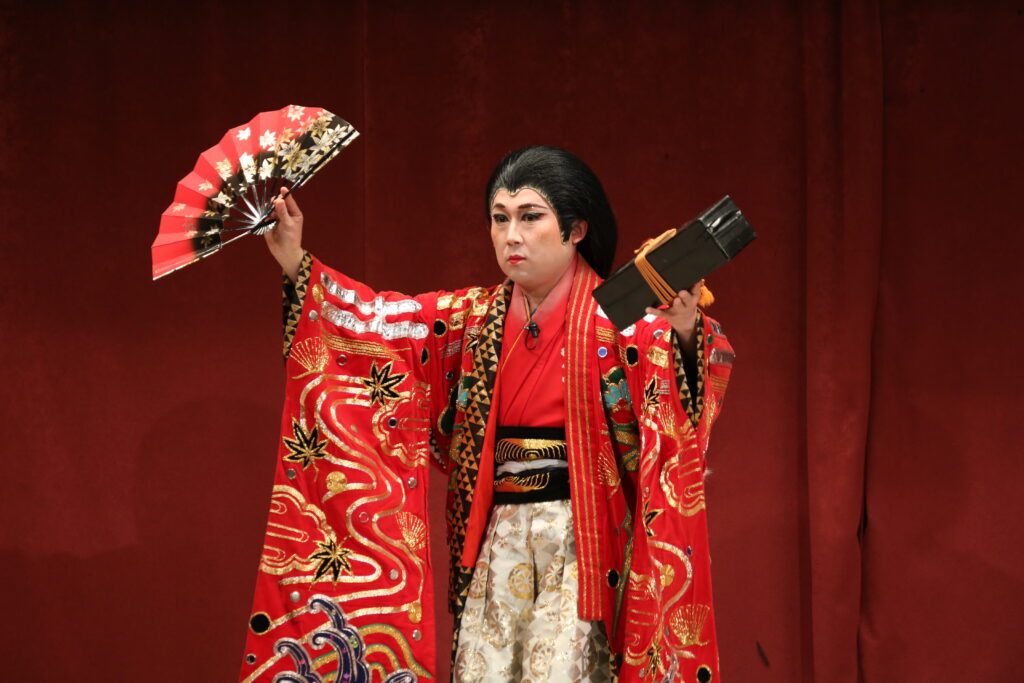
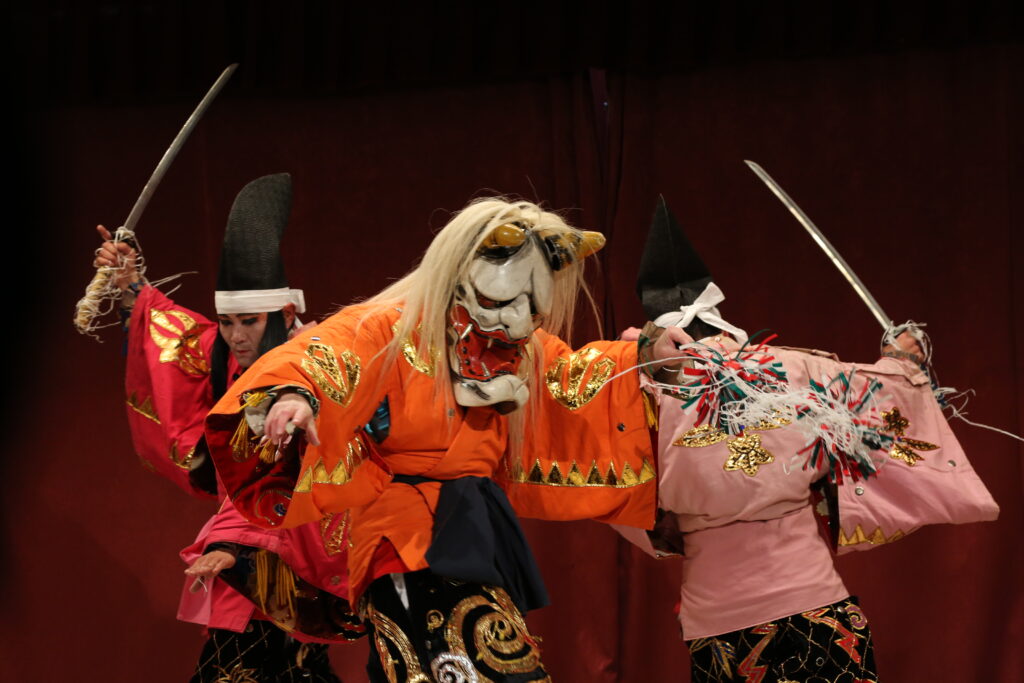
In Kagura performances, Tsuchigumo appears as a powerful antagonist.
The dance combines theatrical movements, symbolic gestures, and dramatic pacing to express the tension between order and chaos.
Performers wear richly decorated costumes and masks, enhancing the visual impact and bringing the story to life.
Performance Highlights
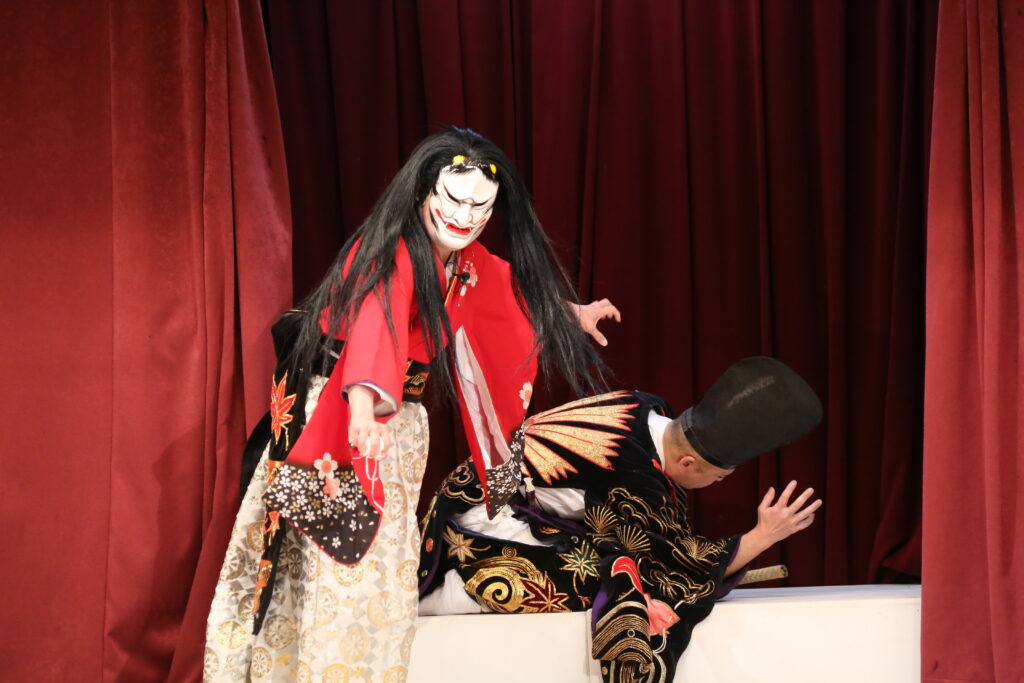
The performance typically includes:
- A heroic warrior confronting the unknown
- The sudden appearance of the demon
- Dynamic sword movements and choreography
- A climactic battle scene
The intensity of the performance makes it one of the most popular Kagura stories.
Cultural Significance
Tsuchigumo reflects deeper themes in Japanese culture, including:
- The fear of hidden dangers
- The triumph of human courage
- The balance between nature and civilization
It is not just a performance, but a symbolic narrative passed down through generations.
Tsuchigumo remains a powerful representation of Japanese mythology and performing arts.
Through Kagura, this ancient story continues to captivate audiences with its beauty, intensity, and cultural depth.