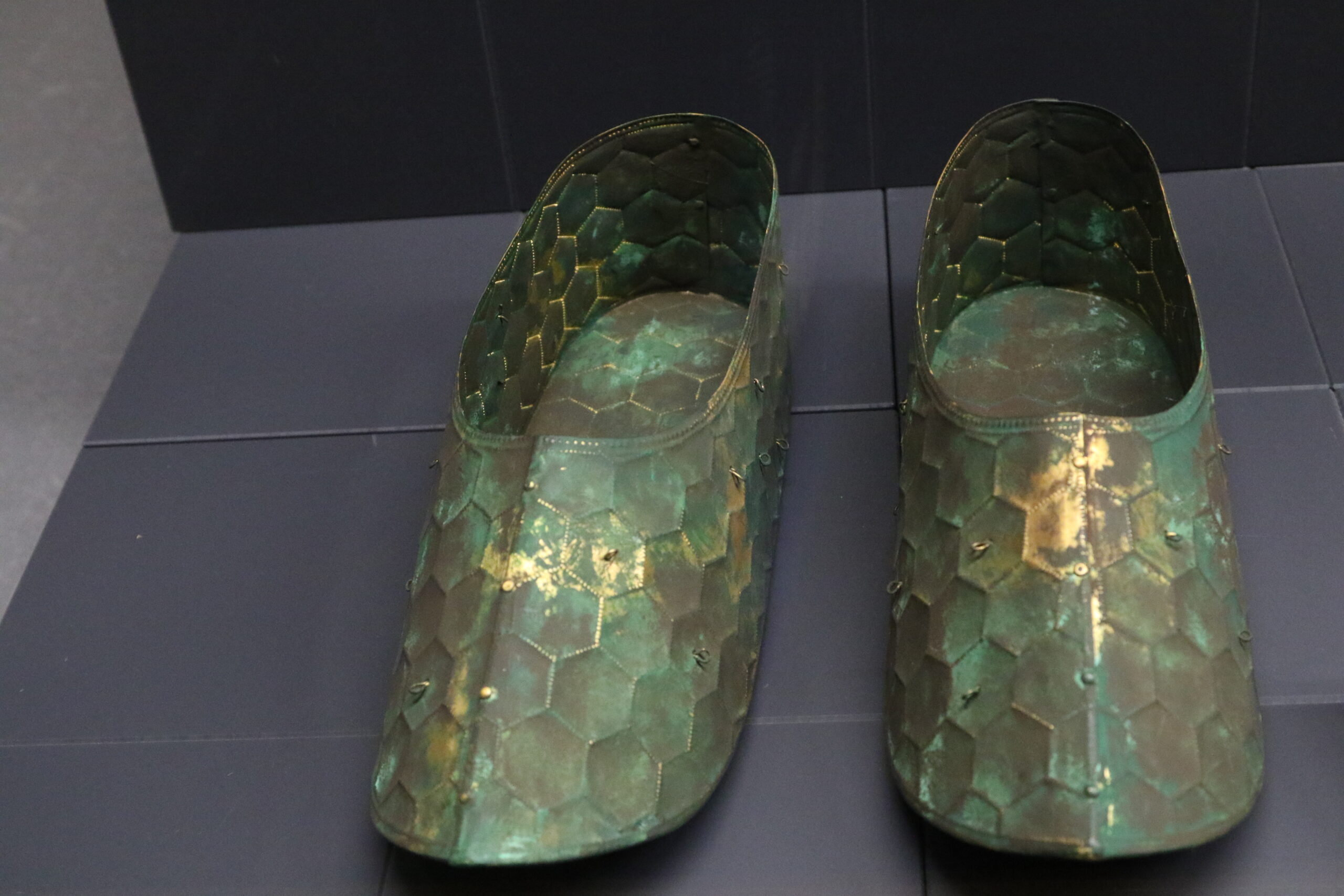
When people think about traditional Japanese footwear, they usually imagine straw sandals, wooden geta, or cloth shoes. However, archaeological discoveries show that much earlier in Japanese history, something very different existed — bronze shoes.
These unusual shoes date back to the Kofun period, roughly from the 3rd to the 7th century AD. They were discovered in ancient burial mounds, or kofun, which were built for powerful rulers and elite families.
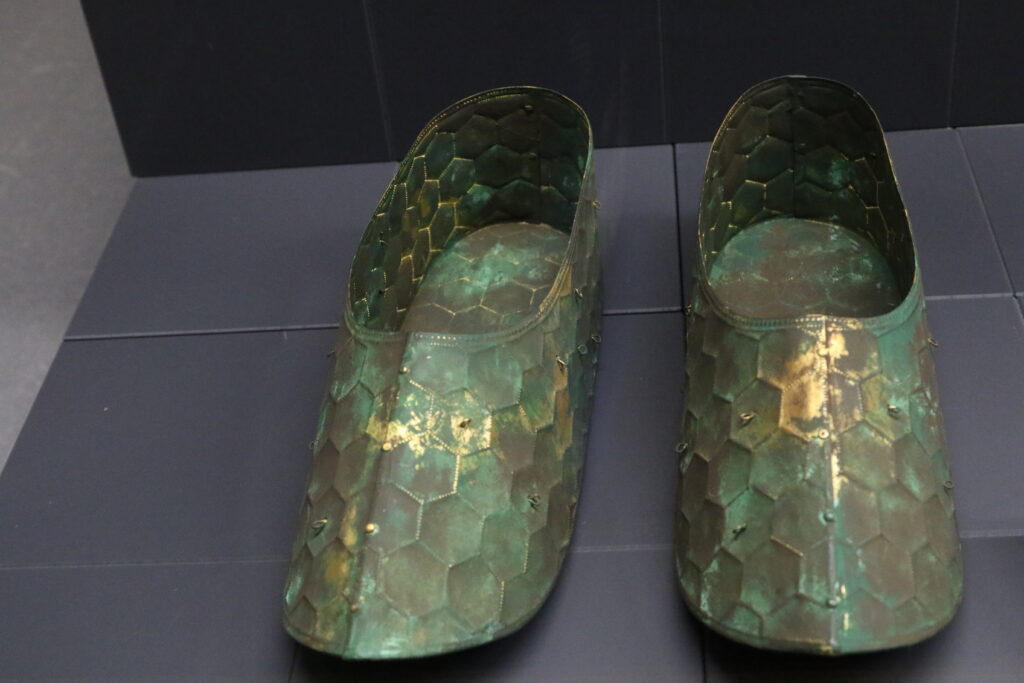
Unlike everyday footwear, these shoes were made from thin plates of bronze. The surface is formed from many small hexagonal metal pieces that were carefully joined together. Because bronze is heavy and rigid, historians believe these shoes were not meant for walking, but instead served as ceremonial or symbolic objects.
In ancient Japan, important items were often placed in tombs as burial goods to accompany the deceased into the afterlife. These bronze shoes likely represented status, power, and authority. Only high-ranking individuals would have been buried with such elaborate objects.
The discovery of these shoes also tells us something important about early Japanese society. By the Kofun period, people already possessed advanced metalworking skills. They were able to cast bronze, shape thin metal plates, and assemble complex objects with decorative patterns.
Today, these bronze shoes offer a fascinating glimpse into a lesser-known part of Japanese history. Long before wooden geta or straw waraji sandals became common, the elite of ancient Japan were associated with footwear made from metal — a remarkable symbol of prestige from more than 1,500 years ago.