Hidden in the historic town of Joge in Hiroshima Prefecture stands a remarkable cultural treasure — Onoza Theater (Okina-za / 翁座).
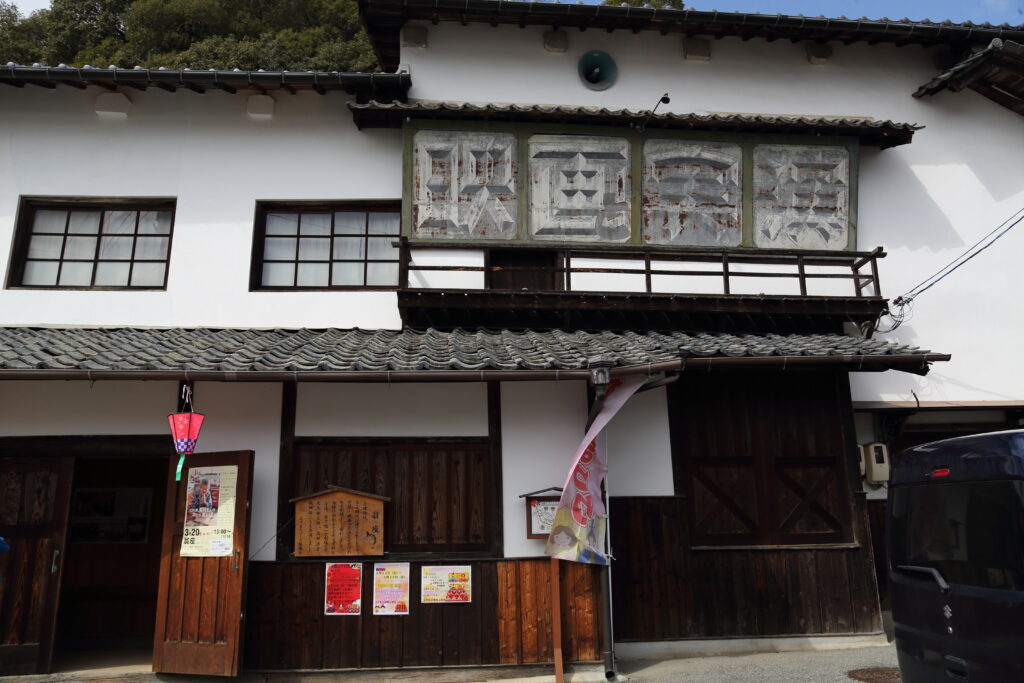
This traditional wooden theater is considered the oldest surviving wooden playhouse in the Chugoku region of Japan, and it preserves the spatial structure of a late Edo-period Kabuki theater.
At first glance, the building looks like a quiet old merchant house. But stepping inside reveals a dramatic performance space that once hosted traveling Kabuki actors and lively audiences.
Onoza offers visitors a rare chance to experience the atmosphere of Japan’s traditional theater culture outside the major cities.
A Rare Surviving Kabuki Playhouse
During the late Edo period (1603–1868), Kabuki was one of the most popular forms of entertainment in Japan.
Many towns built their own playhouses where traveling performers entertained local communities.
However, modernization in the 20th century led to the disappearance of most regional theaters.
Onoza is special because it still preserves the architectural layout of an Edo-era Kabuki theater, making it an important cultural heritage site in western Japan.
Inside the Theater: A Stage from the Edo Period
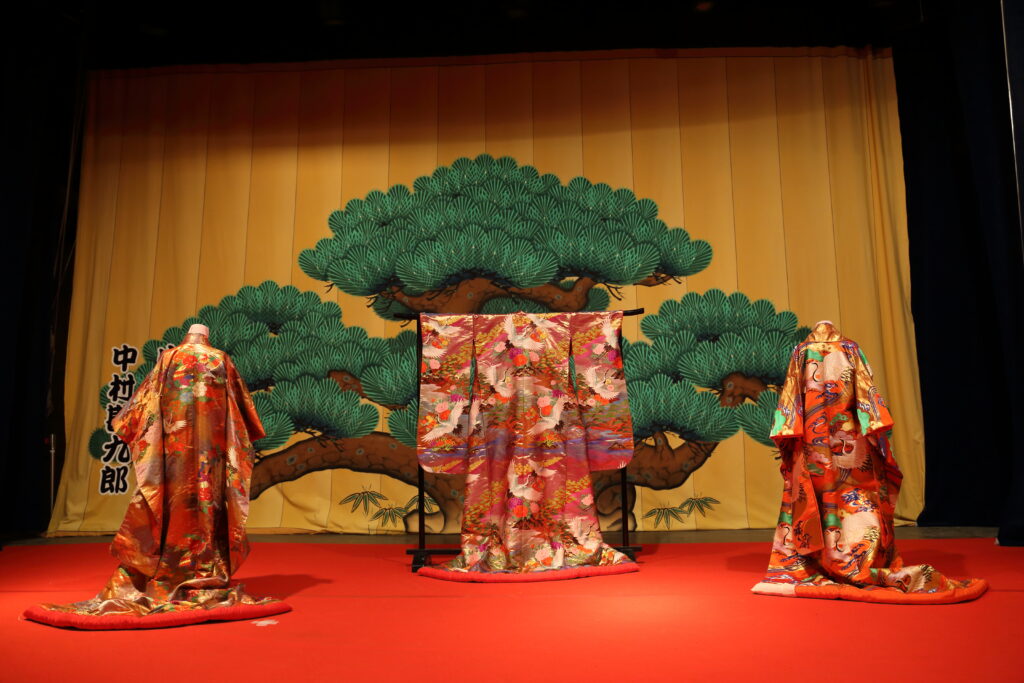
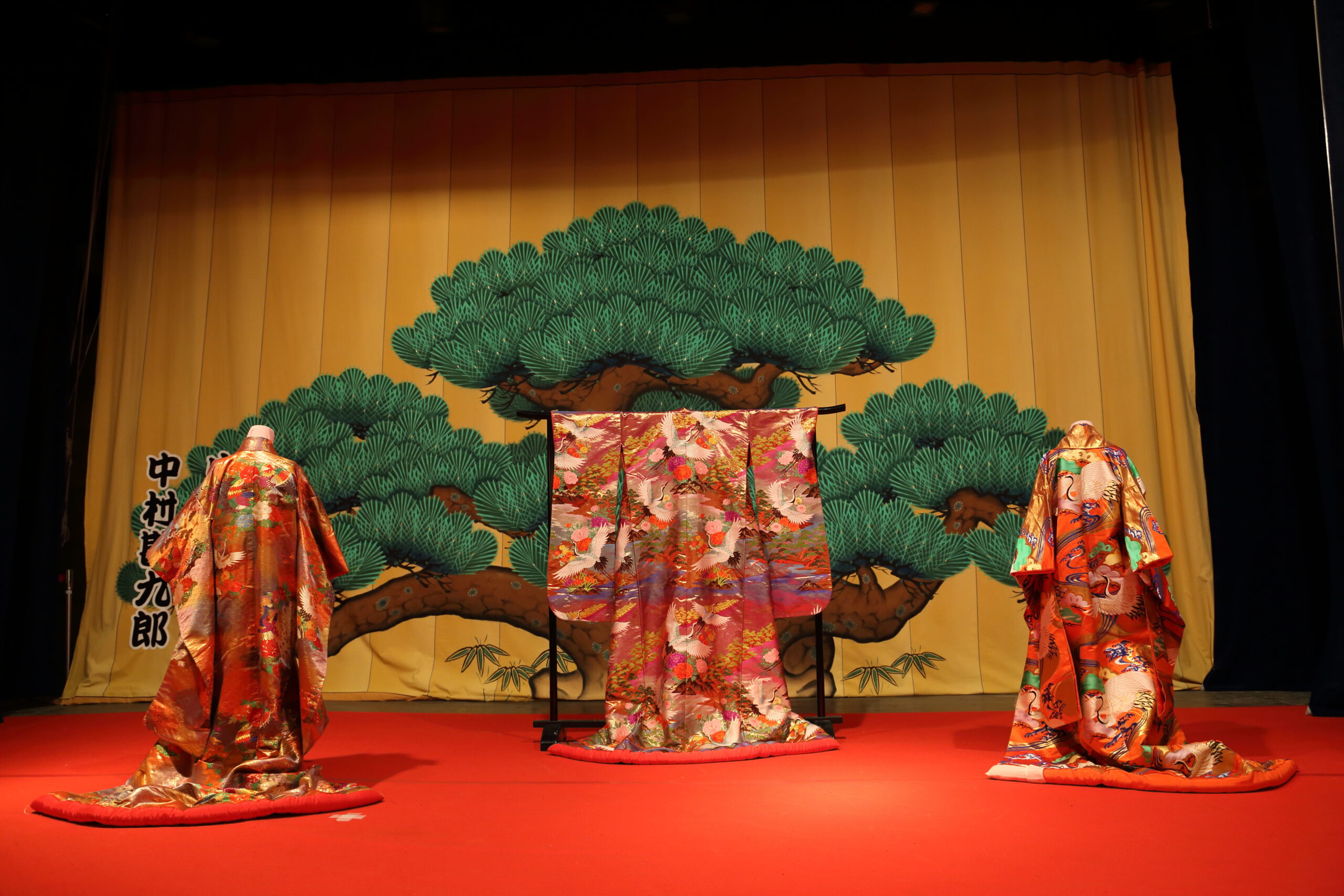
The moment visitors enter Okinaza, they are greeted by a classic Kabuki stage.
The backdrop features a large painted pine tree, a traditional motif used in Japanese theater.
This design originates from Noh theater, symbolizing eternity and auspiciousness.
Displayed on the stage are colorful traditional kimono costumes, giving visitors a glimpse into the visual beauty of classical performances.
Traditional Theater Architecture
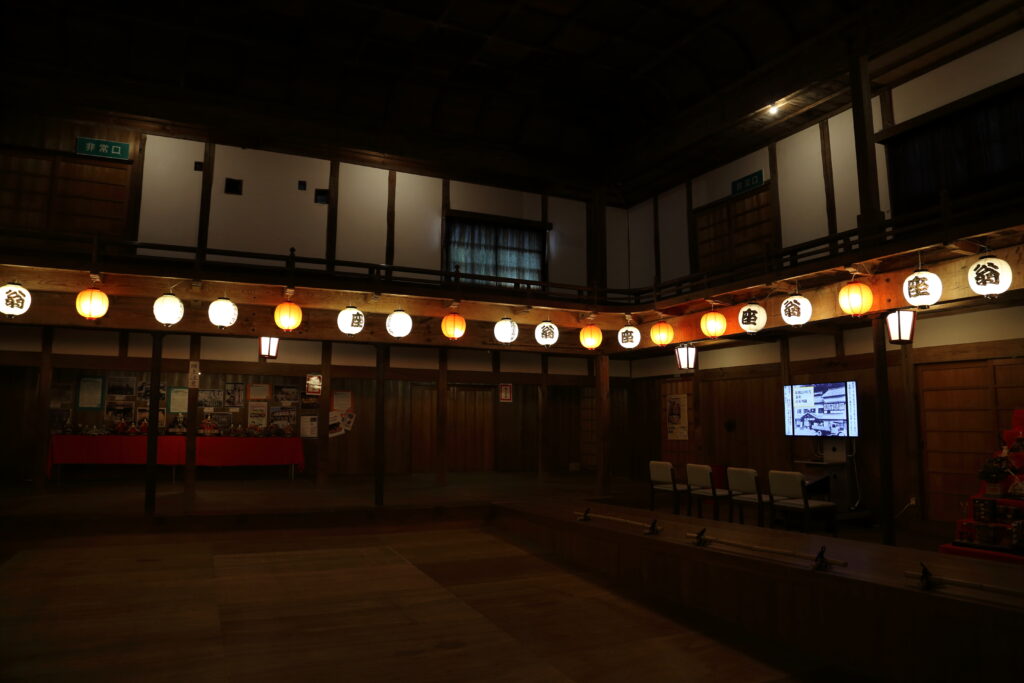
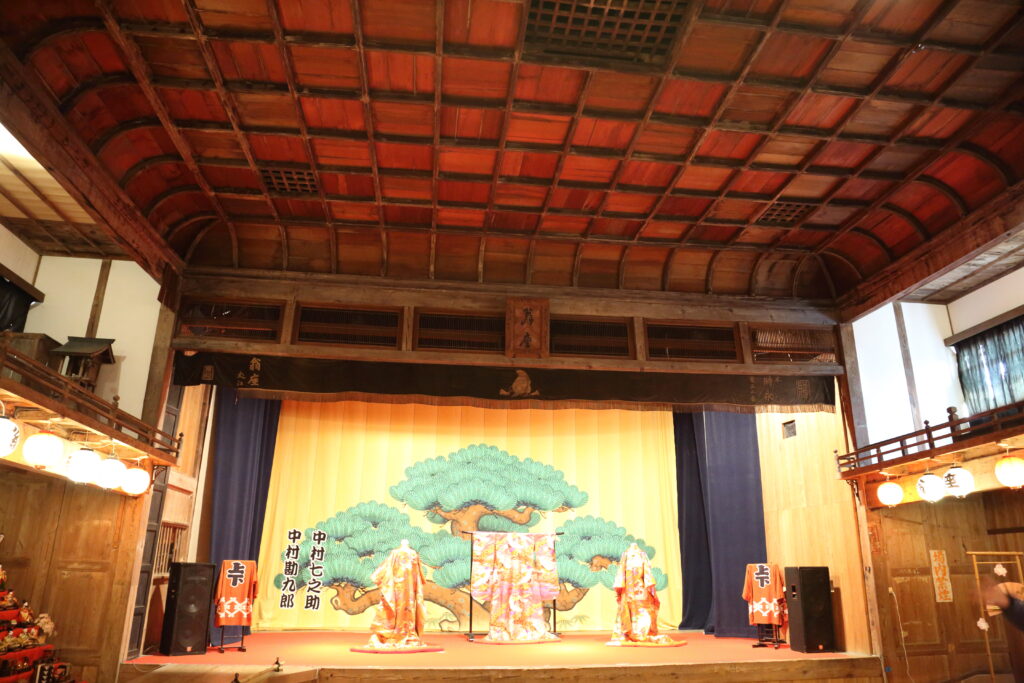
The interior of Onoza still reflects the structure of historic Kabuki theaters.
Several architectural features remain intact:
• A wooden stage designed for traditional performances
• A long runway space connecting performers and audience
• Balcony seating areas illuminated by paper lanterns
• A warm wooden interior that enhances sound and atmosphere
Unlike modern theaters, Edo-period playhouses were designed to bring performers and audiences closer together.
This intimate spatial design created an energetic and interactive theater experience.
A Beautiful Wooden Interior
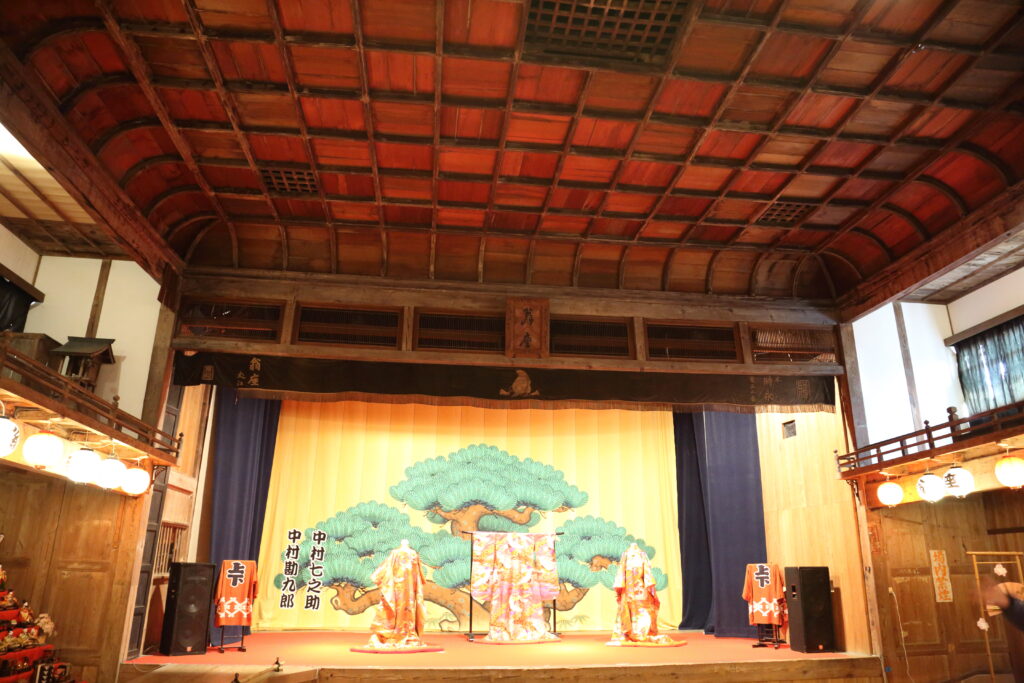
Looking up inside Onoza reveals another impressive detail — the beautiful curved wooden ceiling.
The warm tones of aged wood create a nostalgic atmosphere that modern theaters rarely capture.
The structure also helped improve acoustics for live performances before microphones existed.
Walking through the building feels like stepping into a living piece of theatrical history.
Cultural Events and Seasonal Displays
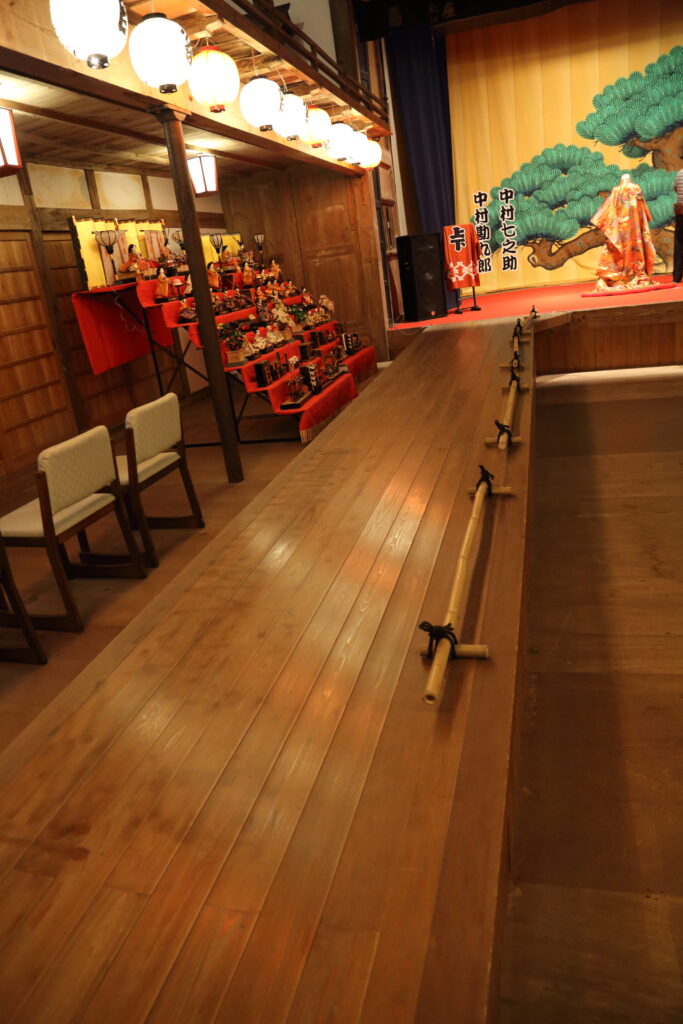
Today, Onoza functions as both a preserved historic building and a cultural space.
During seasonal events, visitors may see exhibitions such as:
• Traditional kimono displays
• Hinamatsuri (Doll Festival) decorations
• Cultural events celebrating the town’s history
These exhibitions allow visitors to experience the atmosphere of traditional Japanese celebrations inside an authentic theater setting.
A Hidden Cultural Treasure in Joge
Unlike the famous Kabuki theaters of major cities, Onoza (Okina-za) represents a more local and intimate side of Japanese performing arts culture.
For travelers interested in:
- traditional architecture
- Japanese theater history
- hidden historical towns
Onoza Theater is a fascinating place to explore.
Visiting this quiet wooden playhouse in the historic streets of Joge offers a rare opportunity to step back into the world of Edo-period entertainment.