What did people wear on their feet in ancient Japan?
For many overseas readers, the image is simple: straw sandals. Rough, woven, practical. A symbol of a pre-modern agricultural society.
And that image is not wrong.
In the Nara period (710–794), most ordinary people wore footwear made from rice straw. After harvesting rice, nothing was wasted. The grain became food. The straw became rope, rain capes, mats—and sandals. When the sandals wore out, they were replaced or returned to the soil.
It was a closed loop of materials.
In modern terms, it was sustainable.
But this was not the whole story.
At the very same time—and even more clearly in the following Heian period—there existed another world of footwear. A world that belonged not to farmers or townspeople, but to high-ranking officials of the imperial court.
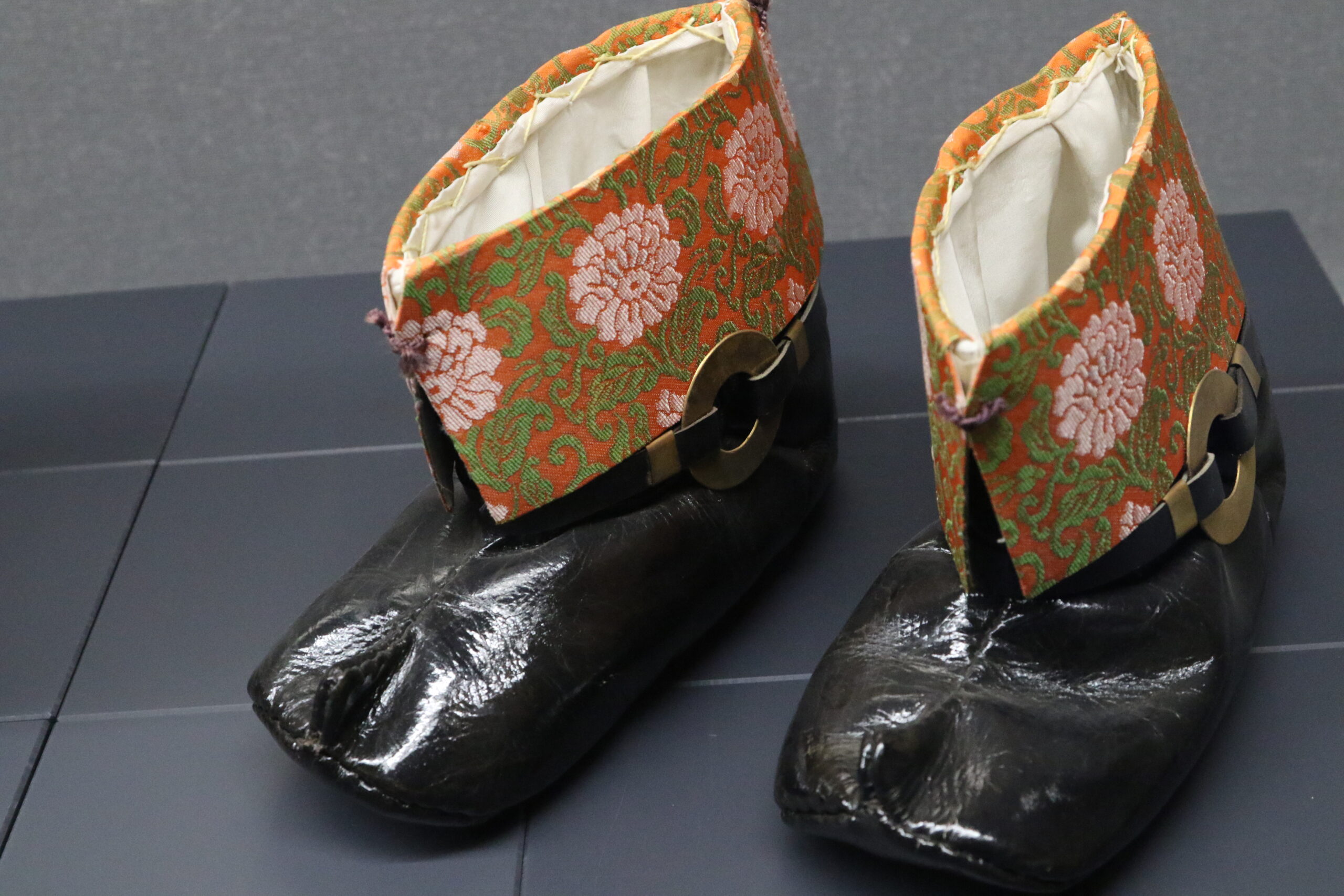
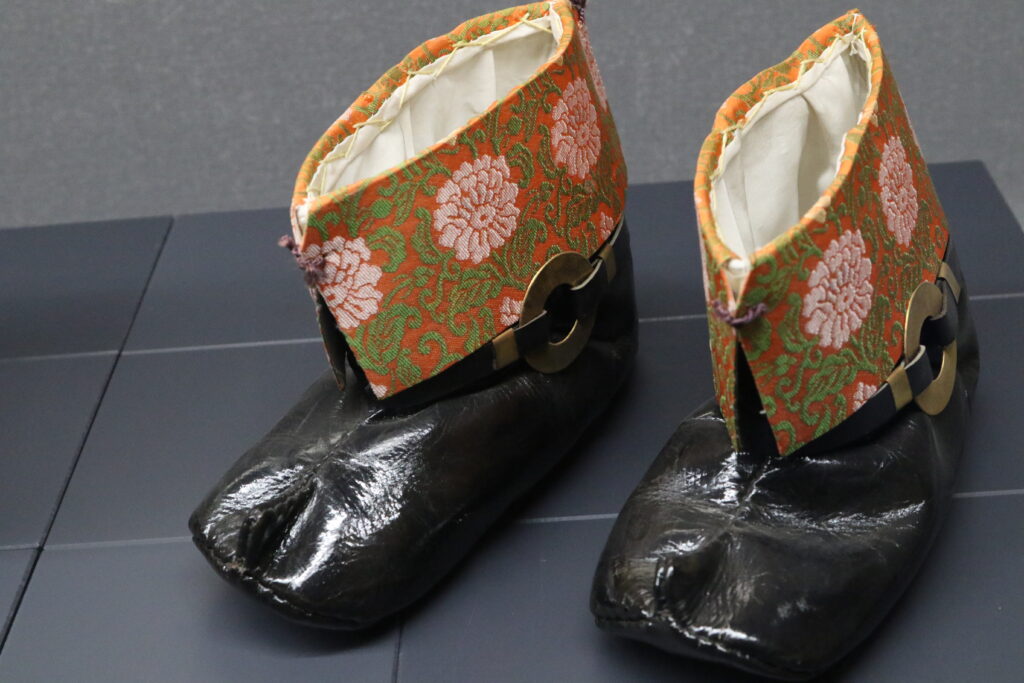
The footwear shown above is known as Monoi-gutsu, a formal shoe worn in the Heian period. While slightly later in date, it belongs to a tradition of elite footwear that traces back to earlier court culture.
These were not made of straw.
They were made of leather.
And finished with lacquer.
The glossy black surface, the red trim, the carefully constructed upper portion—this was not simply something to protect the feet. It was a visible marker of rank.
Under the ritsuryō system, social hierarchy was rigidly structured. Court ranks—from First Rank down to Eighth Rank—determined not only political authority, but clothing, colors, headgear, and even footwear. Fifth rank and above marked entry into the aristocratic class.
In this system, shoes were not just practical objects.
They were part of the state.
Straw sandals were tools of survival.
Lacquered leather shoes were symbols of authority.
The contrast is striking.
On one side, rice straw—renewable, biodegradable, woven by hand, tied directly to the rhythms of agriculture.
On the other, processed leather and lacquer—materials requiring specialized craftsmanship, animal resources, and elite access. Court footwear also reflected the strong influence of Tang China, whose political and ceremonial systems shaped early Japanese state formation.
In other words, ancient Japan was both sustainable and hierarchical.
The farmer’s sandals returned to the earth.
The official’s shoes reflected the structure of the state.
Both existed at the same time.
When we look at footwear from this period, we are not just looking at shoes. We are looking at social philosophy. At how resources were used. At how power was displayed. At how a society organized itself from the ground up—quite literally from the feet upward.
Ancient Japanese footwear tells two parallel stories:
One of circular life rooted in rice cultivation.
And one of rank, ceremony, and imported political culture.
The difference begins at the feet.