Walking on Straw: Life Before Modern Shoes
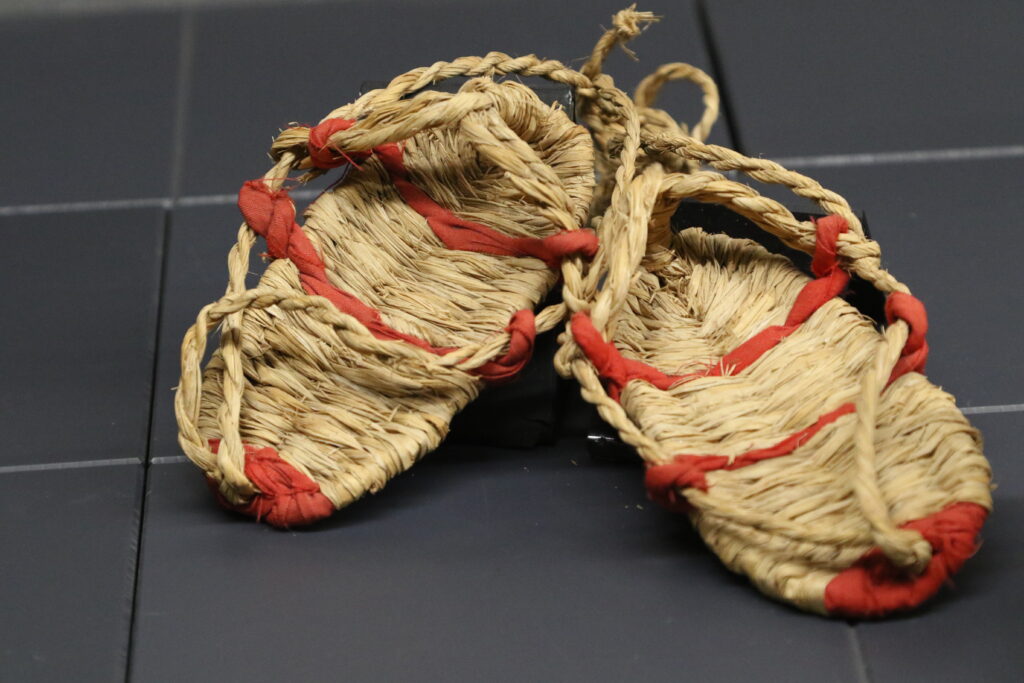
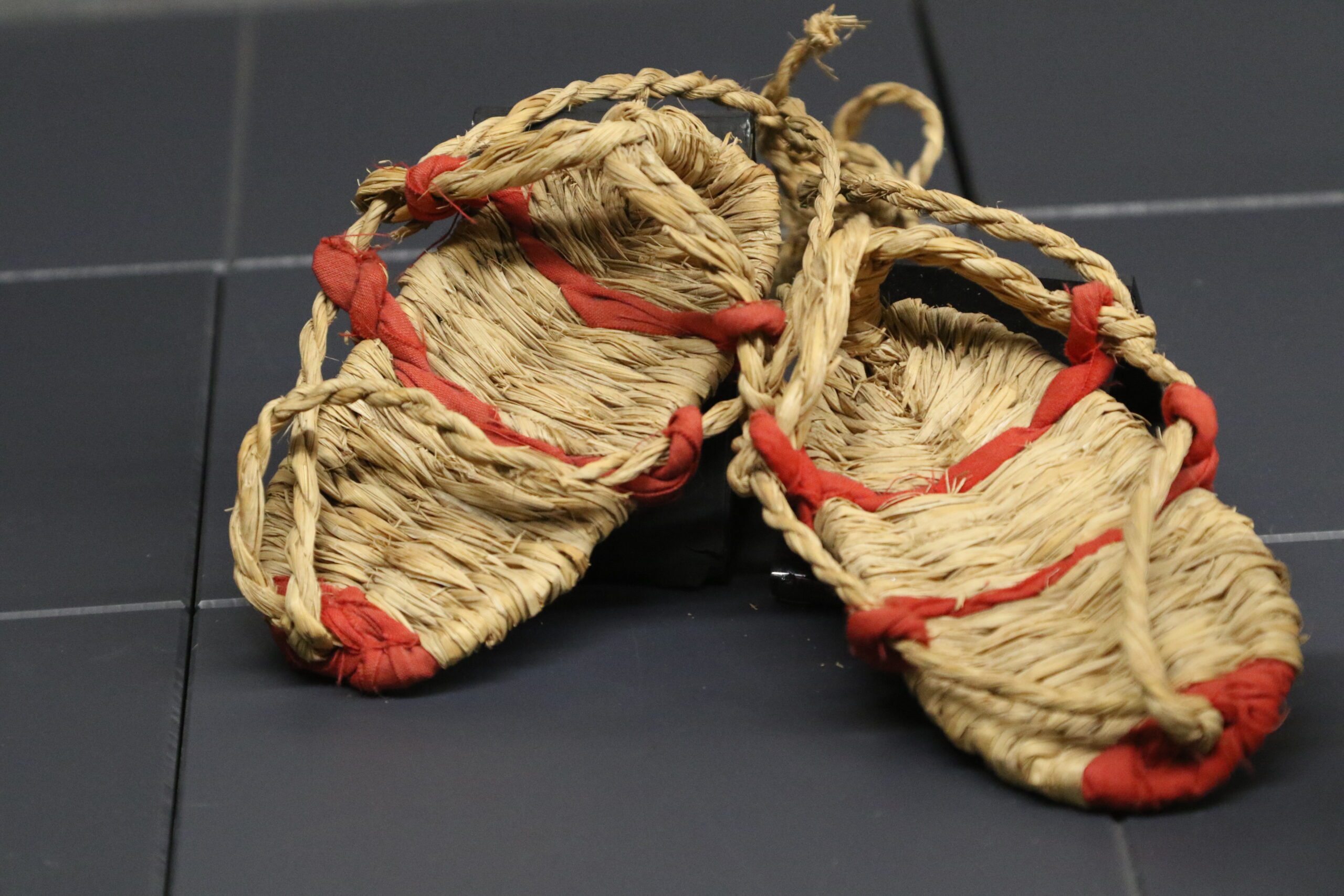
Before rubber soles and leather boots became common, everyday life in Japan depended on something far simpler: straw. For centuries, people walked long distances, worked in muddy fields, and traveled across mountain roads wearing footwear made from rice straw. These sandals, known as waraji, were practical, flexible, and surprisingly durable despite their humble material.
Rice cultivation shaped Japanese society, and straw was one of its most versatile byproducts. It was woven into ropes, bags, mats—and shoes. Unlike modern footwear designed to last for years, straw sandals were consumable. They wore down quickly but could be repaired or replaced with relative ease. This made them ideal for farmers, laborers, monks, and travelers who were constantly on the move.
In a world before industrial manufacturing, footwear reflected local resources and climate. Straw was abundant, biodegradable, and adaptable. The design of waraji allowed them to be tied securely around the ankle, distributing pressure across the foot while remaining lightweight. They were not luxurious, but they were efficient.
Looking at these sandals today reveals more than a simple object. They represent a culture built on movement—on walking, traveling, working, and enduring the seasons with materials close at hand.
Waraji: Sandals for Farmers and Travelers

Waraji were the footwear of movement. Farmers wore them while working in rice fields, where mud and water demanded something lightweight and replaceable. Travelers relied on them for long journeys along unpaved roads. Even monks and messengers are often depicted wearing straw sandals tied securely around the ankles.
Unlike slip-on sandals, waraji were fastened with long braided cords. These cords wrapped around the foot and ankle, keeping the sole firmly in place. This design prevented the sandal from sliding off during travel and distributed weight more evenly than one might expect from such a simple construction.
Because they were inexpensive and easy to make, waraji were considered practical rather than prestigious. They were tools—objects meant to be used hard and replaced often. In many cases, travelers would carry spare pairs, knowing that rough terrain could quickly wear them down.
Built from Rice Straw
The primary material for waraji was rice straw, a byproduct of Japan’s most important crop. After harvesting rice, the remaining straw was dried and twisted into ropes. These ropes were then woven tightly to form the sole and binding cords.
The structure was flexible yet resilient. Straw fibers absorbed impact and provided traction on dirt paths. When the sandals became thin or frayed, they could be repaired or simply discarded. In this way, waraji were an early example of sustainable design—made from natural materials and fully biodegradable.
Their simplicity also meant they could be produced locally. Knowledge of weaving techniques was widely shared, and in some communities, making straw sandals was part of seasonal work. Footwear was not a distant commodity; it was something created within daily life.
Even Horses Wore Them
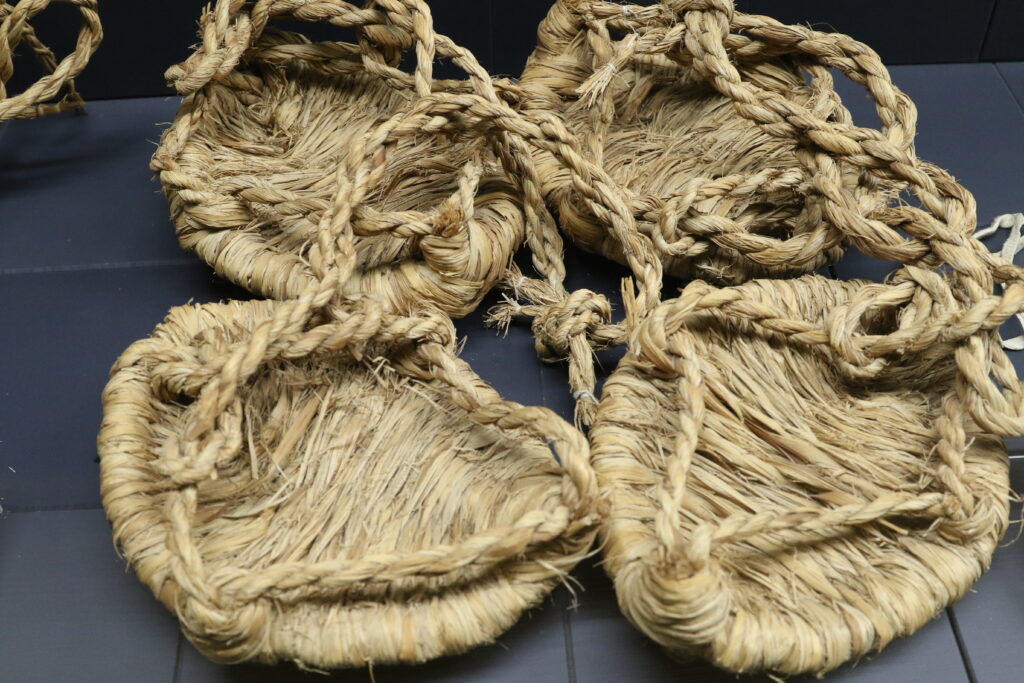
Perhaps the most surprising detail is that straw footwear was not limited to humans. Historical examples show that horses, too, were fitted with straw sandals known as uma no kutsu—literally “horse shoes,” though made of woven straw rather than metal.
In regions such as Yonezawa in northern Japan, where snow and rough roads made travel difficult, these straw coverings helped protect horses’ hooves during long journeys. Just like human sandals, they were practical and temporary. When worn out, they were replaced.
This detail reveals how deeply integrated straw was into everyday mobility. From farmers walking fields to horses carrying goods across mountain passes, woven straw supported movement throughout society.
A Culture of Movement
Straw sandals remind us that technology does not always mean complexity. Sometimes it reflects adaptation—using available materials to meet the needs of climate, labor, and travel.
Before modern shoes reshaped daily life, Japan walked on straw. And in doing so, it developed a culture of movement grounded in resourcefulness and local craft.