Introduction
In many countries, a well is simply a source of water.
In Japan, however, water often carries something more — memory, purity, and authority.
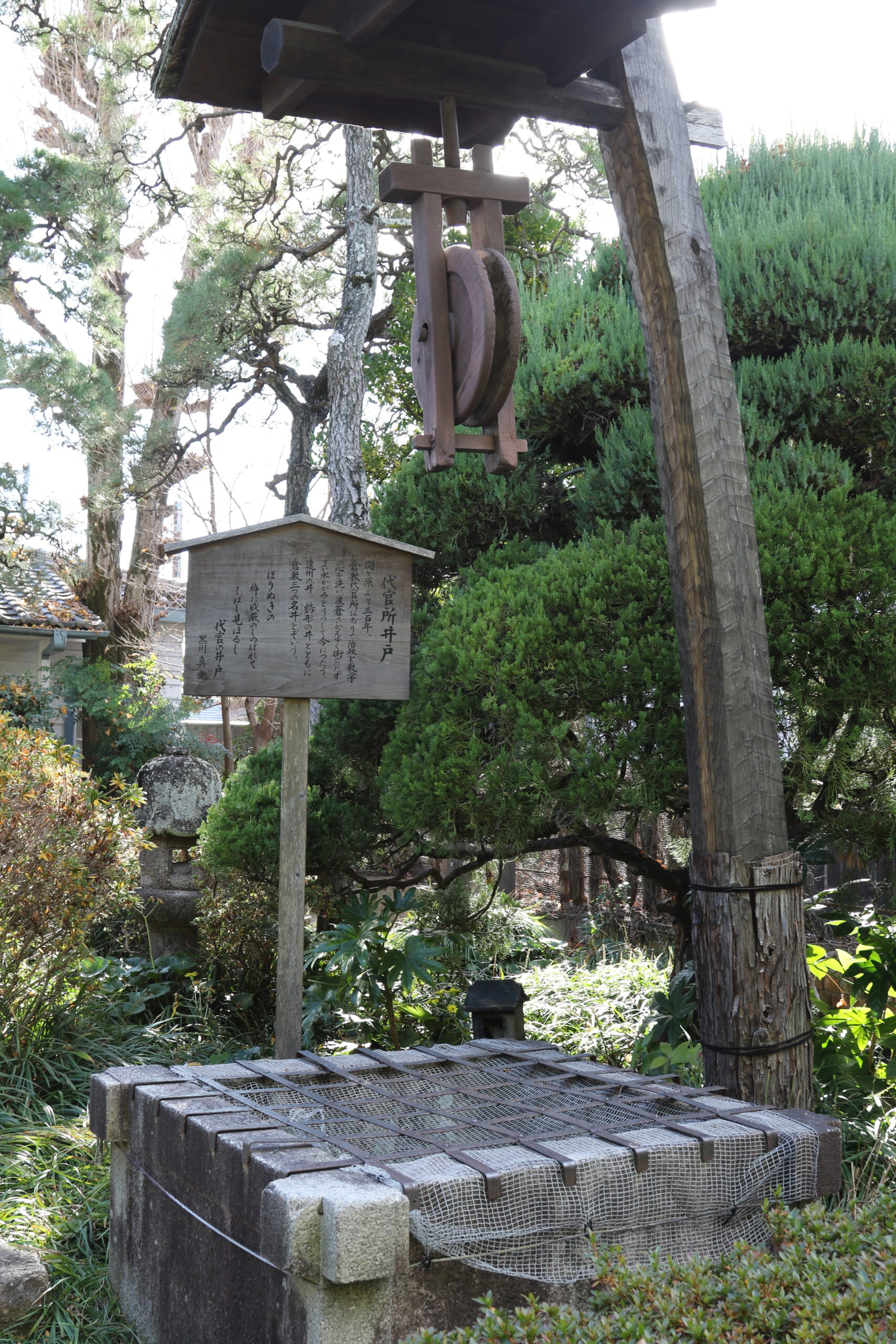
This well, known as the Daikansho Ido (The Magistrate’s Well), once stood inside the administrative office of Kurashiki during the Edo period (1603–1868).
It was not just a well.
It was part of the government.
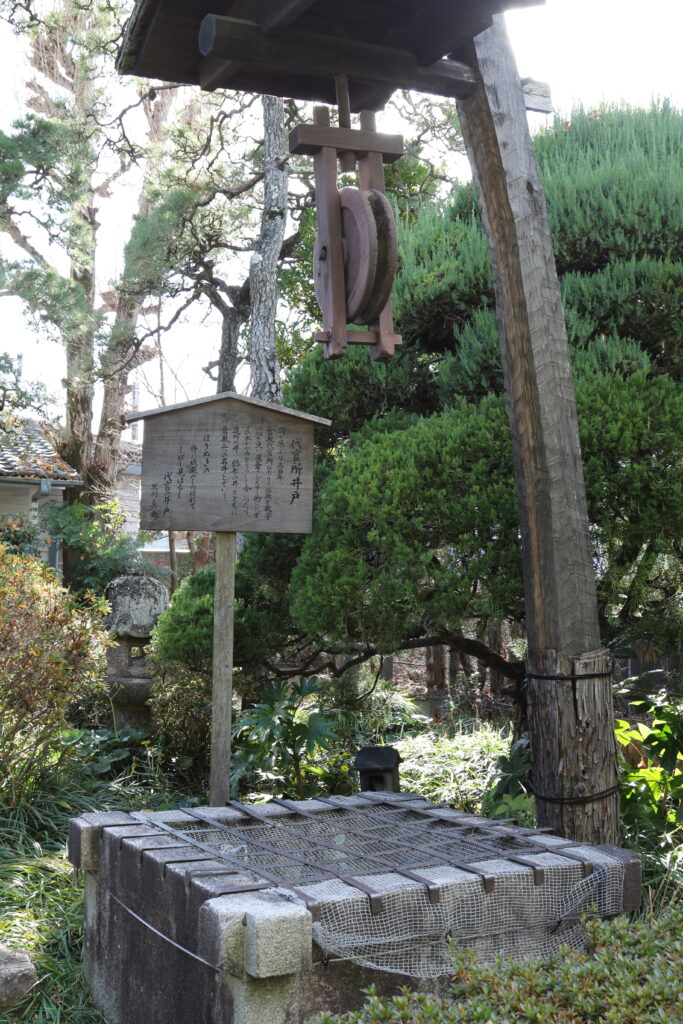
The wooden pulley, the heavy stone frame, and the quiet garden setting may look peaceful today.
But in the Edo period, this water supported the daily operations of the Tokugawa shogunate’s local administration.
Kurashiki was a direct territory of the shogunate.
A magistrate’s office (daikansho) managed tax collection, rice storage, and regional governance.
Water was essential.
Not only for drinking — but for cooking, cleaning, and even fire prevention in a town built largely of wood.
A Famous Well
The sign beside the well describes it as one of the “Three Famous Wells of Kurashiki,” along with two others known as Enshū no I and Tsurugata no I.
In pre-modern Japan, a “famous well” was not merely about water quality.
It meant the well was culturally important — tied to the identity of the town.
This particular well symbolized clean governance.
The text on the sign speaks of water that “washes the heart.”
This phrase is deeply Japanese.
Water is purification.
Water is moral clarity.
Even government should be clean.
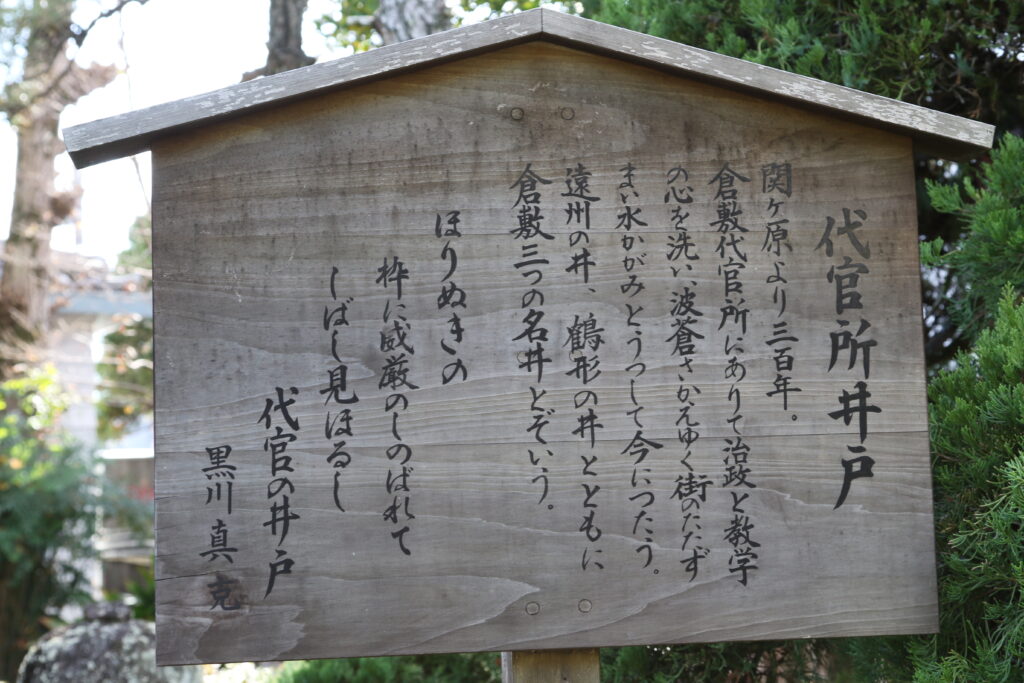
The sign also connects the well to the legacy of administration that began after the Battle of Sekigahara in 1600 — the conflict that established Tokugawa rule.
Three hundred years of governance passed, but the water remained.
Quietly.
Wells in the Western Imagination
In Europe, wells often appear in fairy tales — wishing wells, village wells, places of gathering.
In Japan, wells often have spiritual weight.
They are linked to shrines, purification rituals, and sometimes even protective spirits.
This well combines both ideas:
a practical necessity and a symbol of moral order.
Closing Reflection
Today, the well rests in silence among trees and stone.
Yet it reminds us that political systems, like people, depend on something simple and elemental:
Water.
Without clean water, no town survives.
Without moral clarity, no government lasts.
Sometimes, history is not found in grand castles —
but in the quiet circle of a well.