Where Sake Begins: Rice Polishing
Before yeast ferments and before koji transforms starch into sugar, sake is already taking shape.
That moment comes earlier than many people expect—at rice polishing.
Sake rice is not used as it is harvested. The outer layers of the grain contain fats, proteins, and minerals that can create rough flavors during fermentation. To control taste and aroma, brewers remove these layers, leaving behind the pure starch core that supports clean fermentation.
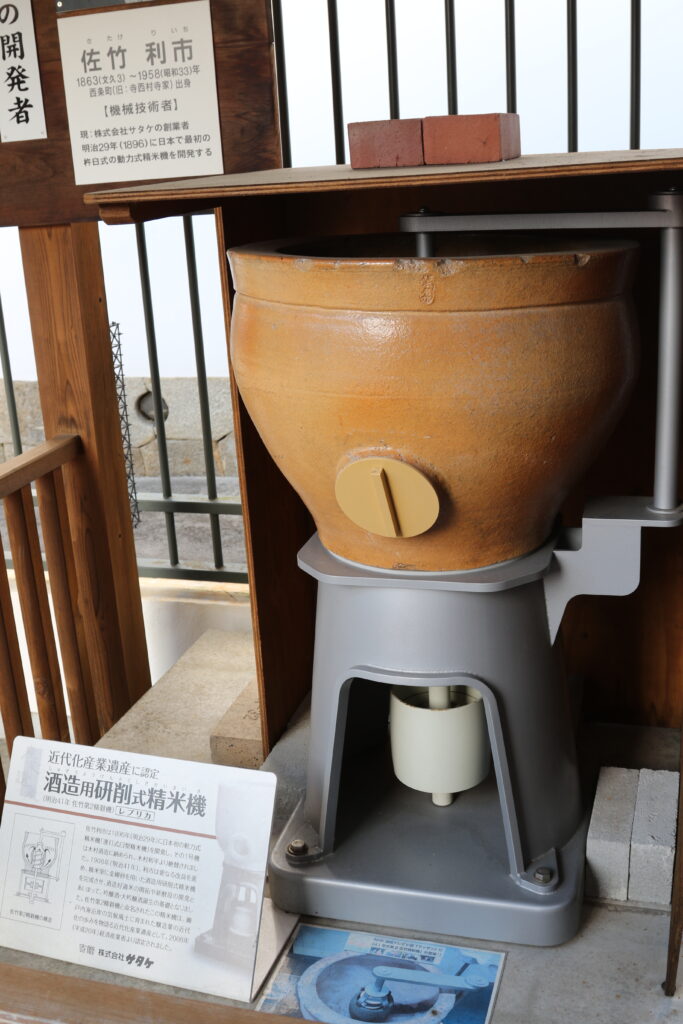
The invention of rice polishing machines changed sake forever.
Before mechanization, polishing was limited and uneven. With machines, brewers gained precision: the ability to decide exactly how much of the rice to remove and to repeat that decision consistently. This technical advancement made it possible to brew cleaner, more refined sake and laid the foundation for modern styles such as ginjo and daiginjo.
But polishing is not simply about removing as much as possible.
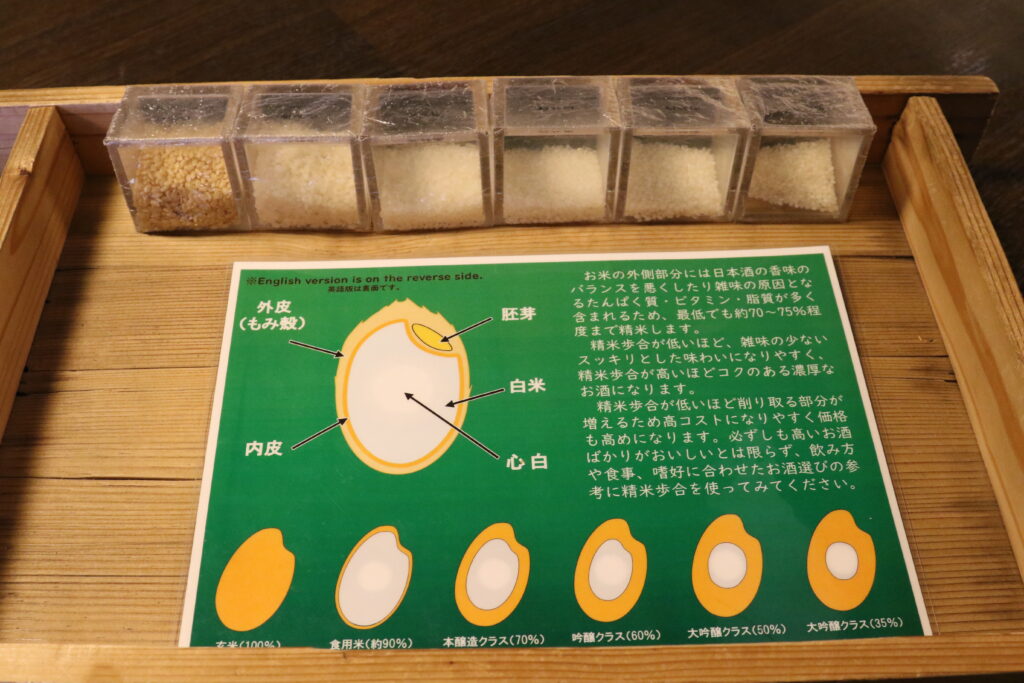
This model shows how different polishing ratios affect the rice grain. As more of the outer layers are shaved away, flavors become lighter, cleaner, and more aromatic. At the same time, yield decreases, costs rise, and the character of the rice itself becomes more exposed.
Less polishing can produce fuller, richer sake. More polishing often results in elegance and clarity. Neither approach is inherently superior—the choice reflects the brewer’s intention and the style of sake being pursued.
Rice polishing is, in essence, the first decision in sake brewing.
It determines how the rice will interact with koji and yeast long before fermentation begins. By the time water is added and tanks are filled, the direction of the sake has already been set.
This quiet, mechanical process marks the true beginning of sake.