An Object from Japan’s Postwar Moment
At first, it looks ordinary.
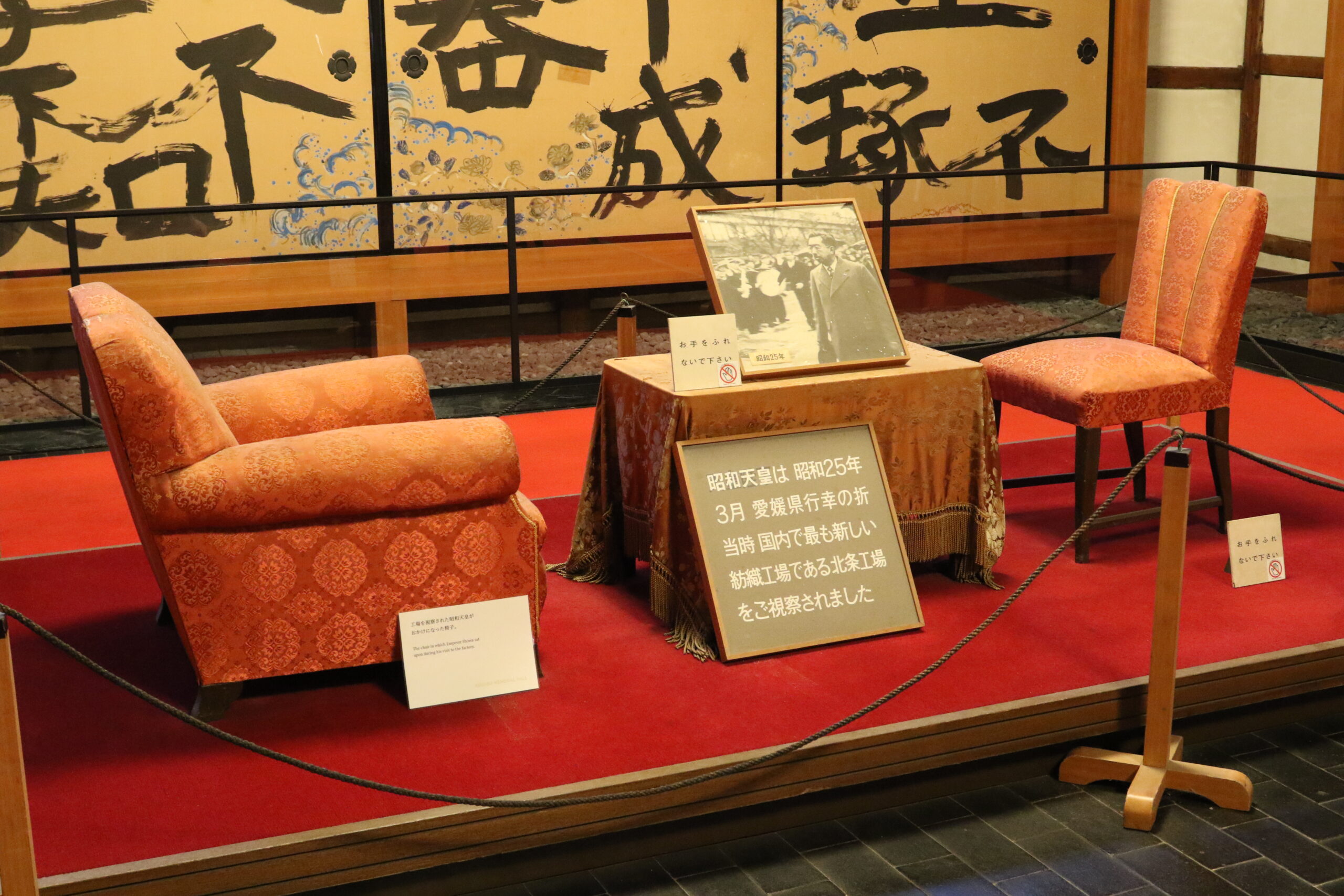
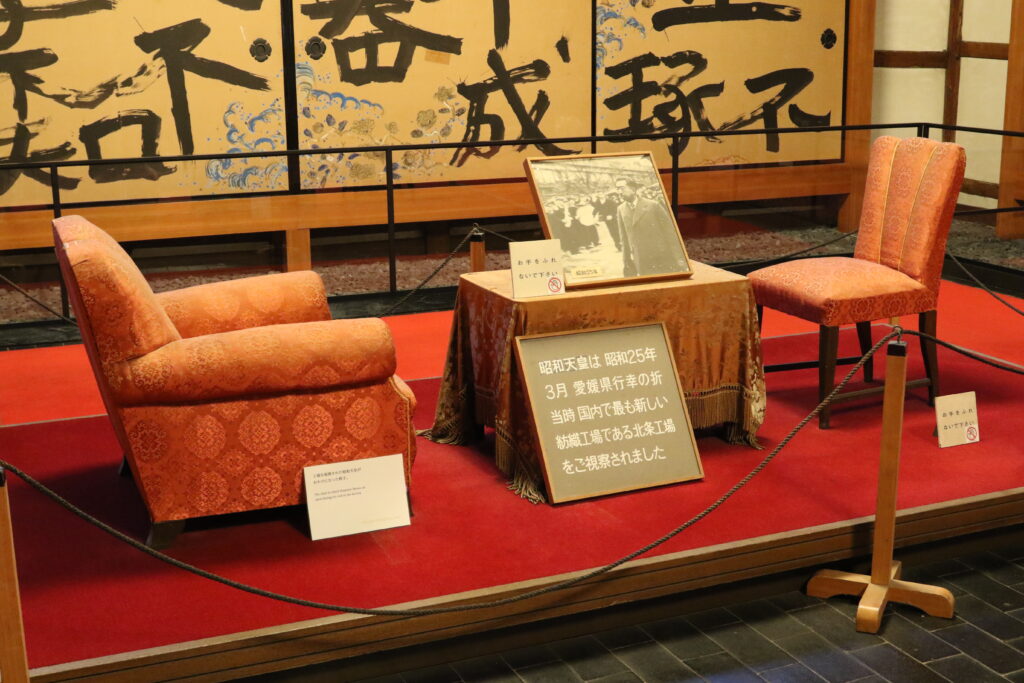
Two chairs.
A small table.
Nothing grand. Nothing ceremonial.
And yet, this chair once held 昭和天皇.
After the War, Not Before It
The visit took place in 1950.
Japan was still rebuilding.
The war had ended, but its weight had not disappeared.
This was not a moment of triumph.
It was a moment of presence.
The chair does not represent power at its peak,
but a country standing quietly in the aftermath of history.
Not a Throne
This is not a throne.
Not a symbol carved in gold or placed above others.
It is upholstered fabric.
Wooden legs.
A chair meant to be sat on — and then left behind.
For many outside Japan, Emperor Showa is associated with complex memories:
war, responsibility, silence, and transition.
This chair does not resolve those questions.
It simply remains.
Objects That Do Not Explain
Japanese history is often discussed through dates, speeches, and decisions.
But sometimes, it is objects that speak most quietly.
A drum worn by countless strikes.
Ink absorbed into sliding doors.
A chair used once — and never again in the same way.
None of them offer answers.
They only carry time.
What This Chair Holds
It does not tell us what to think.
It does not ask for reverence.
It reminds us that history is not only written or spoken —
sometimes, it is sat with, briefly,
and then left behind.
In Japan, even an ordinary chair can become a witness.