Munakata Shiko and the Courage to Paint a Room
You don’t expect this inside a building.
Not inside sliding doors.
Not inside walls meant to open and close.
And yet, there it is —
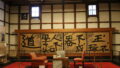
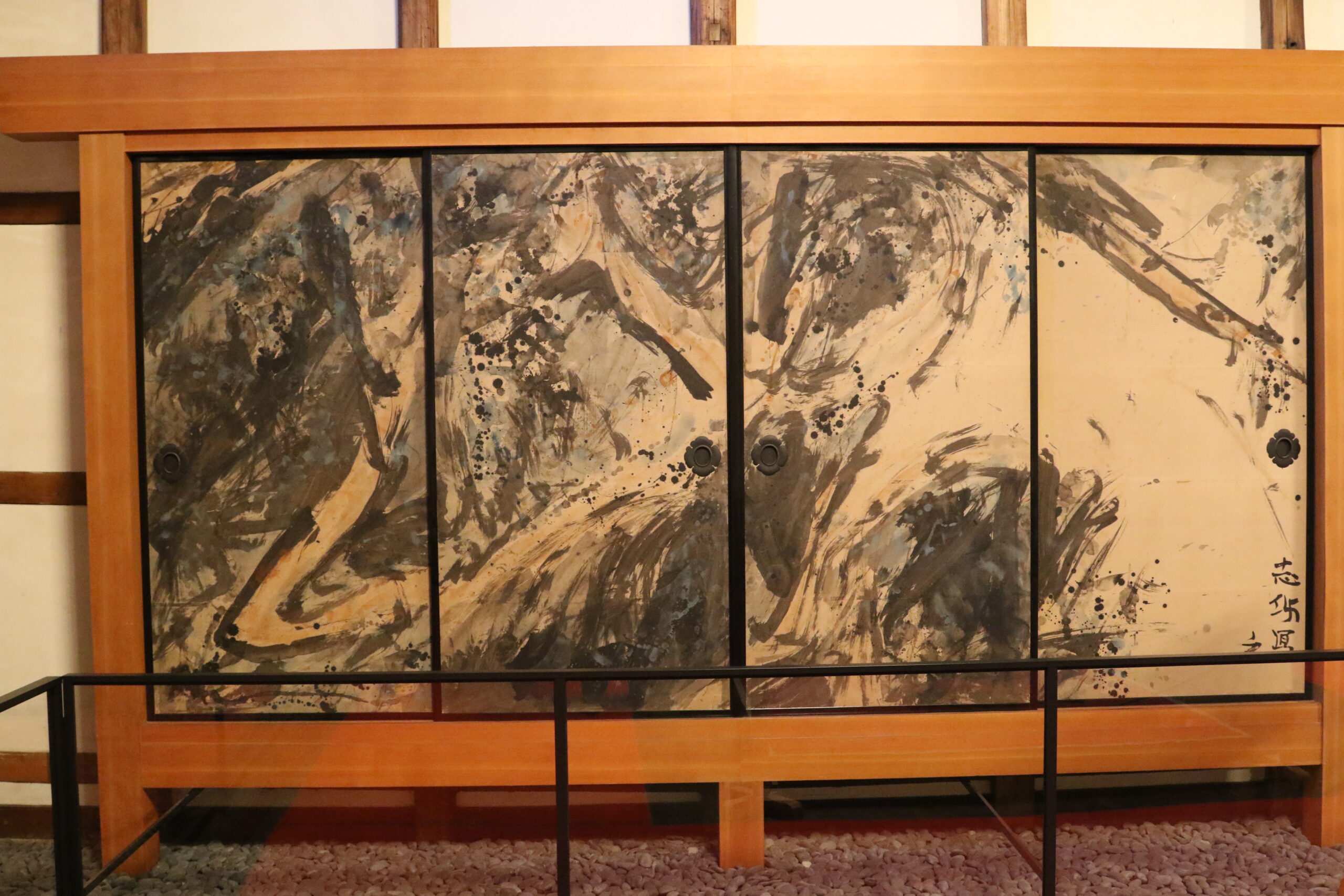
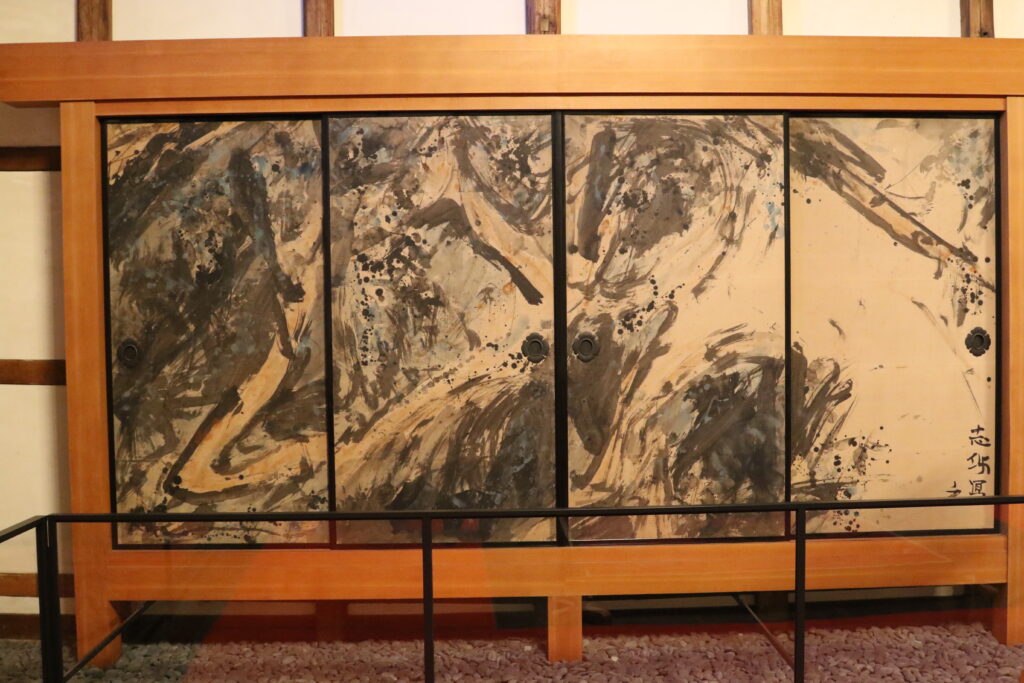
ink moving freely across fusuma panels, refusing to behave like decoration.
These works are by 棟方志功,
created not for a gallery, but for a living architectural space.
Art That Does Not Stay on the Wall
In many cultures, art is framed, isolated, and protected.
Here, it becomes part of the room itself.
The panels slide.
The space changes.
The artwork moves with it.
This is not art added to architecture.
It is art that accepts responsibility for the space it inhabits.
Meaning Is Not the First Arrival
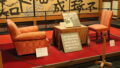
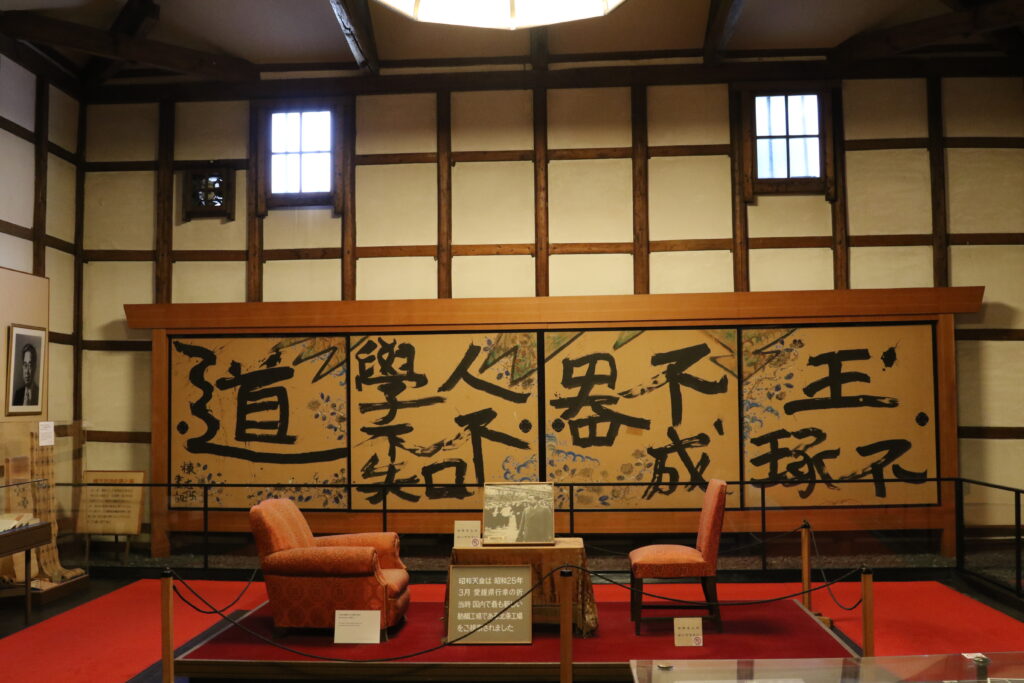
Some of the panels contain characters.
Others contain only sweeping motion, splashes, and pauses.
You don’t need to read Japanese to stand in front of them.
The impact comes first —
before language, before interpretation, before explanation.
Thick strokes press forward.
Ink bleeds where it is allowed to bleed.
Paper absorbs everything without apology.
Painting Without an Exit
To paint on fusuma is an irreversible decision.
You cannot easily erase it.
You cannot replace it without altering the room itself.
This is what makes the act so bold.
It is not experimentation.
It is commitment.
The artist accepts that the work will age, move, and exist beyond control.
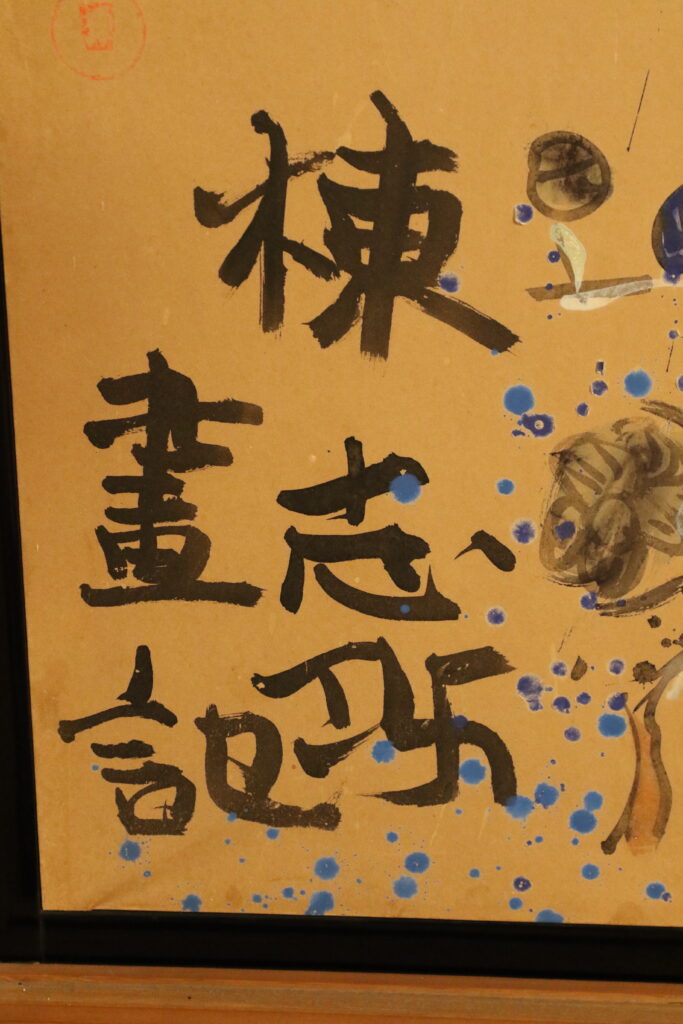
A Name That Does Not Claim the Space
The signature does not dominate.
It does not conclude the work.
It simply remains —
another mark among many.
Here, authorship feels secondary to presence.
When Nothing Is Written
And then, there are panels with no words at all.
Only motion.
Only rhythm.
Only the memory of a hand moving once, decisively.
What Remains
These panels are silent.
Yet they speak —
not through meaning, but through scale, risk, and restraint.
In Japan, even a wall can become an act of expression.
And sometimes, the boldest art is the one that chooses
not to separate itself from life at all.