Munakata Shiko’s Fusuma Paintings in Kurashiki
At first, you don’t try to read them.
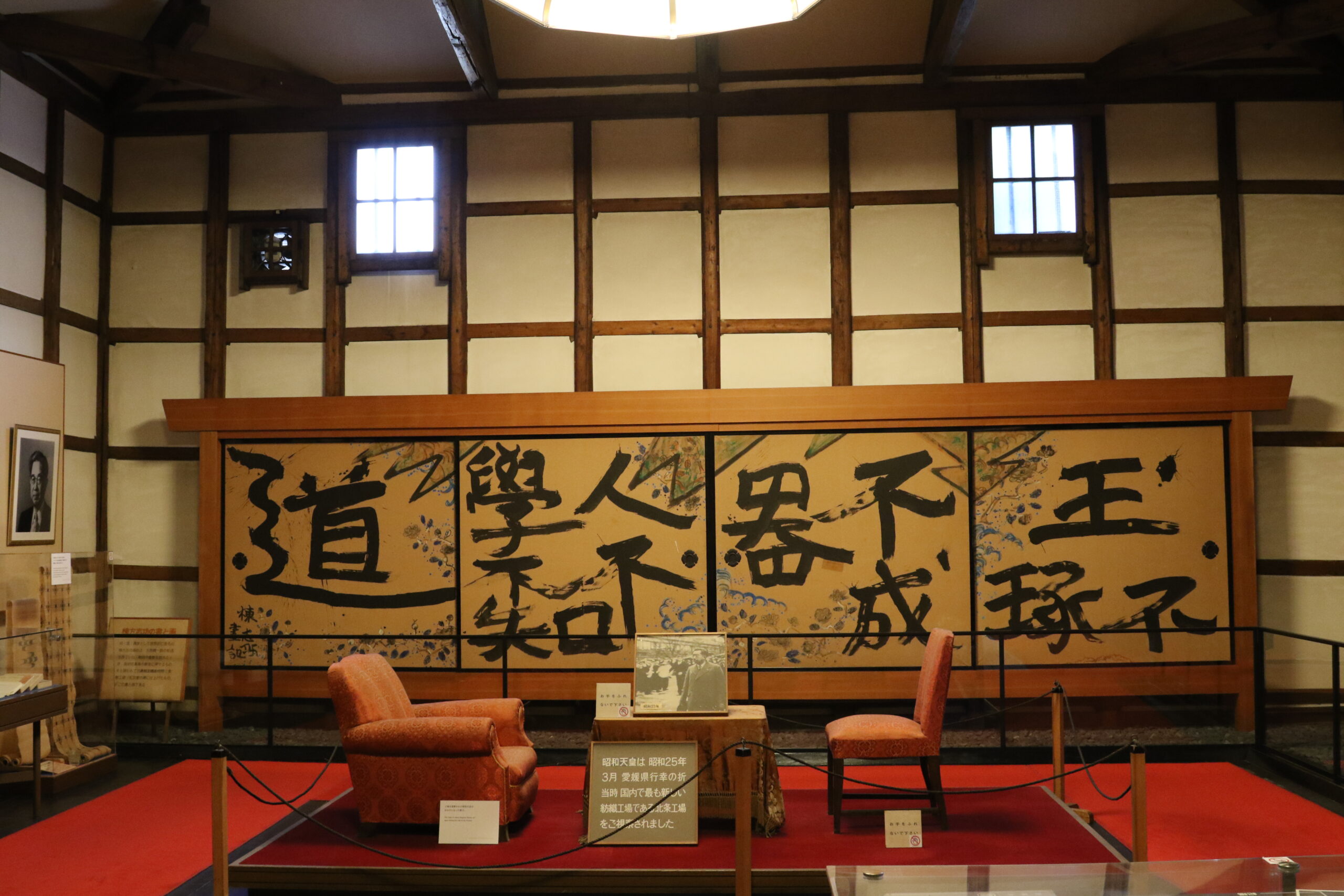
You simply stand in front of the panels and feel the force of the black ink pressing against the space.
These fusuma paintings by 棟方志功 are not quiet.
They do not decorate the room — they occupy it.
Where Art Becomes Architecture
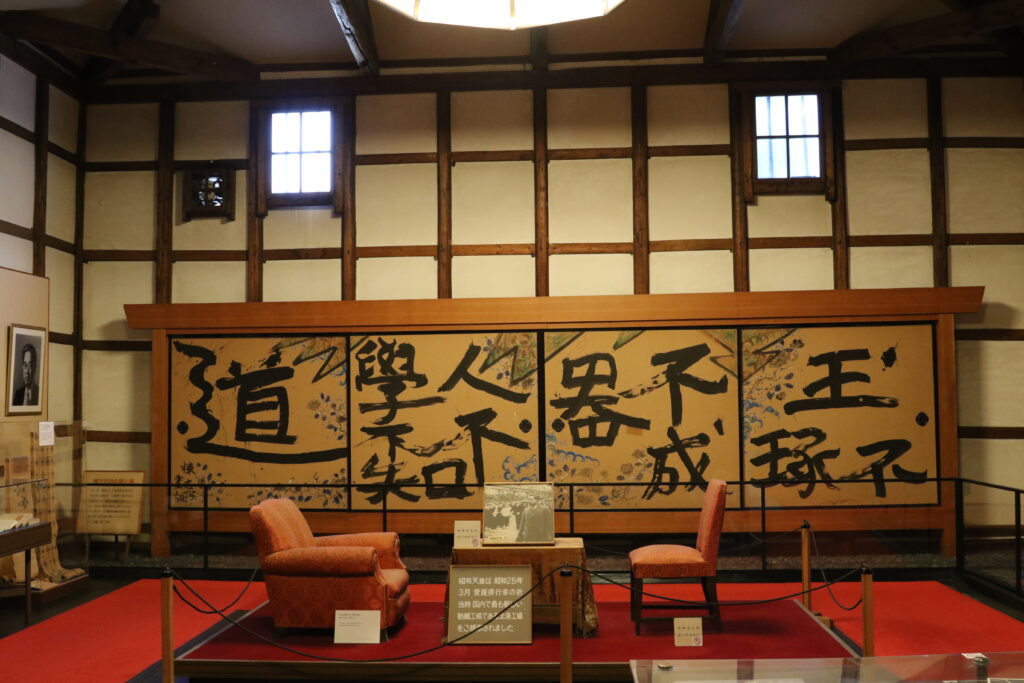
The paintings are displayed inside a historical building once connected to Kurashiki’s textile industry.
Here, the artwork is not isolated on white walls.
It exists as part of the structure itself — sliding doors, paper, wood, air.
This is something distinctly Japanese:
art that lives inside everyday space, not separated from it.
You don’t approach these works as objects.
You encounter them as an environment.
When Meaning Comes After Impact
Most visitors outside Japan cannot read the characters.
And that is perfectly fine.
Munakata’s work does not wait for linguistic understanding.
The thick strokes, uneven edges, and splashes of ink reach you first — emotionally, physically.
This is not writing meant to be deciphered.
It is writing meant to be felt.
Imperfection as Presence
The surfaces are rough.
Ink bleeds where it is not controlled.
Paper absorbs more than it should.
Yet this is not carelessness.
In Japanese aesthetics, perfection is not the goal.
Presence is.
Each stroke carries hesitation, confidence, and momentum at once —
a visible record of the artist’s body and breath.
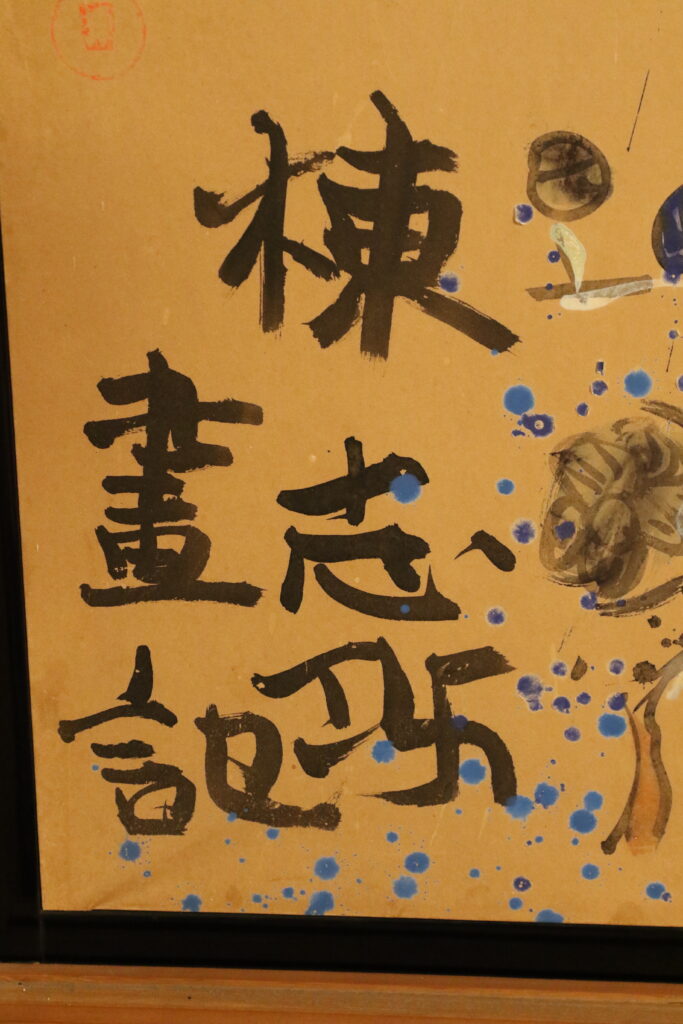
A Name That Does Not Conclude the Work
The signature does not finish the piece.
It does not claim ownership.
It simply exists — like the rest of the ink.
In Munakata’s world, the work does not end with the artist’s name.
It continues in the space, in the viewer, and in time.
Art That Refuses Silence
These panels are still.
But they are not silent.
They speak through scale, texture, and resistance —
reminding us that Japanese art often asks us not to understand first,
but to stay, look, and feel.
Sometimes, words are not meant to explain.
They are meant to remain.