Japanese traditional crafts often reflect seasonal customs, symbolism, and meticulous handwork.
One such example is Hagoita, decorative paddles that have evolved from a simple New Year’s game into highly refined folk art.
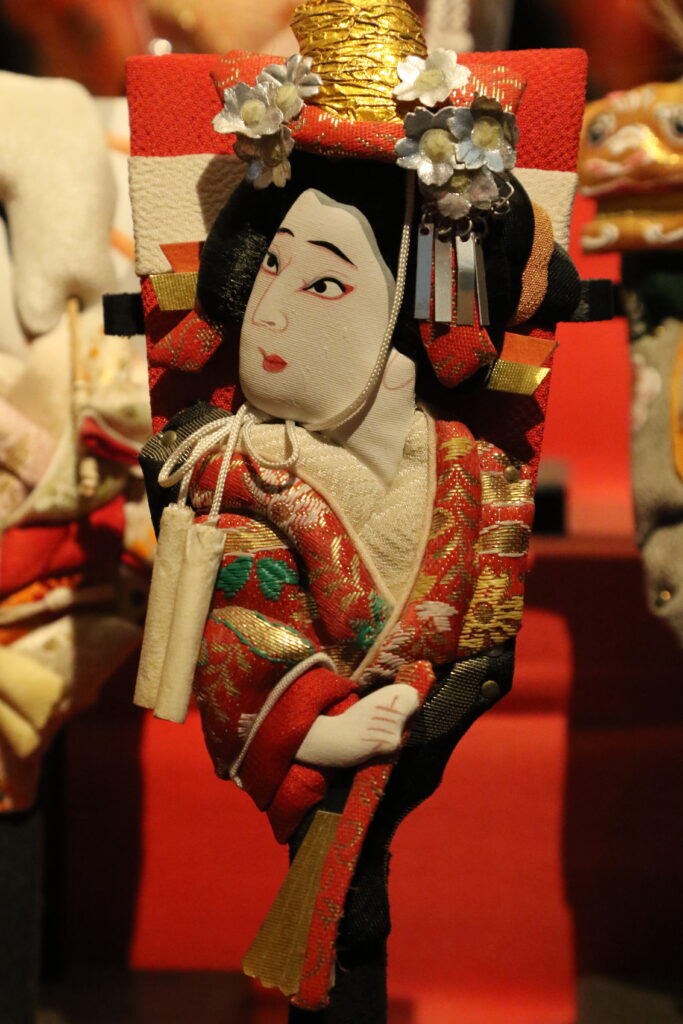
A traditional hagoita decorated with an oshie figure, crafted from layered silk and hand-painted details.
Hagoita were originally used in a New Year’s game similar to badminton. During the Edo period (1603–1868), they gradually transformed into decorative objects, admired for their beauty rather than their function.
Today, hagoita are displayed as symbols of good fortune, protection, and healthy growth, especially during the Japanese New Year season.
What Makes Hagoita Special?
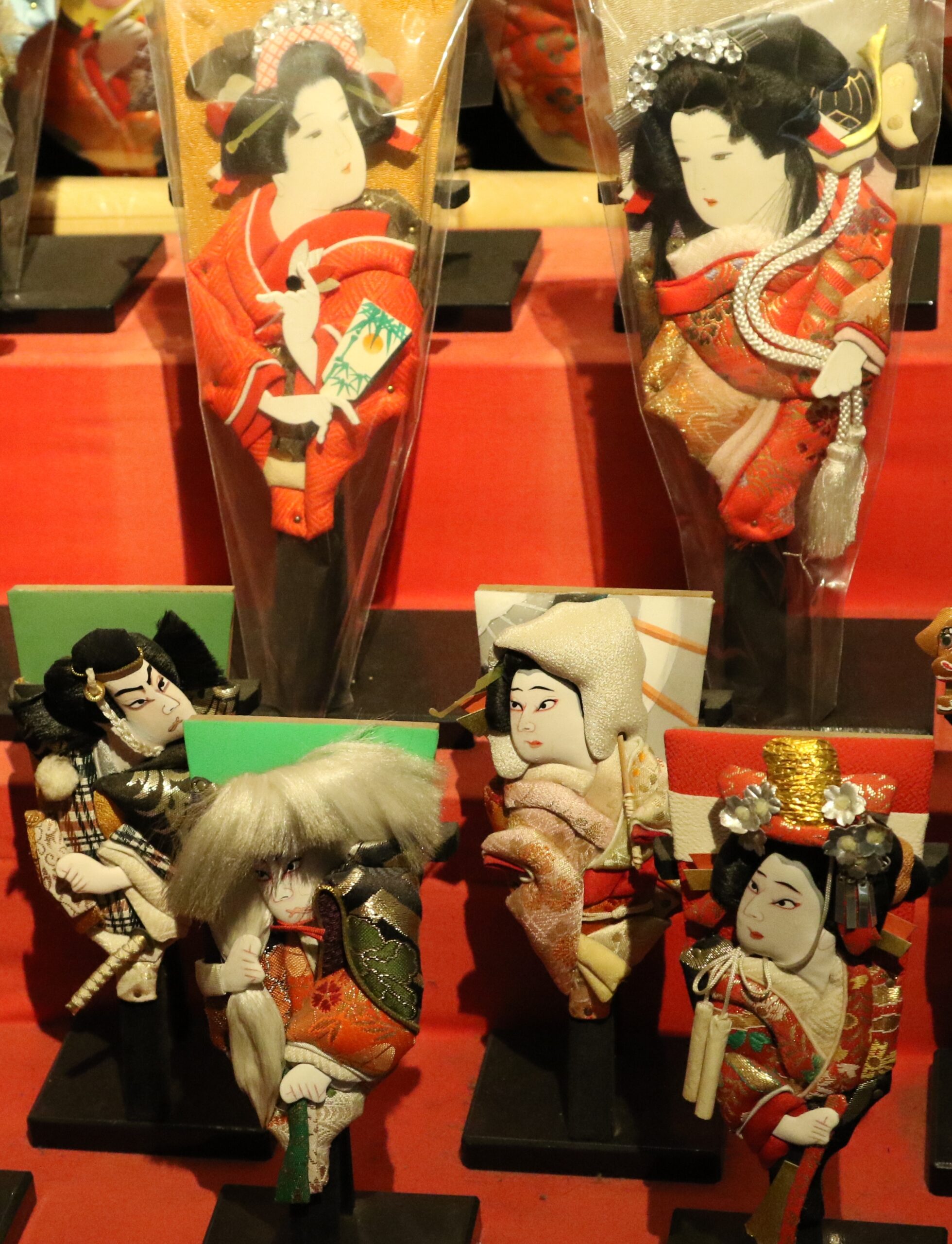
A display of decorative hagoita, showcasing the variety of styles inspired by kabuki and classical beauty.
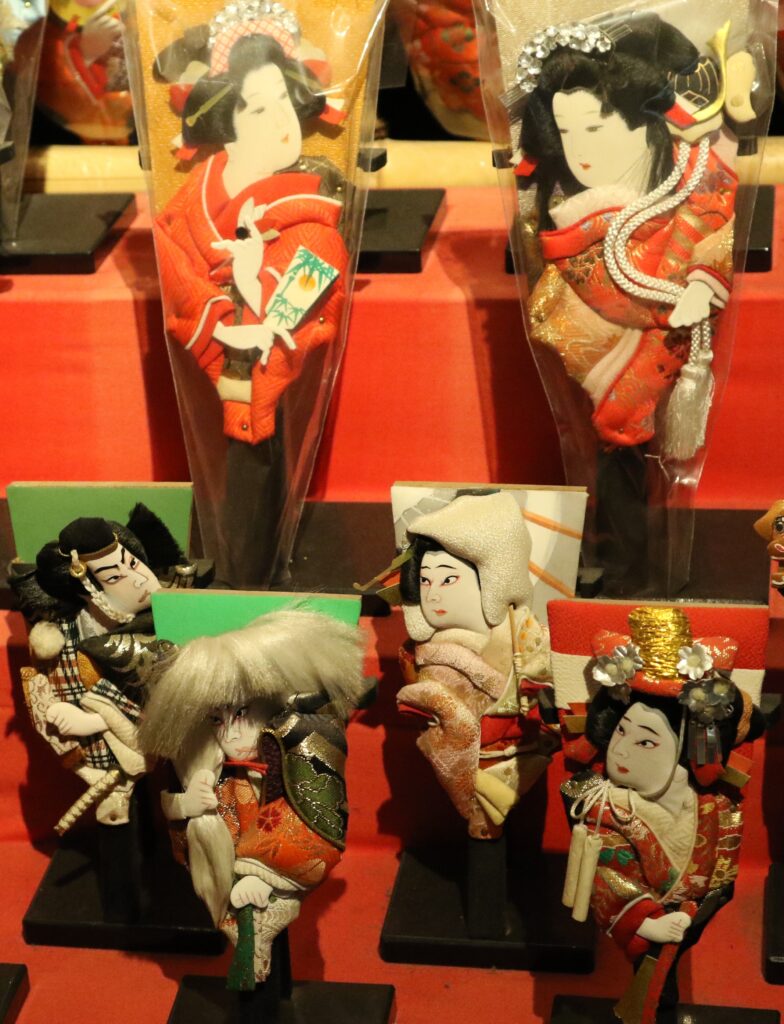
The most distinctive feature of hagoita is the oshie technique—a raised, three-dimensional figure made by layering silk, cotton, and paper. Faces are hand-painted, while costumes use fragments of richly patterned kimono fabric.
Key characteristics include:
- Three-dimensional textile construction
- Expressive, stylized facial features
- Gold accents and elaborate hair ornaments
- Designs inspired by kabuki actors, courtesans, and folklore heroes
Each piece is handcrafted, making no two hagoita exactly alike.
From Folk Craft to Collectible Art
A kabuki-inspired hagoita figure, emphasizing bold facial expression and theatrical costume.
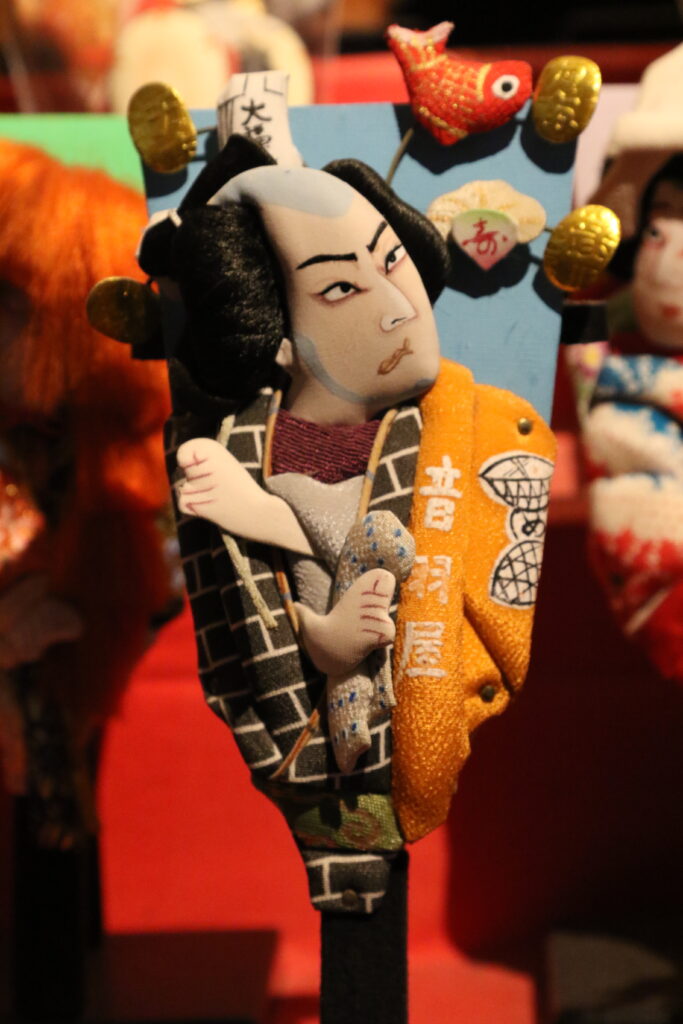
Many hagoita designs are influenced by kabuki theater, a traditional Japanese performing art known for its dramatic makeup and exaggerated expressions. These theatrical elements translate beautifully into hagoita figures, giving them strong visual presence despite their compact size.
Today, hagoita are collected not only in Japan but also internationally, valued as:
- Examples of traditional Japanese craftsmanship
- Decorative art objects with historical context
- Unique combinations of sculpture, textile art, and painting
A Glimpse into Traditional Japan
Hagoita represent more than decoration. They embody a time when art, ritual, and daily life were closely connected. Through careful craftsmanship and symbolic design, these objects continue to preserve cultural memory across generations.
Even for viewers unfamiliar with Japanese traditions, the attention to detail and expressive character of hagoita remain immediately captivating.