At first glance, Shishimai may resemble other lion dances found across Asia, but in Japan it evolved into a unique ritual deeply connected to local festivals, beliefs, and communities.
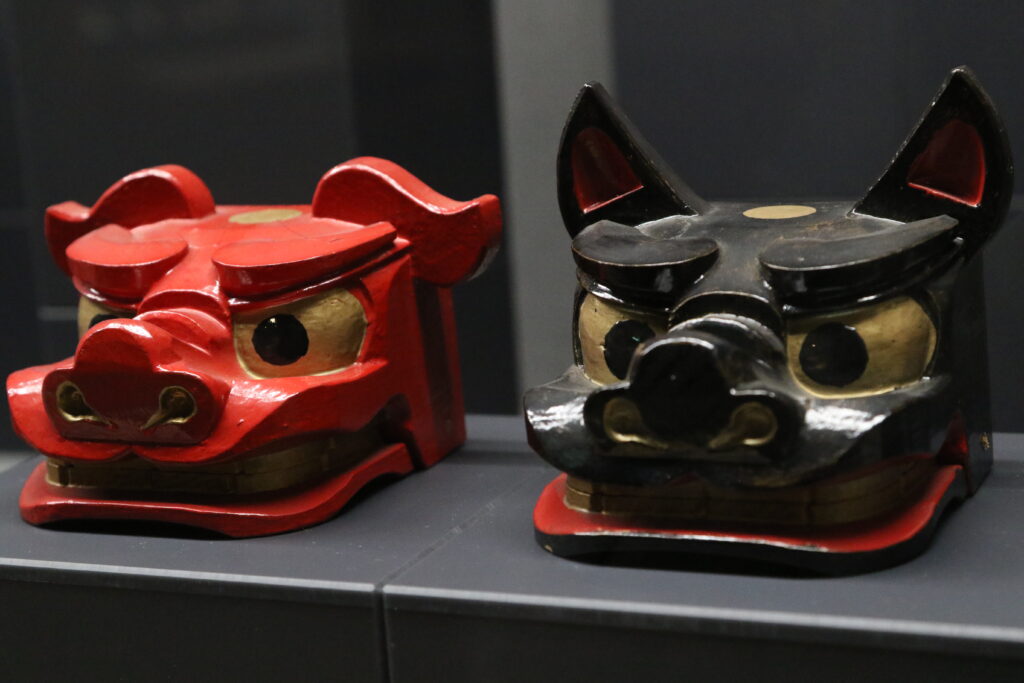
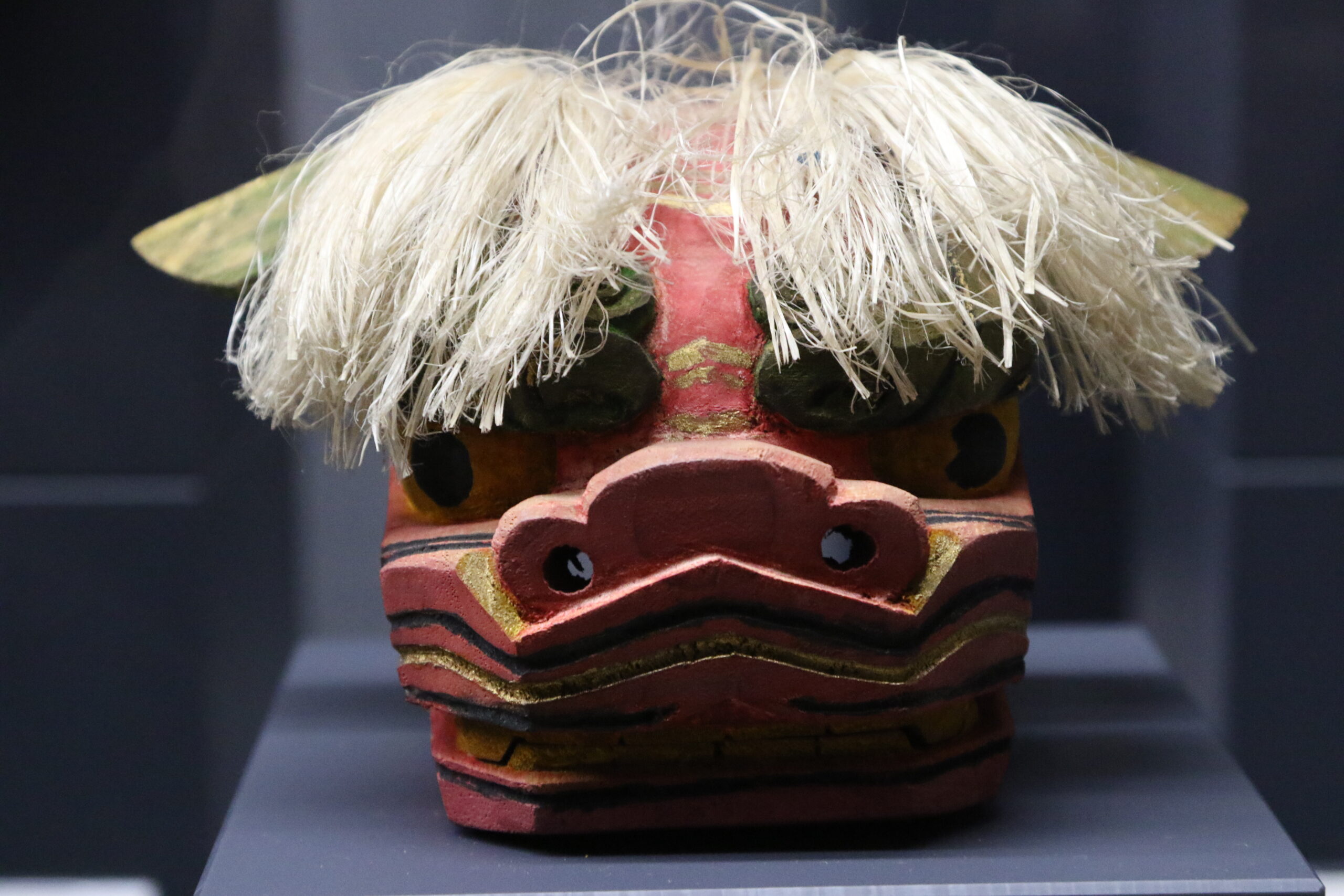
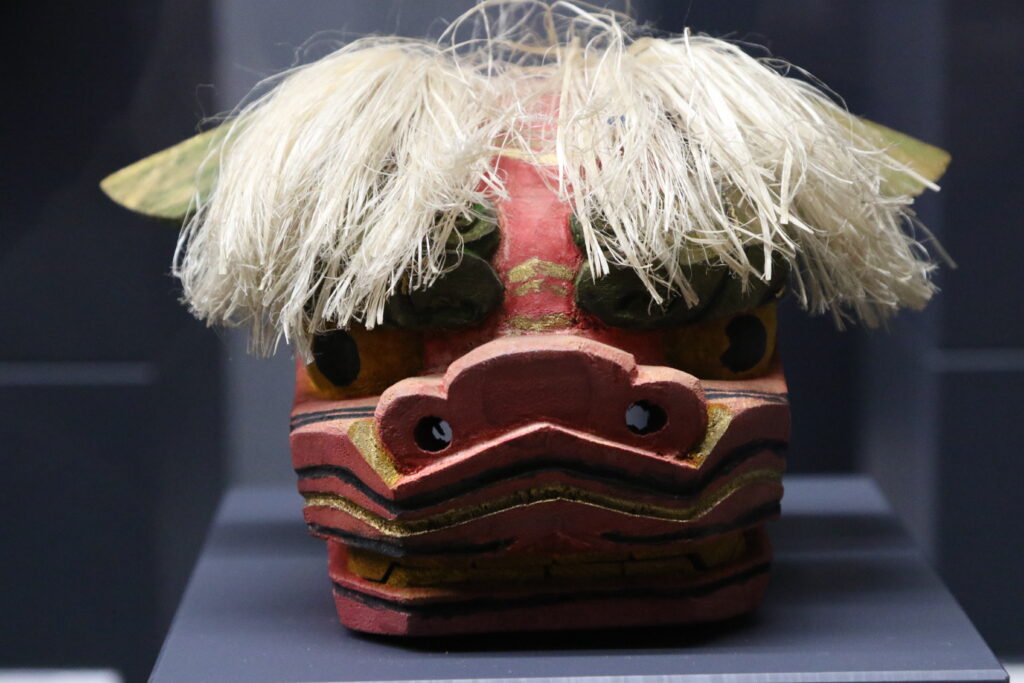
Although both are called Shishimai, no two lion heads are exactly the same in Japan.
Their colors, shapes, and expressions vary widely from region to region, reflecting local beliefs, history, and aesthetics.
Red lion heads are often associated with vitality, celebration, and protection against misfortune, while darker tones can convey strength, dignity, or a more solemn presence. These differences are not merely decorative — they signal how each community understands the role of the lion within its own festivals and rituals.
Rather than following a single fixed design, Shishimai in Japan evolved as a living folk tradition. Each village or town adapted the lion’s appearance to match its own values, passing those choices down through generations. As a result, Shishimai became less about uniformity and more about local identity.
What unites all of them is not their appearance, but their purpose: to protect, to bless, and to connect people through shared ritual.
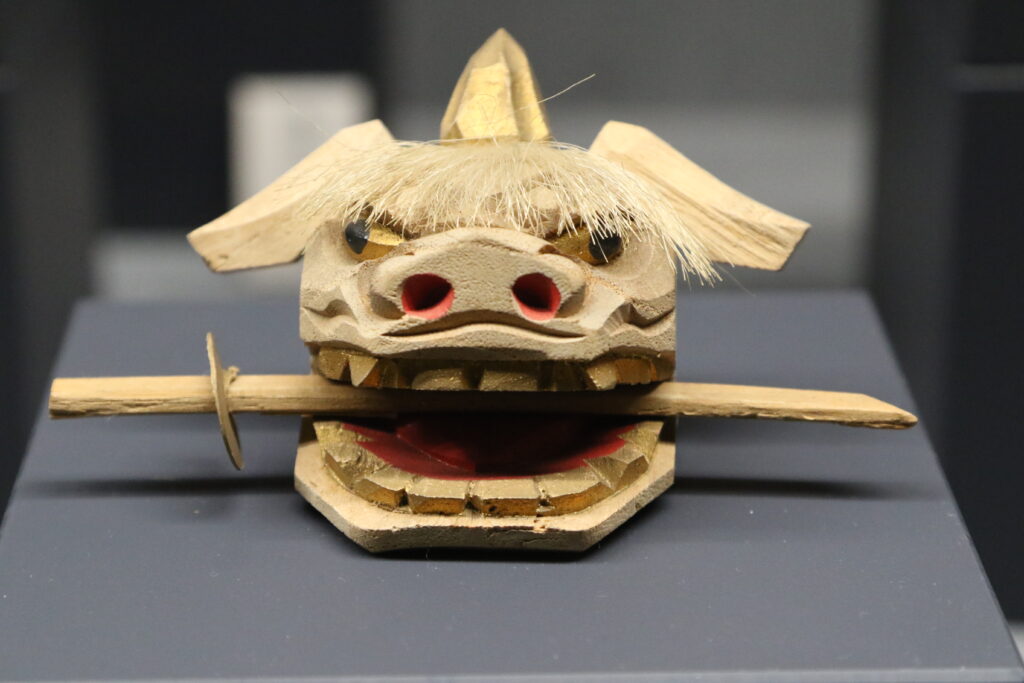
This lion head, unfinished and unpainted, reveals another side of Shishimai — not as an object to be admired, but as a tool meant to be used.
Unlike decorative masks, Shishimai heads are built for movement and performance. The wooden rod held in the mouth allows the dancer inside to control the jaw, creating the illusion of a living creature. The opening and closing of the mouth is not only visually striking, but symbolically important, especially when the lion “bites” to remove bad luck or bring good fortune.
The absence of bright colors draws attention to the craftsmanship itself: carved wood, simple materials, and practical construction. In this form, Shishimai feels closer to an ancient ritual object than to a stage costume.
Together, these different expressions of the lion — ornate or plain, fierce or restrained — show how Shishimai in Japan is defined less by origin and more by use. It is shaped by hands, festivals, and the communities that continue to perform it today.
“Shishimai is not a relic of the past, but a tradition still alive.”