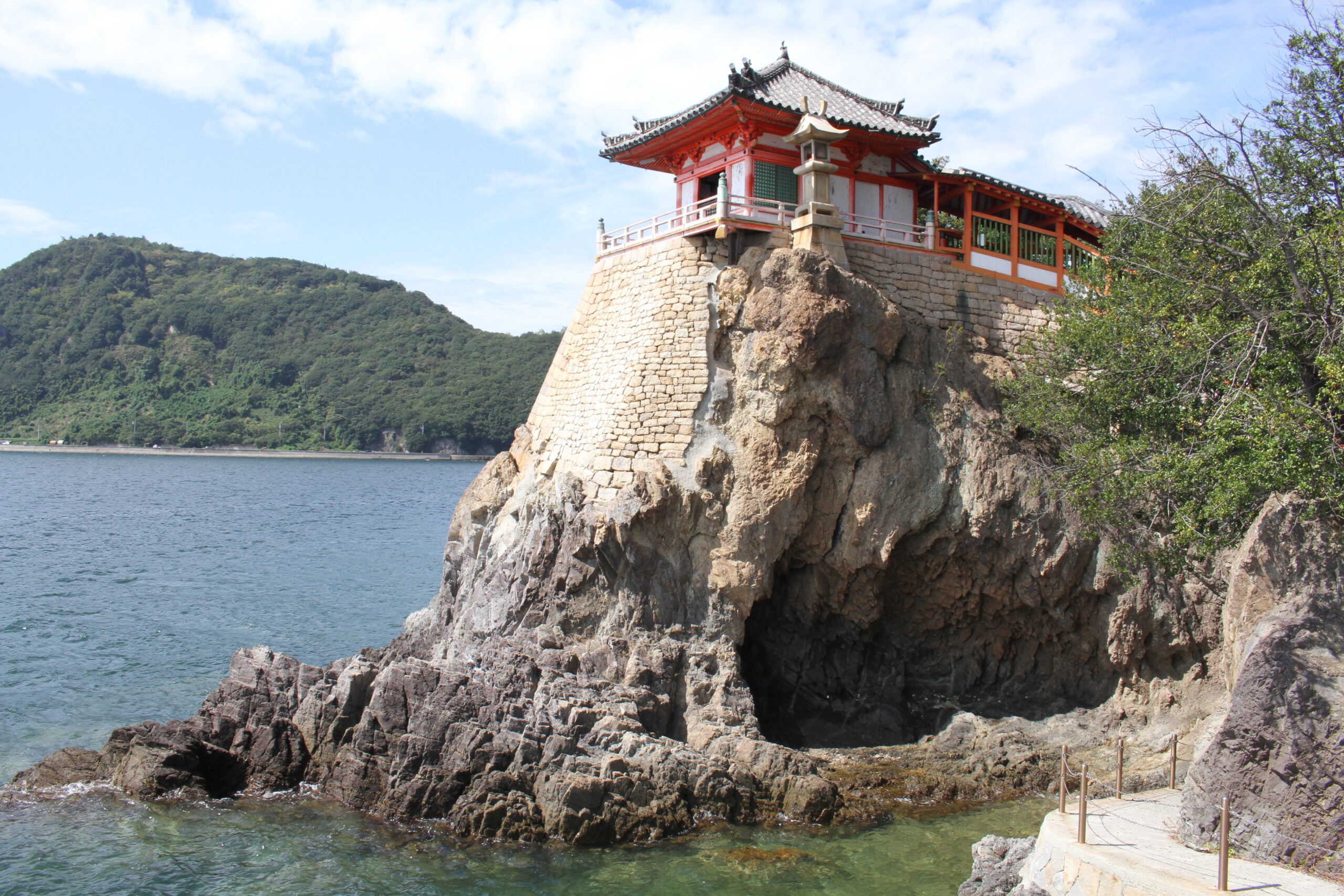
On a quiet stretch of Japan’s coastline, a small temple clings to a cliff — a place where people come to pray for safe childbirth.
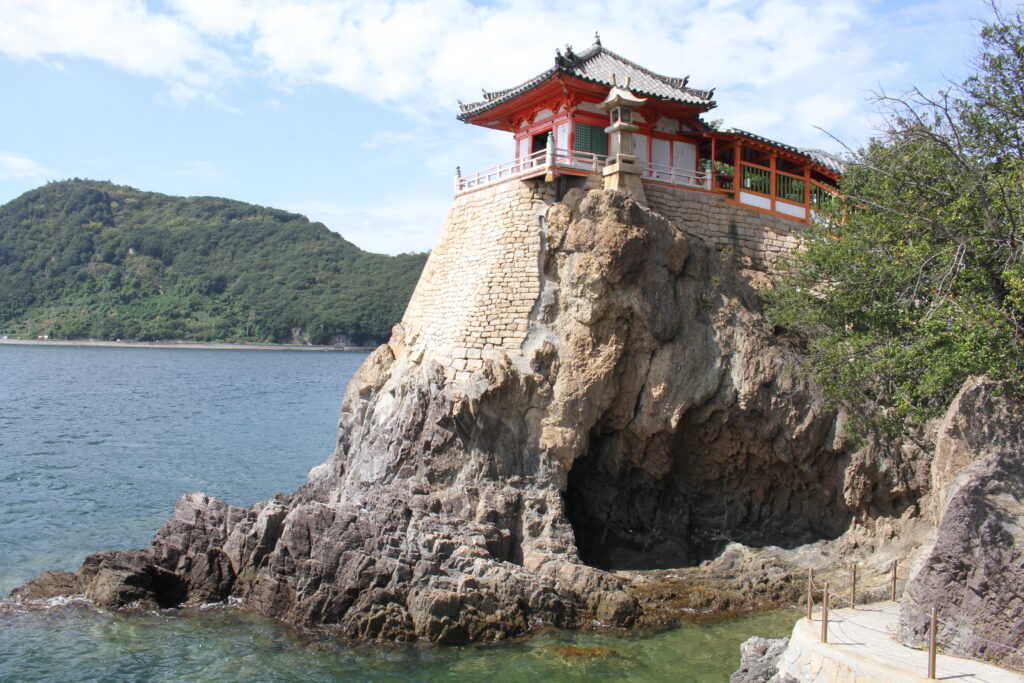
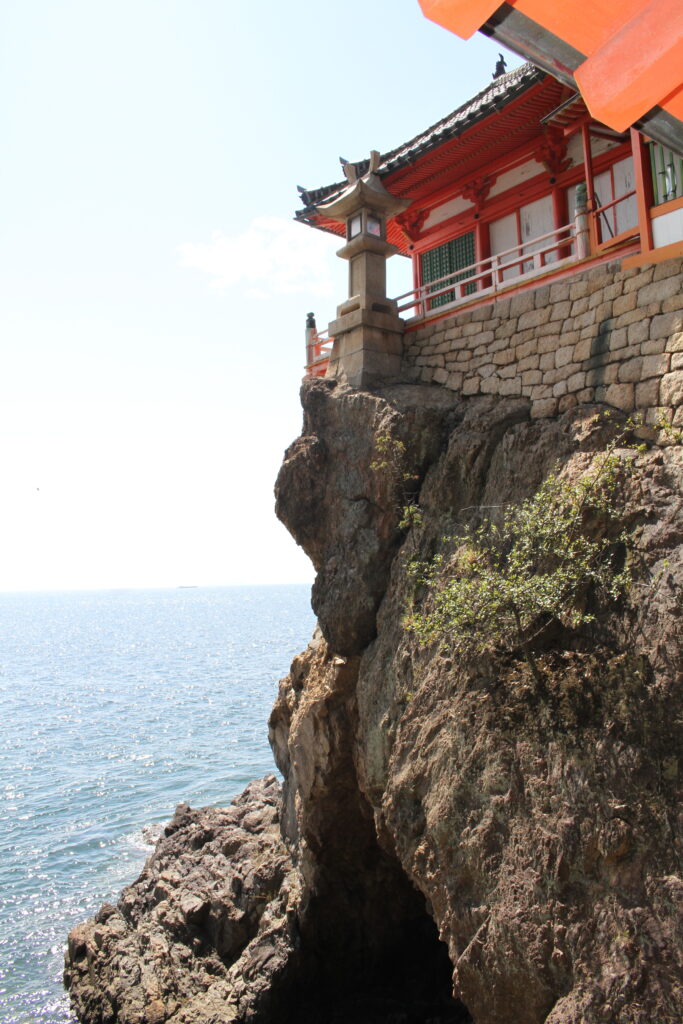
At first glance, it feels almost impossible.
A small temple stands quietly on a cliff, its wooden halls extending over the sea below. Waves crash against the rocks far beneath it, and there is nothing between the building and the water but open air. It is the kind of place that makes you stop, not because it is loud or dramatic, but because it seems to defy common sense.
Why build a temple here?
This is Abuto Kannon, a Buddhist temple located along the Seto Inland Sea in western Japan. Unlike large, famous temples found in cities, Abuto Kannon feels intimate and remote. The path to it is narrow, the structure compact, and the surrounding landscape dominates the experience. Standing here, you are constantly aware of the sea — its movement, its sound, and the height separating you from it.
The temple has stood in this precarious position for centuries. Rather than conquering nature, it appears to submit to it, carefully fitted into the cliff itself. In Japan, places of worship are often built where the natural world feels especially powerful. Mountains, forests, and coastlines are not obstacles, but partners in faith. Abuto Kannon is a striking example of this idea — a place where belief exists at the very edge of land.
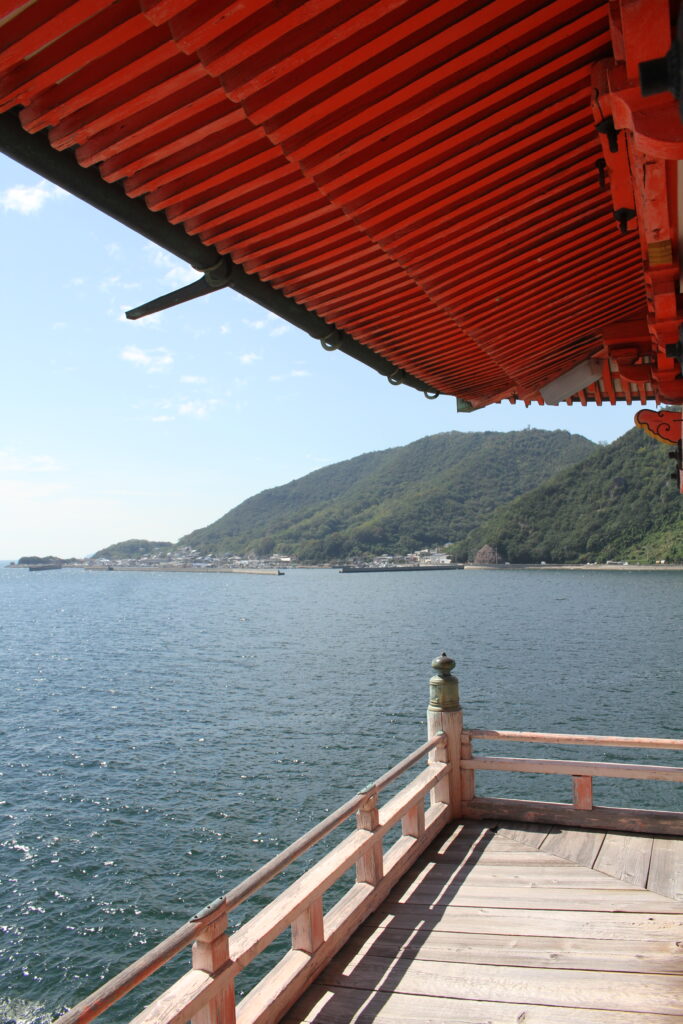
Walking along the narrow wooden veranda, with the sea stretching endlessly in front of you, the feeling is neither fear nor thrill. It is quiet. Almost protective. And that feeling is essential to understanding why people have come here for generations — not as tourists, but to pray.
Abuto Kannon is best known as a place to pray for safe childbirth.
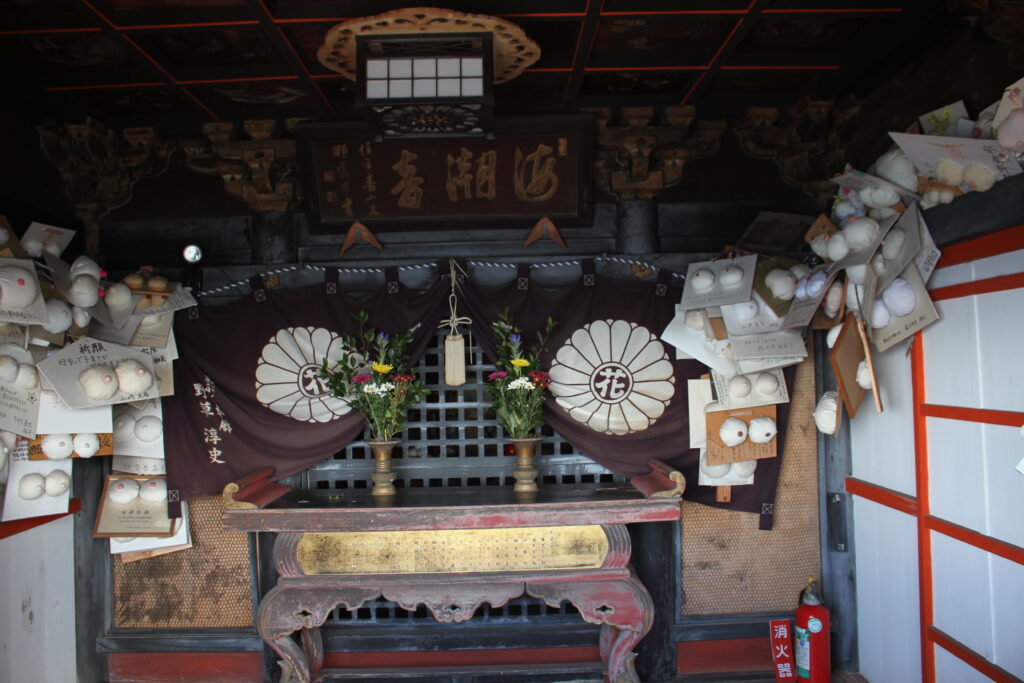
For centuries, expectant mothers — and often their families — have come here to offer prayers for protection and new life. Inside the temple, this purpose becomes immediately clear. The space is filled with small wooden votive plaques, many shaped like breasts, carefully hung and dated by those who once stood here with quiet hopes.
To an overseas visitor, these offerings may seem surprising at first. But in Japanese Buddhism, prayer is deeply connected to everyday life. Health, birth, work, and family are not separate from faith; they are its foundation. The breast-shaped plaques represent nurturing and life itself — a simple, physical symbol of care and survival.
What makes Abuto Kannon especially striking is how closely this belief is tied to its location. The temple clings to the cliff, exposed to wind and sea, yet remains steady. In the same way, childbirth has always carried both vulnerability and strength. Praying here is not about eliminating risk, but about entrusting oneself to something larger — nature, time, and faith combined.
Standing inside the hall, looking out over the water, the experience feels deeply personal. There are no grand ceremonies, no crowds, and no sense of performance. Just the quiet presence of those who came before, and the sea continuing its rhythm below.
Abuto Kannon is not a place that demands attention. It does not try to impress. And yet, long after leaving, the image remains: a small temple on the edge of the land, where people have come — and still come — to pray for life itself.
Abuto Kannon is located in Fukuyama, along the coast of the Seto Inland Sea in western Japan. The area is known for its calm waters and historic port towns, far from the busy routes of major international tourism. Reaching the temple requires a small detour — but that quiet distance is part of what has kept this place unchanged for generations.