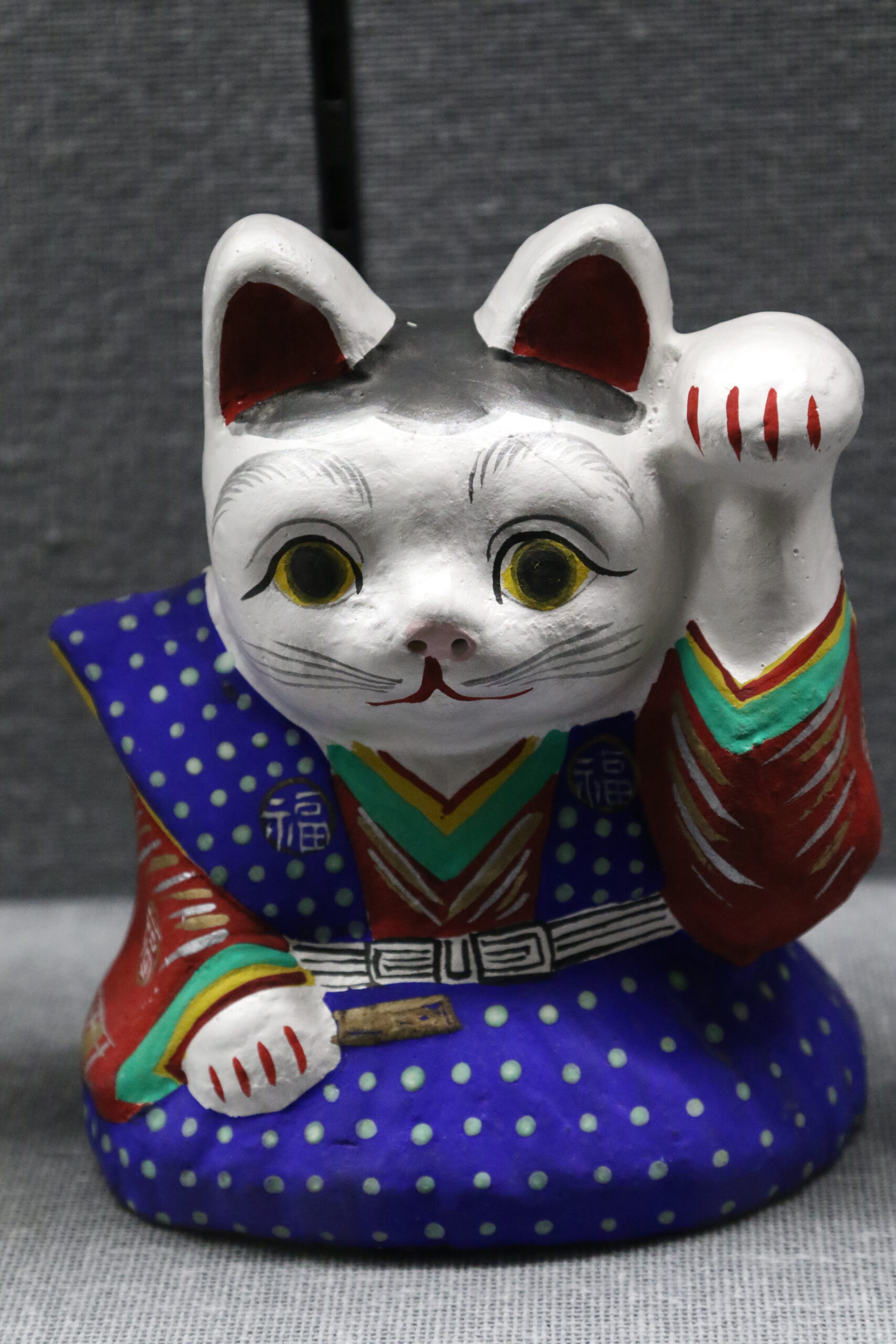
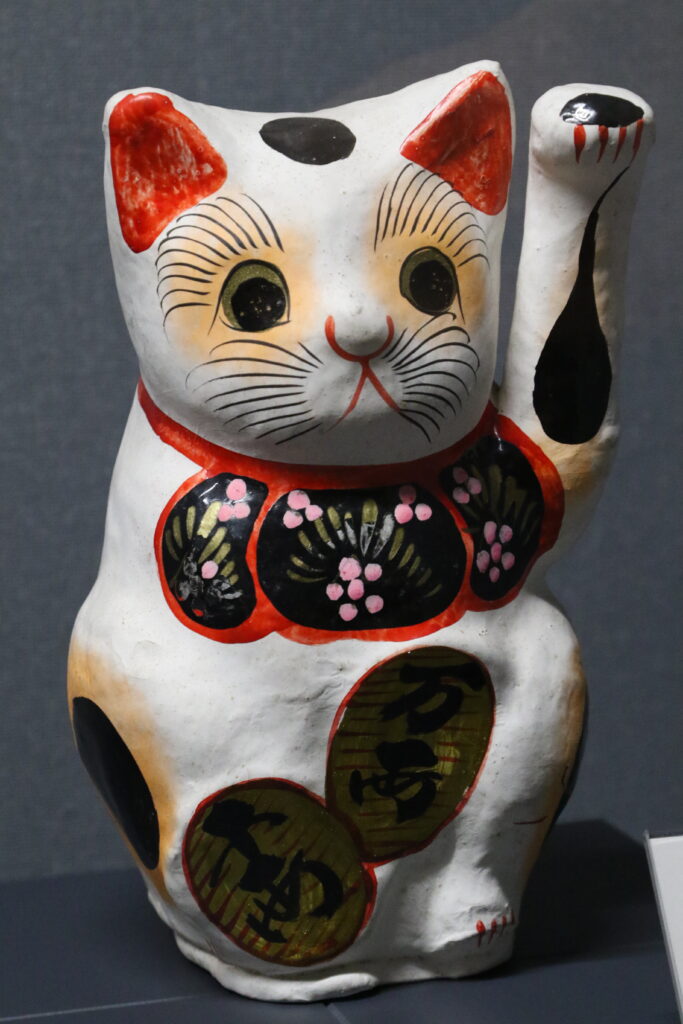
After placing this white Maneki-neko at the center, the atmosphere immediately feels lighter and more welcoming.
White Maneki-neko are traditionally associated with purity, new beginnings, and good fortune in general. This particular cat appears to be a calico (known as mike in Japanese), a pattern long believed to be especially lucky in Japan.
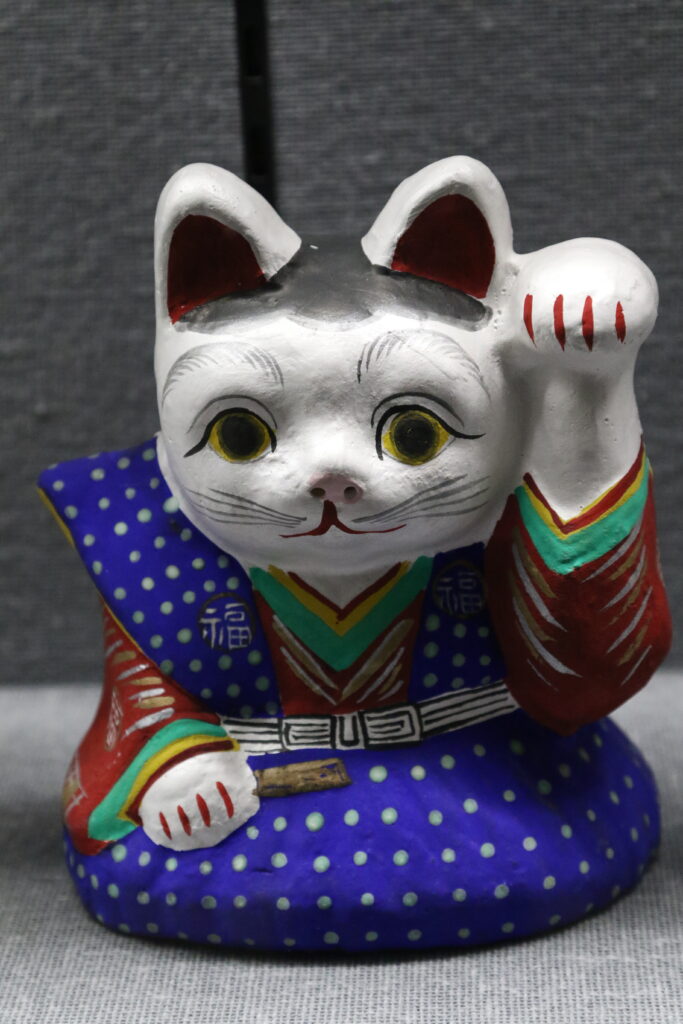
Dressed in a kimono, the figure quietly reflects everyday Japanese aesthetics — simple, warm, and rooted in tradition. Kimono-clad Maneki-neko are often seen as symbols of respect for heritage, while still inviting prosperity into modern life.
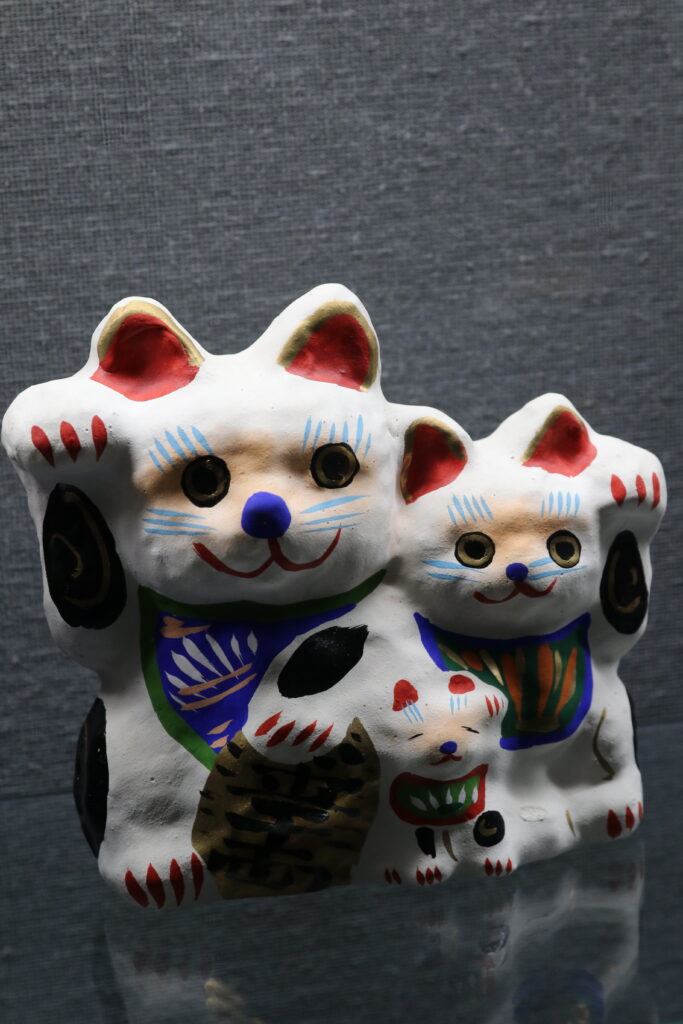
In the third piece, we see what looks like a parent-and-child pair, both raising their paws. A raised right paw is said to invite wealth and good luck, while a raised left paw welcomes people and connections. Together, they symbolize not only prosperity, but also harmony, family bonds, and shared fortune.
These Maneki-neko are more than decorative objects. They carry stories — of wishes for happiness, protection, and continuity — quietly watching over the spaces they inhabit.